 ESP 16%
 FRA 12%
 ARG 12%
 BRA 11%
 ENG 10%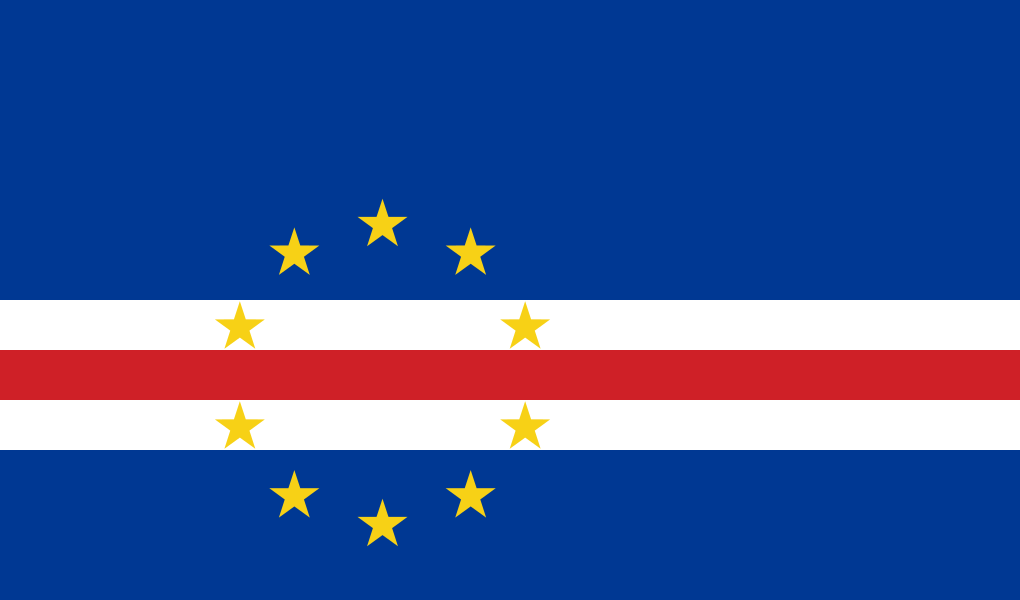
Cape Verde bowed out of World Cup 2026 in the Round of 32, holding reigning champions Argentina to a 1-1 draw and finishing above Uruguay in Group H on debut.
Cape Verde's first World Cup ended in the Round of 32, where the Blue Sharks held reigning champions Argentina to a 1-1 draw before bowing out. It was a fitting, gallant finish to a debut nobody outside the Atlantic archipelago saw coming: a nation ranked FIFA #69, handed pre-tournament title odds of just 0.1%, not only survived a group containing Spain and Uruguay but finished second in it.
That combination of context and achievement is what makes this run so remarkable. Cape Verde entered 2026 as the classic fairytale story, a tiny island federation making its finals bow. They left it having outlasted a Uruguay side ranked 52 places above them and having pushed the eventual World Cup 2026 finalists to the very edge in the knockouts.
This is the story of how the Blue Sharks got there, why they were so difficult to beat, and exactly how far a genuine outsider can travel at a modern World Cup.
Ad
How did Cape Verde reach the World Cup 2026 knockouts?
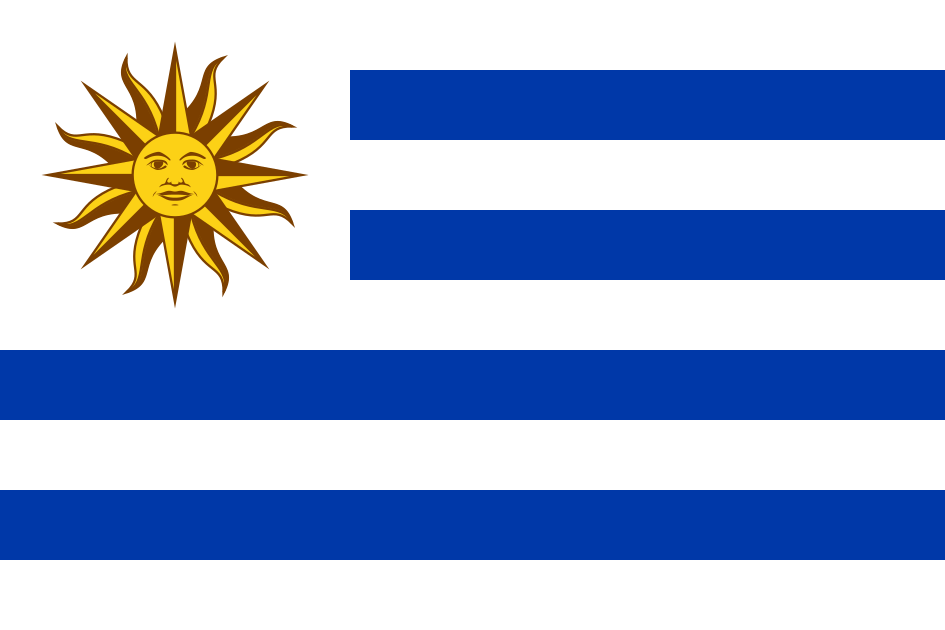
Cape Verde qualified for the last 32 by finishing second in Group H on 3 points with a goal difference of zero. Spain, the Euro 2024 winners and pre-tournament favourites at 16% title odds, topped the group on 7 points, but the fight for the runners-up berth was where the debutants made history. Cape Verde came through it ahead of Uruguay, who managed just 2 points, and Saudi Arabia, also on 2.
The scale of that result is hard to overstate. Uruguay arrived as a FIFA #17 side with 4% title odds and Bielsa's high-pressing reputation; Saudi Arabia carried the memory of toppling Argentina in 2022. Cape Verde, the lowest-ranked team in the pool, finished above both. For a nation at its first World Cup, escaping a group with that pedigree is the kind of line that reshapes a footballing identity.
Crucially, Cape Verde did it without leaking goals. A level goal difference across three matches in a group featuring Spain points to a team that defended its structure, picked its moments and refused to be overrun. In a tournament where fancied names such as Germany and the Netherlands fell in the Round of 32, that discipline was the platform for everything that followed.
How close did Cape Verde come against Argentina?
The reward for finishing second in Group H was a Round of 32 tie against Argentina, the Group J winners who had swept to nine points and a +7 goal difference in the first phase. On paper it was a mismatch: the FIFA #3 reigning world champions, built around Lionel Messi, against a debutant outsider. Cape Verde did not read the script.
The Blue Sharks matched Argentina blow for blow and forced a 1-1 draw, taking the tie to the wire before the South Americans edged through. Against a team that scores freely, holding Argentina to a single goal in normal play was a defensive feat, and the fact that Cape Verde found the net themselves showed they were no passive presence.
The weight of that performance only grew as the tournament unfolded. Argentina did not just scrape past Cape Verde and fade; they marched all the way to the World Cup 2026 final, where they met Spain. Messi finished the tournament with eight goals, second only to Kylian Mbappé's ten. To run the eventual finalists that close, on debut, is the clearest measure of how good this Cape Verde side was.
What made the Blue Sharks so hard to beat?
Cape Verde's success was a collective achievement rather than the work of one superstar. None of the tournament's leading scorers wore their shirt, and that is precisely the point: this was a team whose value came from organisation, work rate and a clear sense of its own limits. They defended in numbers, stayed compact between the lines and made every opponent earn their chances.
Like many of Africa's most competitive sides, Cape Verde drew on a diaspora of professionals schooled in Europe's leagues, giving a small nation a squad far stronger than its population would suggest. That blend of technical comfort on the ball and physical resilience without it allowed them to compete with more storied opponents rather than simply contain them.
The mentality mattered just as much. A team carrying 0.1% title odds and zero World Cup history had nothing to lose and played that way, fearless in the group stage and unshaken by Argentina's aura in the knockouts. In a tournament defined by grit outlasting glamour, Cape Verde embodied the trend as vividly as anyone.
Where does Cape Verde's run rank among 2026's underdogs?
Measured against the pre-tournament odds, Cape Verde's debut stands among the very best overachievements of World Cup 2026. Only a handful of genuine outsiders reached the knockouts, and few carried longer odds or a lower ranking than the Blue Sharks did at FIFA #69. Reaching the last 32 from that starting point is a result that will be cited for years.
The wider knockout picture flatters them further. This was a tournament that punished big names: Brazil, Germany, the Netherlands, Portugal and England all fell short of the final, while giants tumbled at every round. In that context, a first-time qualifier finishing above Uruguay and testing Argentina belongs in the conversation with the tournament's other great underdog tales.
Cape Verde ultimately hit the same ceiling that caught most outsiders, the Round of 32, but the manner of the exit matters. There was no thrashing, no collapse, just a one-goal margin against the side that reached the final. For a nation writing its first World Cup chapter, that is the difference between making up the numbers and announcing yourself.
How far can Cape Verde really go from here?
The honest verdict on 2026 is that the Round of 32 was close to Cape Verde's realistic ceiling, and reaching it was a triumph. A squad without a marquee goalscorer and with no prior finals experience got everything out of its resources; asking it to go deeper, past a side of Argentina's calibre, would have been asking for a miracle rather than an overachievement.
What this run buys, though, is a foundation. Cape Verde have now proven they can defend, compete and win in a group alongside a European heavyweight and a Copa América-class South American side. That belief, plus the exposure their players earned on the biggest stage, is the raw material of a programme that can aim to make the knockouts a habit rather than a one-off.
For now, the Blue Sharks head home as one of the defining feel-good stories of World Cup 2026. They did not lift the trophy, and they were never going to, but they turned a 0.1% shot into a Round of 32 place and a 1-1 with the finalists. In the ledger of first World Cups, that is about as good as debuts get.
Frequently asked
How far did Cape Verde go at World Cup 2026?
Cape Verde reached the Round of 32 on their tournament debut. They were eliminated there by Argentina after a 1-1 draw, having qualified as Group H runners-up.
Who knocked Cape Verde out of the 2026 World Cup?
Argentina ended Cape Verde's run in the Round of 32, with the tie finishing 1-1 before the reigning champions advanced. Argentina went on to reach the World Cup 2026 final.
How did Cape Verde qualify for the knockout stage?
Cape Verde finished second in Group H with 3 points and a level goal difference, edging out Uruguay and Saudi Arabia behind group winners Spain.
Did Cape Verde really finish above Uruguay?
Yes. Cape Verde (FIFA #69) placed second in Group H ahead of Uruguay (FIFA #17), who finished third on 2 points, one of the biggest surprises of the group stage.
Was Cape Verde's run historic?
Absolutely. As a debutant ranked FIFA #69 with pre-tournament title odds of just 0.1%, Cape Verde were among the lowest-ranked and longest-odds teams ever to reach a World Cup knockout round.