ESP 16%
 FRA 12%
 ARG 12%
 BRA 11%
 ENG 10%
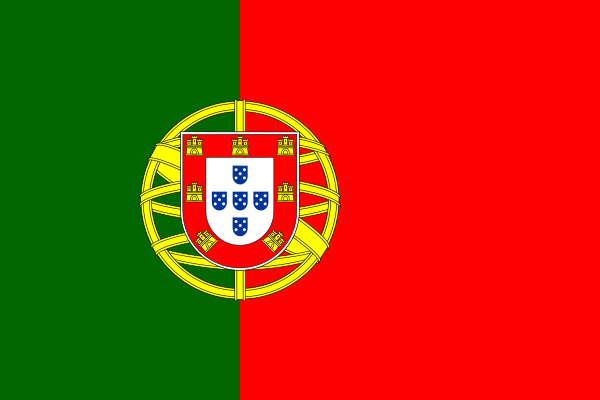

The Messi vs Ronaldo goals market belonged to Lionel Messi: eight World Cup goals and a run to the final dwarfed Ronaldo's Portugal, out in the last 16.
The verdict the market should have reached, and did: back Lionel Messi, and never flinch. The Messi vs Ronaldo goals head-to-head was decided less by finishing quality than by survival, and Argentina's march to the final against Portugal's early exit turned a coin-flip framing into a rout. Messi finished on 8 World Cup goals; Cristiano Ronaldo's Portugal were gone by the last 16.
This was always a market about fixtures, not flair. Two 38-plus-year-old icons with similar penalty responsibilities and similar diminished output per 90 minutes were never going to separate themselves on raw instinct. The separator was obvious if you looked past the names: whichever side played more matches would almost certainly produce the higher scorer, and Argentina were built to go deep.
If you priced the run rather than the reputation, you had the whole thing solved weeks before the knockouts. Below is how the gap opened, why penalty duty was a red herring, and why the recency-bias crowd who leaned Ronaldo were trading the wrong variable.
Ad
How did the Messi vs Ronaldo goals market resolve?
It resolved for Messi, and not narrowly. Argentina's captain ended the tournament on 8 goals, the second-best haul of the entire World Cup behind only Kylian Mbappe's 10 and clear of the pack on 7. He scored in the group stage, through the knockouts, and carried that tally all the way to a goalless final against Spain.
Ronaldo, by contrast, never made the top-scorer conversation. Portugal finished second in Group K on 5 points, edged Croatia 2-1 in the round of 32, then ran into Spain and lost 0-1 in the last 16. That defeat froze Ronaldo's tally five rounds before Messi's did, and no late surge was coming once Portugal were on the plane home.
The chart below puts it in context: Messi's 8 sat near the very top of the goal charts, while Ronaldo did not register among the tournament's leading marksmen at all. That is not a one-goal squeaker; it is a chasm, and it was the predictable outcome of one team reaching the final and the other bowing out in the first knockout round proper.
Why did depth of run decide it?
Count the matches. Argentina won Group J with 9 points, then played five more games: past Cape Verde, Egypt (3-2), Switzerland, England (2-1 in the semi) and Spain in the final. That is eight World Cup matches in total. Portugal played five, and stopped at the last 16.
Three extra knockout rounds is three extra windows for a penalty, a set-piece, a tap-in or a trademark Messi finish. Even at a modest goal-every-other-game rate, the simple arithmetic of three additional fixtures was worth more than any plausible edge Ronaldo held as a pure number nine. The longer-run side almost always wins these head-to-heads, and Argentina were the deeper team on paper and in practice.
This is the heart of the angle: a goals head-to-head between two veterans is really a trade on which nation advances further. Pricing Messi was, in effect, pricing Argentina's route, and Argentina had the kinder bracket, the stronger spine and the finals pedigree to validate it. Portugal's path collapsed the moment they drew Spain, and with it so did Ronaldo's ceiling.
Anyone treating the two scorers as independent of their teams mispriced the market. The correlation between run length and goal tally is the dominant term in this equation, and it pointed one way from the start.
Did penalty duty actually matter?
It is the first thing sharp traders look for in a goals head-to-head, and here it was a wash. Both Messi and Ronaldo were their country's designated penalty taker, so any spot-kicks awarded fell to each man equally within his own matches. There was no asymmetry to exploit; the duty cancelled out.
What did not cancel out was volume. More matches meant more penalty opportunities, more dead-ball situations and more open-play chances, and Argentina's extra three rounds handed all of that to Messi. Penalty duty amplified the run-length edge rather than creating a separate one: the same job is worth far more over eight games than over five.
Role told the same story. Messi operated as a free creator who still finished and still stepped up for penalties, while Ronaldo's more static centre-forward role depended on service that a last-16 exit cut short. Neither role was decisive on its own; both were simply downstream of how long each side stayed in the tournament. The lesson for next time: if both men take the penalties, stop analysing the spot-kick and start analysing the bracket.
How Argentina's and Portugal's runs compared
Argentina were a finalist-grade side and behaved like one. Nine points from Group J, a survival job against Cape Verde, a 3-2 win over Egypt, a quarter-final past Switzerland and a 2-1 semi-final defeat of England carried them to a goalless final with Spain. Messi was involved at every turn, and the sheer number of high-stakes minutes is what let his tally climb to 8.
Portugal's run was respectable but short. Second in a competitive Group K, a 2-1 win over Croatia, and then the wall: Spain beat them 0-1 in the last 16. For a 41-year-old Ronaldo chasing goals, that is three or four fewer games than his rival got, and in a market measured purely by the scoreboard, missing games is fatal.
Put the two side by side and the market's logic writes itself. One team had a finals-calibre draw and the engine to use it; the other had a dangerous group and a brutal round-of-16 assignment. The goals head-to-head was never going to defy that structure, and it did not. Messi's 8 against a last-16 exit is exactly the scoreline the fixtures predicted.
The only way Ronaldo wins this is if Portugal outlast Argentina, and nothing in either side's profile suggested that was likely. The run gap was the market, and the run gap favoured Messi throughout.
Where the Ronaldo backers went wrong
The case for Ronaldo was always a recency-and-reputation play: a storied finisher, a man who scores in bursts, a name that feels like it belongs near the top of any goal chart. But feelings are not fixtures. The people leaning his way were pricing highlight reels instead of the one variable that mattered, which was how many games Portugal would actually play.
They also over-weighted the idea that a classic number nine out-scores a withdrawn creator. In a vacuum that argument has merit; across unequal match counts it collapses. Messi playing eight games as a goal-involved free man beats Ronaldo playing five as a starved target man every time, and that is precisely what happened.
The clean read was unglamorous: forget who looks more like a scorer, and back the player whose team is more likely to reach the final. That was Messi and Argentina, and the market that respected depth of run over finishing instinct cashed without drama.
Trade the World Cup markets on Polymarket
This one is settled, and it settled the way the smart read said it would: Messi's run to the final buried Ronaldo's last-16 exit, and the goals head-to-head was a lesson in pricing fixtures over fame. If you had the discipline to back the deeper run, you were on the right side the whole way.
The takeaway travels. On Polymarket you can trade the full 2026 World Cup board, and the same principle applies to every player-goals and head-to-head market: read the bracket first, the name second. Prices move fast as results land, so always check the live market before you commit rather than trusting a stale snapshot.
New to the platform? There is a live offer worth grabbing: Deposit $20, Get a $50 Trading Bonus with promo code TGSWC. Head to Polymarket, load up the World Cup markets, and trade the angle you have an edge on. The Messi vs Ronaldo book is closed; the next mispriced head-to-head is already waiting.
Frequently asked
Who won the Messi vs Ronaldo goals market at the 2026 World Cup?
Lionel Messi won it comfortably, finishing the tournament on 8 goals. Cristiano Ronaldo trailed well behind after Portugal were knocked out in the round of 16 by Spain.
How many goals did Messi score at the 2026 World Cup?
Messi scored 8 goals, the second-highest tally of the tournament behind Kylian Mbappe's 10 and level with Erling Haaland and Jude Bellingham on 7 was not enough to catch him.
Why did Messi beat Ronaldo in the goals head-to-head?
The decisive factor was how far each team went. Argentina reached the final and played eight matches, while Portugal were eliminated in the last 16 after only five, so Messi simply had far more games to score in.
Where can I trade the Messi vs Ronaldo goals market?
You can trade this market and the rest of the 2026 World Cup board on Polymarket. New traders can use the current offer: deposit $20 and get a $50 trading bonus with promo code TGSWC.
Did penalty duty decide the Messi vs Ronaldo market?
No. Both players were their nation's designated penalty taker, so spot-kick duty cancelled out. The gap came entirely from Argentina's longer run giving Messi more matches.