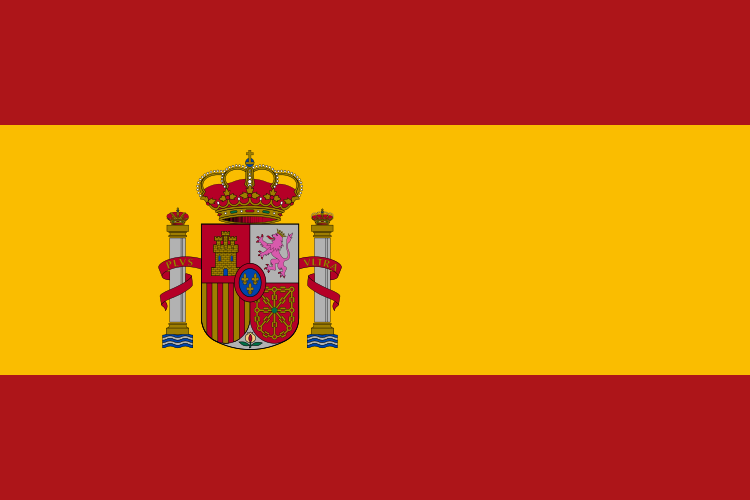
 ESP 16%
 FRA 12%
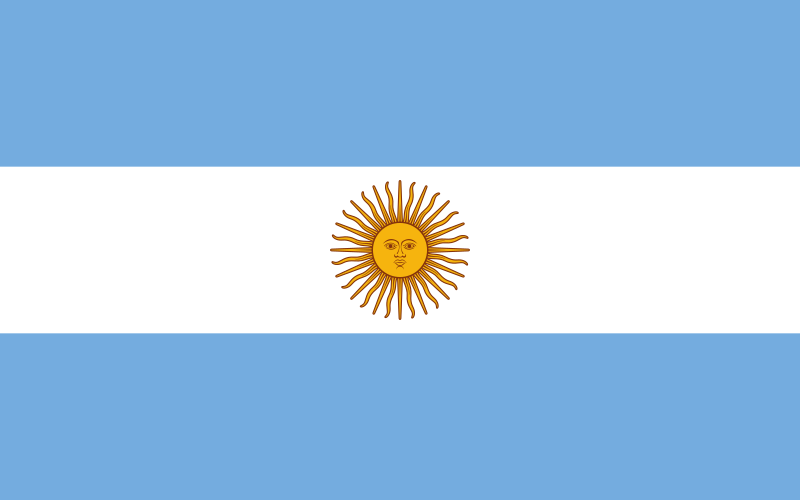 ARG 12%
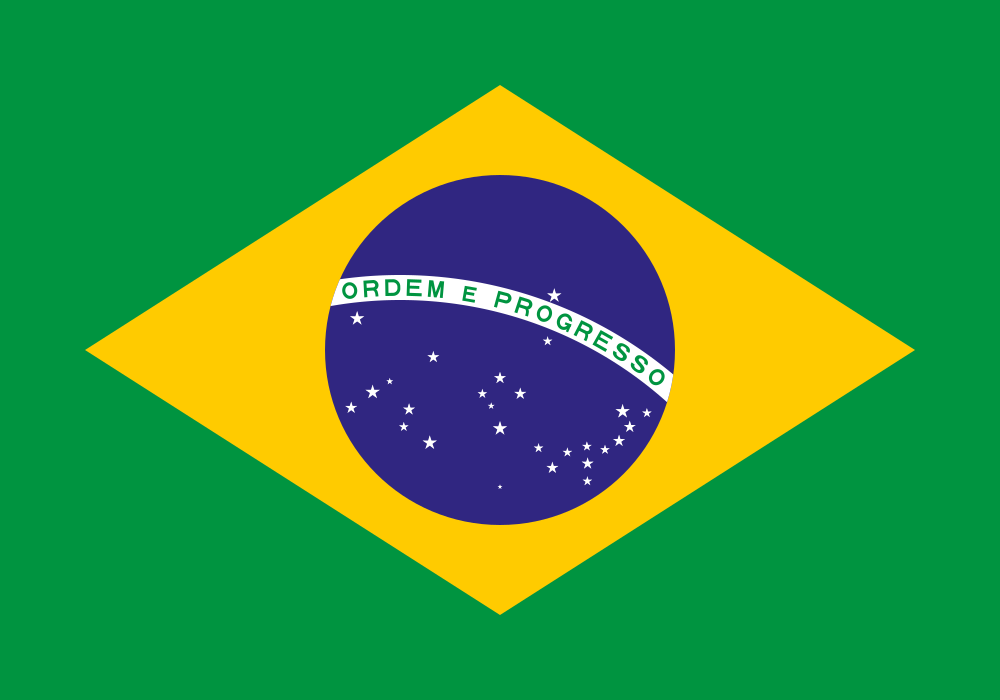 BRA 11%
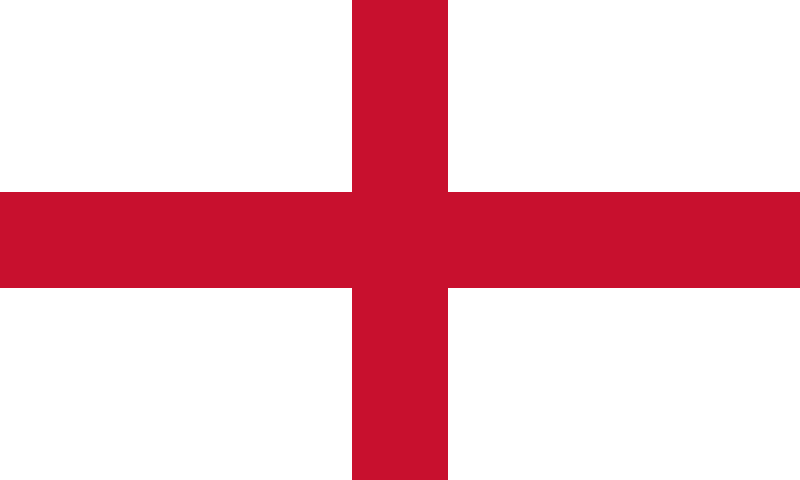 ENG 10%


New Zealand head to the 2026 World Cup as the lowest-ranked side at FIFA #85. Here is the squad, Chris Wood's role, the Group G draw and their realistic ceiling.
New Zealand can realistically reach the round of 32, but no further. As the lowest-ranked team at the 2026 World Cup (FIFA #85, title odds 0.1%), the All Whites are overwhelming outsiders in Group G, and their path to the knockout rounds runs almost entirely through the new format's third-placed lifeline rather than a top-two finish.
That is not a slight; it is context. New Zealand are Oceania's standard-bearers, a side that qualifies comfortably from its own confederation but then steps up into a tournament where every other nation has been hardened by tougher continental competition. The gap between #85 and a top-30 side is enormous, and Group G hands them three of them in Belgium, Iran and Egypt.
What follows is a clear-eyed look at the squad, the man it is built around in Chris Wood, the Group G draw, the third-place mathematics that could rescue them, and an honest verdict on how far this team can travel in North America.
Ad
Where do New Zealand rank among the 48 qualifiers?
New Zealand arrive in North America as the single lowest-ranked team in the entire field. At FIFA #85, they sit below fellow minnows Curaçao (#82) and Haiti (#83), and a full 76 places behind world #9 Belgium, the team they must measure themselves against in Group G. Their 0.1% title odds are the joint-lowest at the tournament, shared with the other debutants and small nations.
Ranking is not destiny, but it frames expectations. The FIFA points gap exists because Oceania's qualifying path offers fewer competitive fixtures against elite opposition than the European, South American or African routes. New Zealand can dominate their region without ever facing a side of Belgium's or Iran's calibre, which leaves them under-tested when the World Cup finally pits them against the world's best.
The flip side is that New Zealand consistently get to the tournament. Reaching a World Cup at all is an achievement Oceania's other nations cannot match, and the All Whites have built an identity around making themselves awkward, organised opponents who refuse to be embarrassed. In 2010 that produced three draws and an unbeaten group-stage exit, one of the great underdog footnotes in World Cup history.
The challenge in 2026 is to convert that resilience into something tangible: a first-ever World Cup win, and ideally a knockout place. With the field expanded to 48 teams and 32 going through, the door is fractionally more open than it has ever been for a side ranked this low.
Who are New Zealand's key players?
Chris Wood is the player everything revolves around. New Zealand's Premier League striker is the team's talisman, its penalty-box presence and, in most matches, its only realistic route to a goal. When the All Whites defend deep and look to spring forward quickly, the plan is to find Wood early and trust his strength and finishing to manufacture a chance from very little.
That reliance is both a strength and a vulnerability. On his day, Wood gives New Zealand a genuine top-flight finisher that few sides ranked near #85 can boast, and one clinical moment from him could be the difference between defeat and a famous point. But if opponents nullify him, the supply of alternative goalscoring threats thins out quickly, and New Zealand can struggle to create.
Around their focal point, New Zealand's strength is collective rather than individual: a disciplined defensive block, honest running and set-piece organisation at both ends. This is a team that wins admirers through structure and work rate, not through a roster of household names. The goalkeeper and centre-backs carry an outsized burden, because the game plan invites pressure and asks the back line to absorb long spells without the ball.
For New Zealand to spring a surprise, the supporting cast must protect Wood's energy and deliver him service in the rare windows they get forward. Stay compact, frustrate better sides, and let their one elite attacker do the rest: that is the blueprint, and it is the only one that gives a #85 team a puncher's chance against #9 Belgium.
How tough is Group G for New Zealand?
Group G is unforgiving. Belgium (FIFA #9, title odds 3%) headline the pool as clear favourites, a transitional but still talent-rich side that should top the group comfortably. Behind them, Iran (#21, 0.5%) are Asia's most consistent qualifiers, and Egypt (#29, 0.6%) bring Mohamed Salah and genuine pedigree. New Zealand at #85 are the obvious bottom seed.
The ranking spread tells the story. Belgium, Iran and Egypt all sit inside the world's top 30; New Zealand are 56 places adrift of the next-lowest side in their own group. On paper this looks like a procession for the three favourites and a struggle for survival for the All Whites, who will likely be underdogs in all three fixtures.
Yet there is nuance. Iran have qualified repeatedly without ever winning a knockout-stage place, and Egypt's fortunes lean heavily on Salah, so neither is invincible. If New Zealand can take one of these two to a low-scoring, set-piece-decided contest, the margins narrow. A single Chris Wood goal in a 1-0 or 1-1 game is exactly the kind of result that keeps a campaign alive.
Realistically, though, New Zealand's target is points rather than placings. Avoiding heavy defeats matters in the 48-team format, where goal difference can decide which third-placed teams advance. Every clean sheet, every narrow loss kept to a single goal, improves the maths that the All Whites will need on their side.
Can New Zealand reach the knockout stage?
The expanded format is New Zealand's best friend. With 48 teams across 12 groups, the top two from each group plus the eight best third-placed sides advance to a 32-team round of 32. That means New Zealand do not need to beat Belgium, Iran or Egypt to the top two; they need to finish third and assemble a competitive points-and-goal-difference record against the other group runners-up.
In practice, a third-placed side often needs around three to four points to make the cut, which for New Zealand likely means one win and one draw, or three draws of the kind they managed in 2010. That is a demanding ask against this group, but it is no longer the near-impossibility it was in the old 32-team structure, where only the top two survived.
Goal difference is the hidden battleground. Because the best third-placed teams are separated by fine margins, New Zealand cannot afford to ship four or five against Belgium and expect to creep through on points alone. Defensive discipline across all three matches, not just heroics in one, is what gives a side ranked 85th a mathematical route to the last 32.
It would take an upset and a degree of luck, but it is a defined, achievable target. Sneaking through as a third-placed team would represent New Zealand's deepest World Cup run, surpassing even the cherished unbeaten exit of 2010.
How far will New Zealand actually go? The verdict
The honest verdict: New Zealand are most likely to exit at the group stage, but with a real, if slim, chance of becoming one of the eight best third-placed teams and reaching the round of 32. Their ceiling is that single knockout appearance; the round of 16 and beyond is beyond a side carrying title odds of 0.1% and ranked 85th in the world.
The most meaningful prize within reach may be simpler than qualification: a first World Cup victory in the nation's history. New Zealand have never won a finals match, and beating one of Iran or Egypt would be a landmark that resonates well beyond the tournament, regardless of whether it is enough to progress.
Everything hinges on the familiar New Zealand formula. Defend with discipline, keep matches tight, protect Chris Wood and strike on the rare chances that come. Execute that against Belgium's superior talent and you limit the damage; execute it against Iran or Egypt and you might just nick the points that change the whole complexion of the group.
Expect New Zealand to be competitive, awkward and well-organised rather than spectacular. If they go home unbeaten again, the 2010 comparison will write itself; if they go home having finally won a World Cup game, or even sneaked into the round of 32, this generation will have written a new chapter for the All Whites.
Frequently asked
How far can New Zealand realistically go at the 2026 World Cup?
New Zealand's realistic ceiling is the round of 32, reached as one of the best third-placed teams in the expanded 48-side format. A top-two finish in Group G is unlikely given they are ranked 85th, far below Belgium, Iran and Egypt.
Who is New Zealand's best player at the 2026 World Cup?
Chris Wood is New Zealand's standout player and central striker. The side is built to defend deep and feed Wood in transition, making his finishing the team's single biggest source of goals.
What group is New Zealand in at the 2026 World Cup?
New Zealand are in Group G alongside Belgium (FIFA #9), Iran (#21) and Egypt (#29). They are the lowest-ranked side in the pool at #85, making them clear outsiders.
Why are New Zealand the lowest-ranked team at the World Cup?
New Zealand sit 85th in the FIFA rankings, below every other qualified nation, partly because Oceania offers a weaker pool of opponents than Europe, South America or Africa. Their 0.1% title odds reflect that gap in competitive exposure.
Have New Zealand ever won a World Cup match?
New Zealand are still chasing a first World Cup victory; their most famous campaign came in 2010, when they drew all three group games and went home unbeaten but eliminated. A win in 2026 would be a landmark moment for the All Whites.