 ESP 16%
 FRA 12%
 ARG 12%
 BRA 11%
 ENG 10%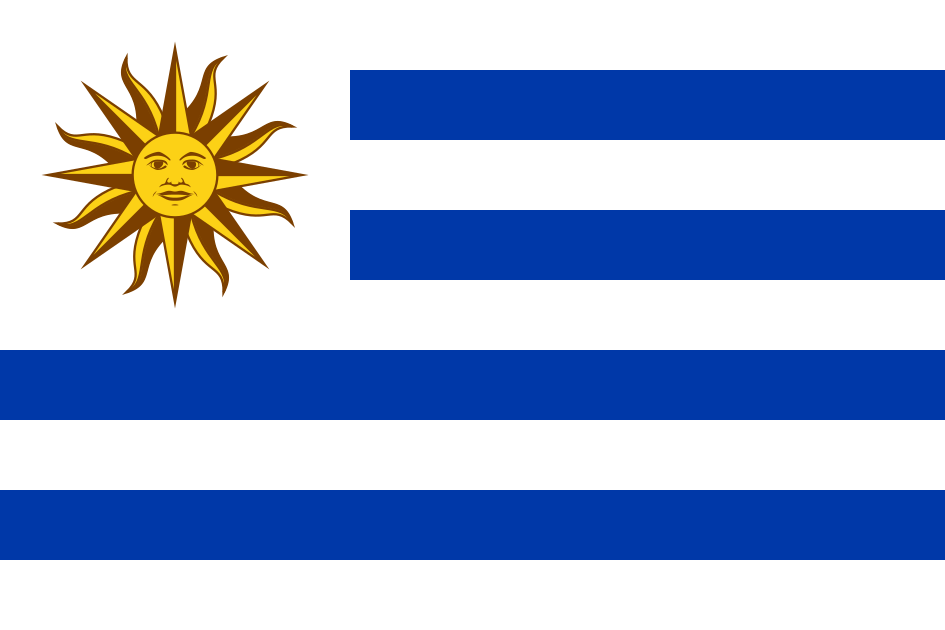
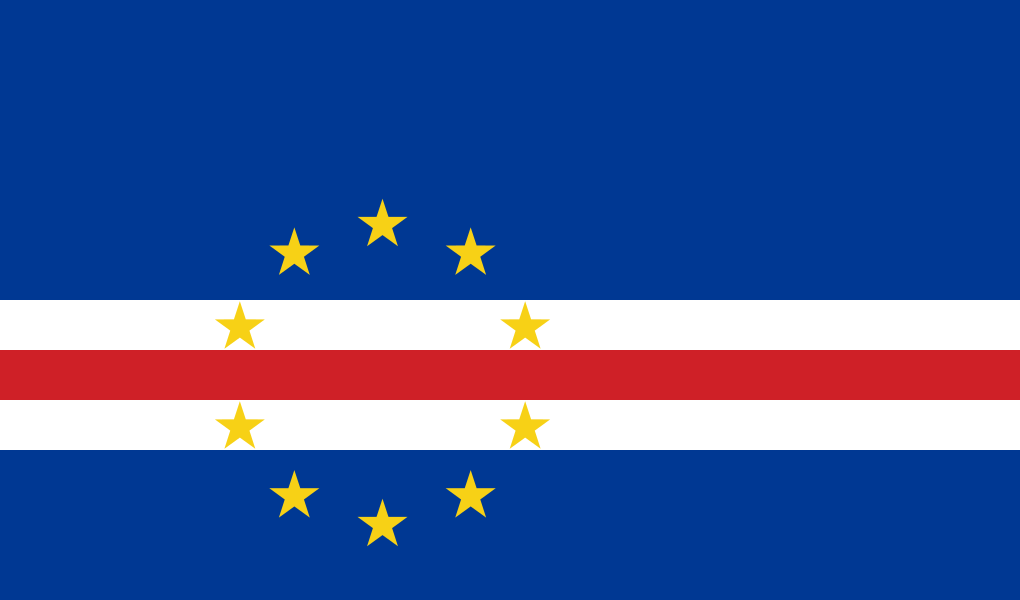

Uruguay 2-2 Cape Verde: World Cup debutants fought back to share Group H spoils with CONMEBOL's Uruguay, proving 52 ranking places counted for little.
What did the 2-2 scoreline really say about the ranking gap?
Uruguay 2-2 Cape Verde, and the single most important takeaway is that a 52-place ranking gap did not show up on the pitch. The Celeste sat at FIFA #17 with 4% title odds; Cape Verde arrived as debutants at #69 with 0.1%. On paper this was a mismatch. On the scoreboard it was a level contest that Cape Verde could argue they should have won.
The margin angle is the whole story here. Rankings predict a comfortable home win; the result returned a shared point. When a side ranked more than fifty places lower scores first, recovers from a goal down and forces two late saves, the numbers that framed the fixture stop being descriptive and start looking decorative.
A draw is a draw in the table, but the distribution of the goals matters. Cape Verde led, were pegged back, fell behind, and levelled again. That is not the shape of a team hanging on against superior opposition; it is the shape of two sides separated by far less than their rankings claimed.
Ad
How did Cape Verde turn a ranking mismatch into a point?
Cape Verde struck first. Kevin Pina curled a free kick into the bottom right corner on 21 minutes, a set-piece moment that put the lowest-ranked side in this group ahead against one of the tournament's seeded names. For a debutant nation, taking the lead against Uruguay was already a statement about how little the gap meant.
When the equaliser came at 2-2, it came quickly and from the bench. Hélio Varela had been on the pitch barely three minutes, introduced in the 58th-minute double change, when he drove a right-footed shot from outside the box into the centre of the goal on 61 minutes. A substitute from the underdog side cancelling out the favourites underlines how thin the quality gap was on the night.
The closing exchanges reinforced the point rather than softening it. Laros Duarte twice tested Fernando Muslera from distance deep in stoppage time, the first assisted by Ryan Mendes, and on both occasions the goalkeeper held firm. A side supposedly outclassed by 52 ranking places finished the match as the one chasing a winner.
Did Uruguay's quality edge actually show?
It showed in a six-minute window before half-time, and barely beyond it. Maxi Araújo headed Uruguay level from very close range on 44 minutes, then turned provider in first-half stoppage time, nodding the ball into the path of Agustín Canobbio, who finished from the centre of the box for 2-2 becoming 2-1 at the interval.
That burst was the clearest evidence of the gap the rankings promised: a quick one-two of goals that briefly made the favourites look like favourites. The problem for Uruguay is that it did not last. Once Cape Verde equalised after the break, the Celeste could not reassert the control their seeding implied.
Uruguay's changes brought attacking intent, with Darwin Núñez and Nicolás de la Cruz introduced on 70 minutes, yet the breakthrough never arrived. For a side carrying 4% title odds and a reputation for intensity, failing to beat a debutant nation at home in the table is the kind of result that rankings simply do not forecast.
What does the booking count tell us about the margin?
Discipline is another place to read how level this felt. Uruguay collected cautions for Rodrigo Bentancur on 20 minutes and Mathías Olivera on 58 minutes, the marks of a higher-ranked side having to foul and chase rather than dictate.
Cape Verde, for their part, were booked through Sidny Lopes Cabral inside the first five minutes and Diney Borges late in stoppage time, the latter the booking of a team managing a result they wanted to keep. The cards do not suggest a side clinging on; they suggest a contest fought on equal terms throughout.
None of this reads like a fixture decided by a 52-place chasm. When the favourites are the ones picking up nervy bookings and the underdogs are the ones defending a draw they helped earn twice over, the ranking differential has stopped explaining anything.
What does the result mean for Group H?
For Cape Verde, a point against a CONMEBOL heavyweight on debut is a marker that travels. It tells the rest of Group H that the Blue Sharks will not be brushed aside on reputation, and that their FIFA #69 status undersold them on this evidence.
For Uruguay, two dropped points are the more uncomfortable number. A side with genuine knockout-stage pretensions and 4% title odds will have expected three points from this matchup, and the table now reflects a stumble rather than the statement their ranking advantage suggested.
The broader lesson sits squarely on the margin angle: in this group, the pre-match hierarchy is not a reliable guide. A 52-place gap produced a 2-2 draw, and any side reading too much into the rankings before facing Cape Verde has just been warned.
Frequently asked
What was the final score of Uruguay vs Cape Verde?
Uruguay drew 2-2 with Cape Verde in their Group H match on 21 June 2026, with the half-time score 2-1 to Uruguay.
Who scored in Uruguay 2-2 Cape Verde?
Kevin Pina (21') and Hélio Varela (61') scored for Cape Verde, while Maxi Araújo (44') and Agustín Canobbio (45'+6') scored for Uruguay.
Was the draw an upset given the FIFA rankings?
Yes, in expectation terms: Uruguay sat 52 places higher at FIFA #17 with 4% title odds, against debutants Cape Verde at FIFA #69 with 0.1%, so a point for the Blue Sharks defied the gap.
How did Cape Verde get back into the game?
After trailing 2-1 at the break, substitute Hélio Varela equalised in the 61st minute with a right-footed shot from outside the box.