 ESP 16%
 FRA 12%
 ARG 12%
 BRA 11%
 ENG 10%

How days of rest between games could shape fortunes at the 2026 World Cup, from squad depth at France and Spain to recovery worries for ageing Croatia.
Rest days will quietly decide more ties at the 2026 World Cup than any tactical tweak: the teams that recover best between games, and the squads deep enough to rotate without dropping quality, hold a real and measurable edge. Expect that edge to surface most in the knockouts, where a side with four days off can punish an opponent staggering out of extra time on three.
This is not a marginal concern. The tournament has ballooned to 48 teams and 104 matches spread across 39 days, the longest and most physically demanding World Cup ever staged. Lift the trophy and you will have played eight matches, several of them in the searing heat of June and July across three vast host nations.
The contenders with the resources to manage all that are the usual suspects. France sit top of the FIFA rankings and carry 12% title odds, Spain lead the betting at 16% from second in the world, and England (#4, 10%) are not far behind. What unites them is not just star quality but the strength in reserve to keep legs fresh when the schedule bites.
The flip side is just as important. Sides leaning on ageing talisman figures, Croatia's Luka Modric and Portugal in Cristiano Ronaldo's likely last dance among them, will find the recovery maths far less forgiving the deeper they go.
Ad
Why does recovery matter more at the 2026 World Cup?
The simple answer is volume. The previous format crowned a champion after seven games; the 2026 winner must navigate eight, and the tournament window has been stretched to accommodate the extra round of 32. More games means more cumulative load on muscles and tendons, and the players arriving in North America have already drained a full club season behind them.
The expanded calendar is a paradox. The tournament is longer in total, yet the rest windows for an individual team can be tighter, because matchdays are packed densely to fit 104 fixtures into the schedule. A team chasing the trophy cannot simply pace itself across 39 lazy days; it must hit peaks every few days against rising opposition.
Climate sharpens the problem. Matches in Mexican altitude and southern US summer heat tax the body far more than a temperate kick-off, slowing the recovery of glycogen stores and lengthening the time needed to flush fatigue from the legs. A three-day turnaround in cool conditions is not the same as a three-day turnaround after 90 minutes in 35-degree heat.
All of this pushes squad management to the centre of the contest. Coaches who rotate intelligently in the group stage, banking minutes in players' legs, will arrive in the knockouts fresher than rivals who ran their first XI into the ground chasing early wins.
Which teams have the squad depth to rotate?
Depth is the clearest defence against fatigue, and here the elite separate themselves. Spain, the reigning European champions and 16% title favourites, can change six players without the quality falling off a cliff. France, ranked first in the world, are similarly blessed, with Kylian Mbappe leading an attack that has genuine match-winners on the bench.
England, fourth in the FIFA rankings and carrying 10% title odds under Thomas Tuchel, belong in the same conversation. So too do Germany (#10, 8%), whose revival around Florian Wirtz is built on a broad pool of Bundesliga-hardened talent. These are the sides that can treat the group stage as a chance to spread minutes rather than a sprint.
The value of that depth compounds. A coach who can rest a key midfielder in a dead-rubber final group game buys that player an extra recovery cycle worth more than any tactical plan, and arrives at the round of 16 with fresher legs than an opponent who could not afford to rotate.
By contrast, the mid-tier nations face a cruel bind. To compete with the favourites they often need their best XI on the pitch every game, which means no hiding place when the fixtures pile up. Their stars will simply have to play through accumulating fatigue, and that gap tends to widen precisely when the matches get hardest.
Which contenders are most at risk from fatigue?
The teams most exposed are those built around brilliant but ageing cores. Croatia, ranked 11th and carrying 2% title odds, lean once more on Luka Modric for one final golden-generation push. His football intelligence is undimmed, but recovery between high-intensity games is exactly where the years tell, and Croatia's recent deep runs have leaned heavily on extra-time stamina.
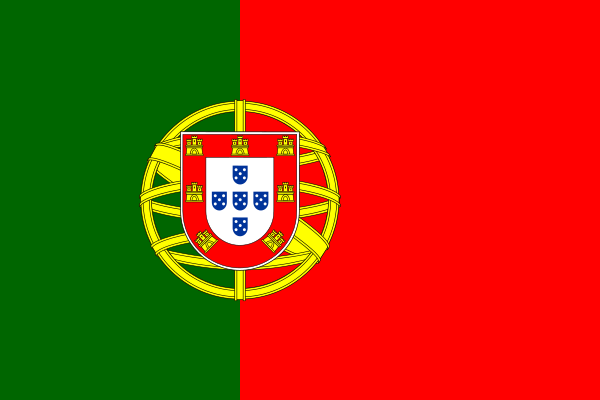
Portugal face a version of the same question. Fifth in the world and 7% to win it all, they pair a golden supporting cast with Cristiano Ronaldo's likely farewell. Managing his minutes, and the minutes of the senior heads around him, across a potential eight-game grind will test the coaching staff as much as any opponent.
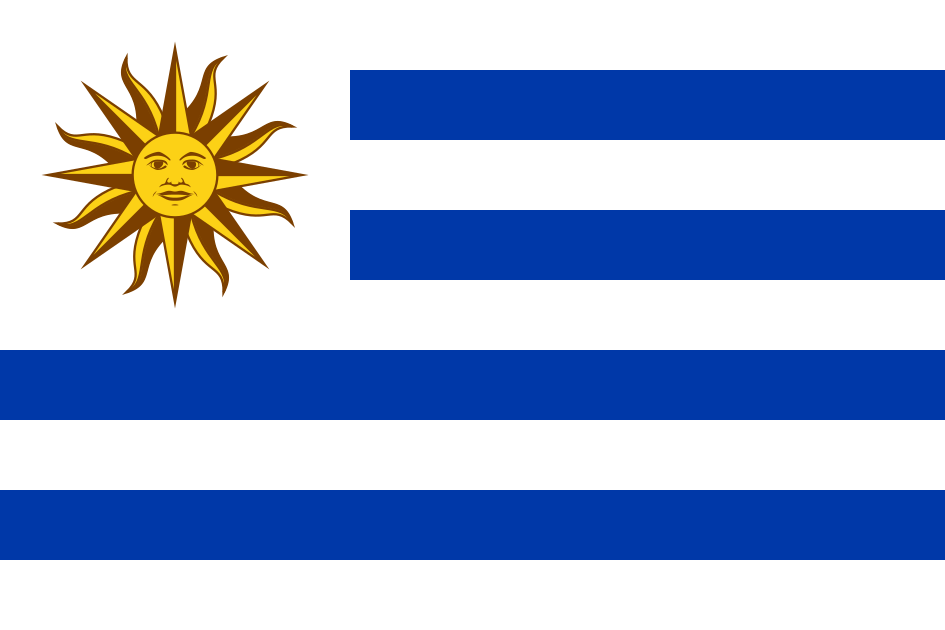
Uruguay are a different kind of risk. Marcelo Bielsa's Celeste, ranked 17th with 4% title odds, play an intense, high-pressing style that is gloriously effective and brutally demanding on the legs. That approach is sustainable over three group games; sustaining it across a full knockout run on shrinking rest is a far steeper ask.
Even physically gifted sides are not immune. The deeper a team goes, the more the format's accumulated load matters, and any squad that has burned through its frontline players early will feel the bill come due in the quarter-finals and beyond.
How do uneven rest days emerge in the knockouts?
The group stage is broadly even, but the knockouts manufacture imbalance. The new round of 32 adds an extra fixture before the last 16, and the precise spacing of those games means one side can arrive at a tie with a full day more rest than its opponent. Over a single knockout match, that gap is significant.
Extra time is the great leveller in reverse. A team that needs 120 minutes and a penalty shootout to advance does not just play 30 extra minutes; it pays a recovery cost that can effectively erase a day of rest before the next round. Face a fresh opponent who won inside 90 and the deficit is real in the closing stages.
Qualification as a third-placed side adds another wrinkle. With the best third-placed teams progressing, some nations will have their round-of-32 pathway confirmed late and on different timelines, creating subtle differences in how many clear recovery days each side banks before the first knockout game.
None of this is visible on a results table, but it shapes outcomes. When two well-matched teams meet, the one carrying an extra rest day or fresher legs from a comfortable previous win holds an edge that often decides tight, cagey knockout football.
What does a day of rest actually do for a player?
Recovery is not vague wellness; it is measurable physiology. After a high-intensity match, players carry depleted glycogen stores, microscopic muscle damage and elevated fatigue markers that take days, not hours, to normalise. Each additional rest day allows more of that damage to repair and more energy to be restocked.
Sprint capacity and high-speed running are the first qualities to suffer when recovery is cut short, and those are exactly the actions that decide modern matches: the recovery run to snuff out a counter, the burst in behind, the extra yard in a duel. A tired team does not necessarily play badly; it simply loses a fraction of its top-end output.
Injury risk climbs alongside fatigue. Compressed schedules are strongly associated with soft-tissue injuries, the hamstring and calf strains that can end a player's tournament. A squad forced to play its stars every three days without rotation is gambling with the availability of the very players it depends on.
This is why the marriage of depth and scheduling is so decisive. Rest days are the raw material of recovery, but only squads with the bench strength to use them, sitting starters without surrendering quality, can convert that raw material into an advantage on the pitch.
Who does the rest-and-recovery picture favour?
Put the pieces together and the conclusion is clear: the recovery battle tilts towards the deepest, best-resourced squads. France (#1, 12%), Spain (#2, 16%) and England (#4, 10%) can rotate through the group stage, protect key players and arrive in the knockouts with fresher legs than almost anyone else. In a tournament this long, that is a genuine edge, not a footnote.
The ageing contenders can still win it, but they must win it efficiently. Croatia, Portugal and Uruguay will be at their most dangerous if they avoid extra time and close out games early, banking recovery rather than spending it. The longer their matches run, the more the rest-day maths works against them.
For the chasing pack, the lesson is to be ruthless about minutes from the very first whistle. A mid-ranked side that rotates cleverly in a dead group game and dodges extra time can steal a recovery advantage over a more fancied but more fatigued opponent in the round of 16.
Trophies are not won on rest days alone, but they are frequently lost on them. The team that lifts the 2026 World Cup will almost certainly be one that managed its load shrewdly, dodged the extra-time trap when it could, and had the depth to keep its best players fresh when the schedule was at its most unforgiving.
Frequently asked
How many days of rest do teams get between World Cup 2026 games?
In the group stage most teams get three to four days between matches, but rest windows tighten in the knockouts, where an extra-time game can leave a side with effectively one less day to recover than a fresher opponent.
Which teams have the best squad depth to cope with fixture congestion?
France (FIFA #1) and Spain (FIFA #2) carry the deepest, most rotation-friendly squads, with England (#4) close behind. Their bench strength lets them rest starters without a steep drop in quality.
Why is recovery a bigger factor at the 2026 World Cup?
The expanded format runs to 104 matches across 39 days, so deep runs demand more games than ever. That raises the cumulative load on legs and makes every rest day between fixtures more valuable.
Which contenders are most at risk from fatigue?
Sides built around ageing cores, such as Croatia with Luka Modric and Portugal in Cristiano Ronaldo's likely farewell, plus an intense, high-pressing Uruguay (#17), are the most exposed to shrinking recovery windows late in the tournament.
Does extra time really change a team's chances in the next round?
Yes. Thirty extra minutes plus the recovery cost of a draining shootout can wipe out a day of rest, leaving players with heavier legs against a fresher side in the following round.