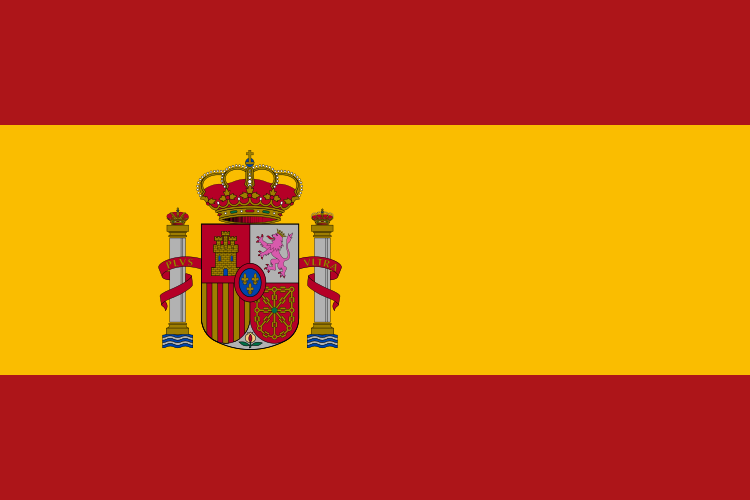
 ESP 16%
 FRA 12%
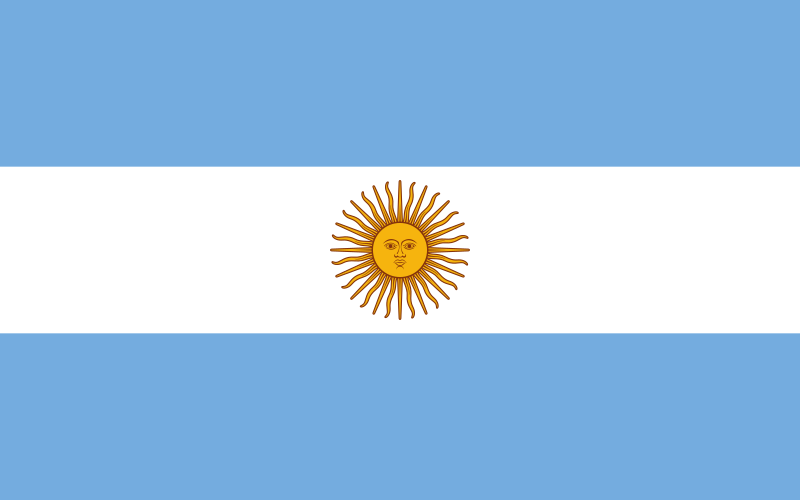 ARG 12%
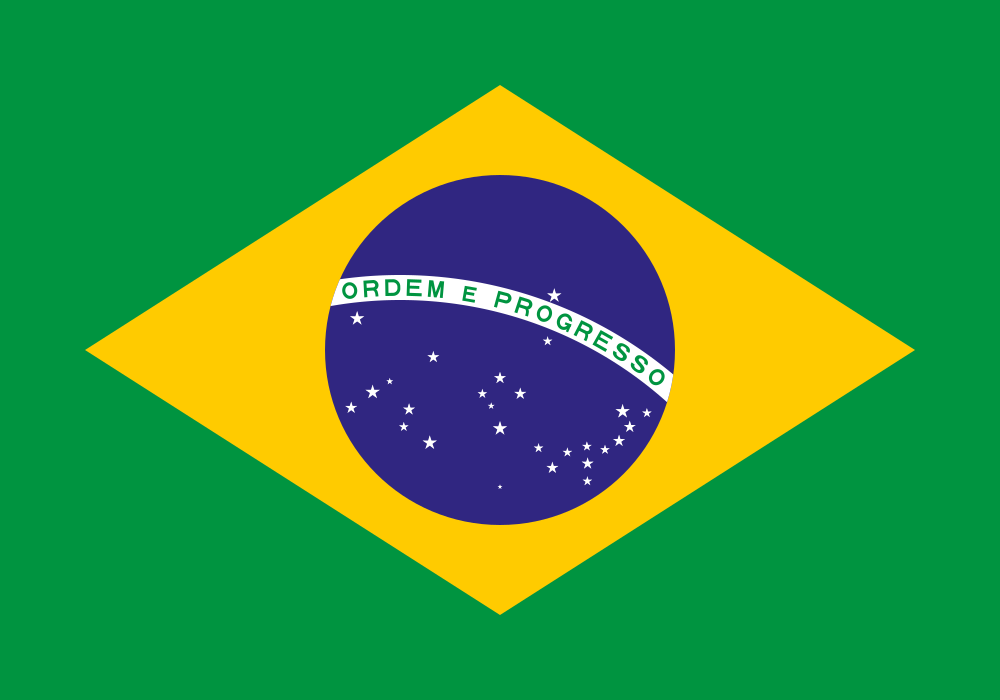 BRA 11%
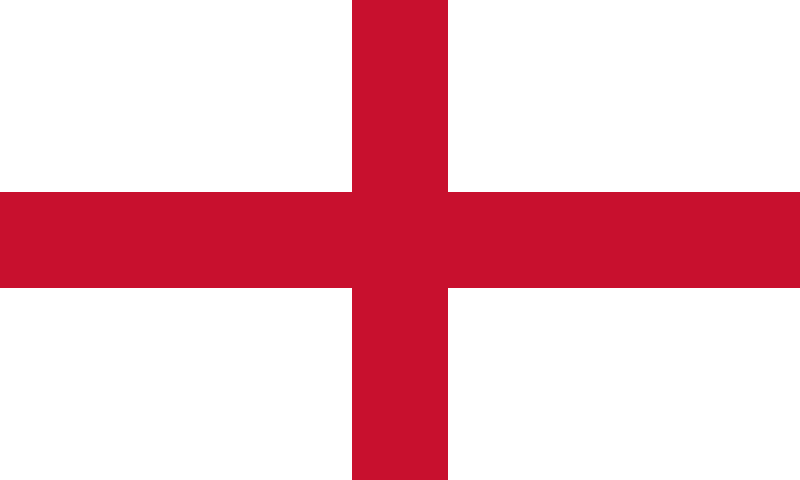 ENG 10%
The World Cup 2026 Bronze Ball is the overlooked award: back Harry Kane, talisman of bronze medallists England, over the Mbappe and Messi names the crowd fixates on.
Back Harry Kane for the 2026 World Cup Bronze Ball. With the tournament complete, England finished third, the highest place of any side that did not reach the final, and Kane captained them there while scoring six goals; that is precisely the profile the Bronze Ball rewards, yet the market is busy pricing Golden Boot winner Kylian Mbappe and finalist Lionel Messi instead.
This is the overlooked award of the whole tournament. The Golden Ball and Silver Ball soak up the headlines because they attach to the champion and the finalists, so the crowd anchors on the biggest names and the biggest goal tallies. The Bronze Ball is different: it is the vote that slips down to the standout of a leading semi-finalist, and that is where the value sits.
The trap is treating this like the Golden Boot. It is not. Voters are not simply reading off the scoring chart; they are rewarding overall impact plus how far a player carried his team. Once you frame it that way, the England captain who led the bronze medallists home is far better positioned than a premium name who has a stronger claim on one of the awards above him.
Ad
What actually wins the World Cup Bronze Ball?
Start with what the Bronze Ball actually measures. It is not third on the goalscoring list; it is the third-best player of the tournament as judged by the media vote handed out at the final. That is a subtle but crucial distinction, because it lets team success, leadership and narrative pull a player up the order in a way the Golden Boot never allows.
History tells you where the Bronze tends to land. The Golden Ball almost always attaches to the champion or a finalist, and the Silver to the other headline act at the very top. By the time voters reach the Bronze, the obvious two names are gone, and the ballot frequently rewards the best player from the leading side that fell short of the final, the team that made the semis but did not win it.
Apply that template to 2026. Spain are champions, so their standout is a Golden or Silver Ball candidate. Argentina lost the final on penalties, so Messi is a Silver, even Golden, contender rather than a Bronze one. That leaves the two losing semi-finalists, France and England, as the natural Bronze pool. And of those two, England finished higher, taking the bronze medal by beating France 6-4 in the third-place match.
So the profile is specific: the leader of the highest-placed non-finalist. That is England. Read the market through that lens and the question is not whether to back a France or England name over the champions and finalists; it is which England name the crowd is ignoring.
Why Harry Kane fits the Bronze Ball profile
Harry Kane checks every box. He is the captain of the bronze medallists, he scored six goals across the tournament, and he led England through a semi-final and out the other side into a winning third-place match against France. When voters reward a deep run with a figurehead, the senior captain who lifted the bronze medal is the name that keeps appearing on ballots.
The counter you will hear is that Jude Bellingham outscored him and is England's flashier attacker. That is true on the goal chart, but it actually helps Kane's case at the margins: a split English vote is exactly why the whole England claim gets underpriced, and when voters look for the defining figure of a bronze-medal campaign, they gravitate to the captain and central striker rather than dividing the credit.
There is also the recency of the finish to consider. England's tournament did not end in a deflating semi-final exit; it ended with a six-goal haul over France to claim third. That is a strong final image for a voter to carry into the ballot, and it lands better than a fourth-placed France side that was beaten in the semi and then lost the bronze match.
None of this requires Kane to have been the best player at the tournament. He does not need to be. The Bronze Ball only asks him to be the standout of the best-finishing side outside the final, and on the completed ladder that side is England, with Kane as its captain and leading man.
Why the crowd is looking the wrong way
The crowd is looking the wrong way because it reads this market off the goalscoring table. Mbappe finished top on ten, Messi on eight, Bellingham on seven; those are the names that jump out, so casual readers assume the individual awards simply follow that order. They do not, and the Bronze is where that assumption breaks down hardest.
Mbappe is a Golden Boot winner whose France side finished fourth. His obvious pull is toward the top awards on reputation and output, not the Bronze; paying up for him here means backing a name better suited to a market above this one. Messi is the same story in reverse: a beaten finalist is a Silver Ball archetype, and his price on the Bronze reflects hype rather than the likeliest slot he lands in.
The Spain contingent muddies it further. As champions, La Roja will attract Golden and Silver Ball votes for their leading lights, which pushes them out of the Bronze conversation rather than into it. Every vote the top of the ballot pulls toward a Spain player or Messi is a vote that clears space lower down for the standout of the highest non-finalist.
That is the inefficiency. The market crowds the names everyone recognises and thins out on the profile that actually wins the Bronze. When the obvious money is all pointed at the top two awards, the disciplined trade is the England captain sitting quietly in exactly the slot the Bronze tends to fill.
How did the award contenders actually score?
Here is the goalscoring shortlist the crowd reads off, and it is worth seeing plainly because it explains both the mispricing and the case for Kane. Mbappe leads on ten, Messi and Bellingham sit next, and Kane is a little further down on six alongside Dembele, with Spain's Oyarzabal on five.
Now overlay the finishing positions. Mbappe's France came fourth. Messi's Argentina lost the final. Oyarzabal's Spain won it. Kane's England finished third, the best of the non-finalists. The player whose goal count looks modest is attached to precisely the result the Bronze Ball rewards, which is the disconnect the market has not fully priced.
That is why the chart is a starting point, not the answer. If the Bronze Ball were decided on goals, you would take Bellingham over Kane inside England and move on. Because it is decided on impact plus team finish, the captain of the bronze medallists is the sharper read, and the goal gap between the two is small enough that it does not override the profile.
How should you price the Bronze Ball market?
To price this market, work from the top down. Assume the Golden and Silver Ball are spoken for by the champions and finalist tier, then ask who the media vote settles on for third. That single step removes most of the expensive names and points you at the standout of the best-finishing side outside the final, which is England and, we argue, Kane.
Weigh the factors the vote actually uses: overall impact, leadership, and how far a player carried his team, not just the raw goal count. On those inputs Kane grades strongly, because captaincy and a bronze-medal finish are exactly the intangibles that lift a six-goal striker above flashier names when voters fill the third slot.
Treat any figure you see as a moving snapshot rather than a settled price. This market resolves on the official FIFA vote announced around the final, so sentiment can swing on a single narrative before it locks in. If the crowd keeps pouring into Mbappe and Messi, the England angle only gets better value, not worse.
The discipline is to trade the profile, not the reputation. The names at the top of the goal chart are the comfortable picks; the Bronze Ball has a habit of rewarding the leader of the team that finished third. That is Kane, and that is the position worth taking before the vote confirms it.
Where can you trade the Bronze Ball market?
The bottom line: the Bronze Ball is the softest of the three individual awards, and the market is mispricing it by chasing the Golden Boot winner and the beaten finalist while ignoring the textbook profile. Harry Kane, captain of third-placed England and the standout of the highest-finishing non-finalist, is the pick the crowd is walking past.
You can trade the World Cup Bronze Ball market on Polymarket right now, ahead of the official vote. Because it is a prediction market, you are pricing implied probability against the field, and the softer a market is, the more room there is to take a position before it settles.
New to the platform? There is a live offer running: Deposit $20, Get a $50 Trading Bonus, using promo code TGSWC. That gives you the stake to price Kane against the Mbappe and Messi names before the vote is announced.
Check the live price before you commit, because it will keep moving as the narrative around the awards firms up. Our read is clear: the Bronze Ball rewards the leader of the best team outside the final, that team is England, and Kane is the value trade the crowd is ignoring.
Frequently asked
Who wins the 2026 World Cup Bronze Ball?
Our pick is Harry Kane. As captain of third-placed England, the highest-finishing side that did not reach the final, he fits the classic Bronze Ball profile far better than the goal-machine names dominating the chatter.
What is the difference between the Golden, Silver and Bronze Ball?
They are the top three players of the tournament as voted by the media. The Golden Ball usually goes to a champion or finalist, the Silver to the other standout at the top, and the Bronze often drops to the best player from a leading semi-finalist, which is why it is the softest market to read.
Is Harry Kane a good Bronze Ball pick?
Yes. Kane scored six goals and captained England to the bronze medal, beating France in the third-place match. Voters reward deep runs and leadership, and the bronze medallists' talisman is a textbook Bronze Ball winner.
Why not just back Mbappe or Messi for the Bronze Ball?
Mbappe won the Golden Boot and Messi reached the final, so both are more likely to land the Golden or Silver Ball, not the Bronze. Backing them here means paying a premium for names better suited to the awards above.
Where can I trade the Bronze Ball market?
You can trade the World Cup Bronze Ball market on Polymarket. New users can Deposit $20, Get a $50 Trading Bonus with promo code TGSWC, then price Kane against the field before the official vote settles it.