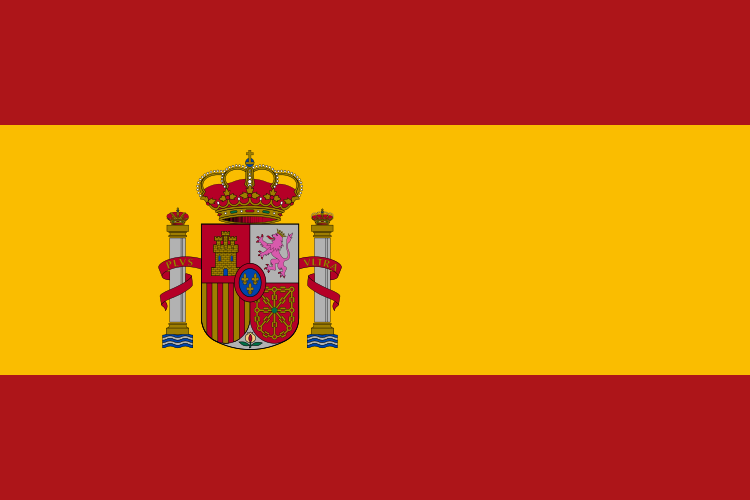
 ESP 16%
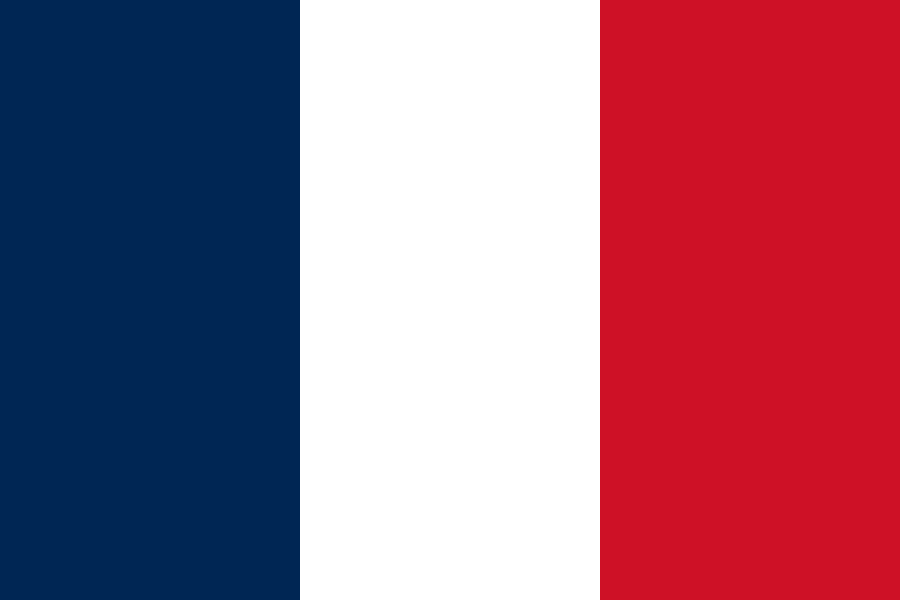 FRA 12%
 ARG 12%
 BRA 11%
 ENG 10%

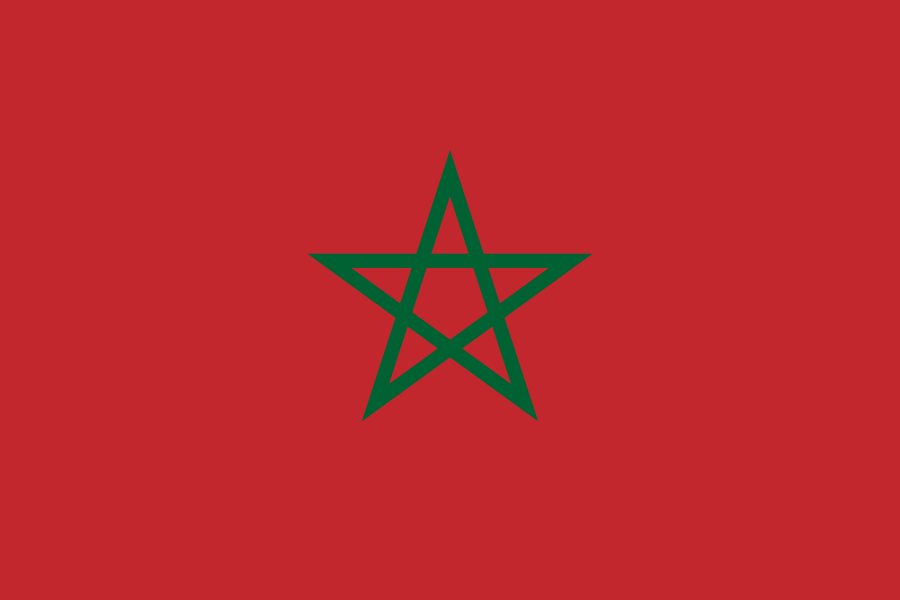
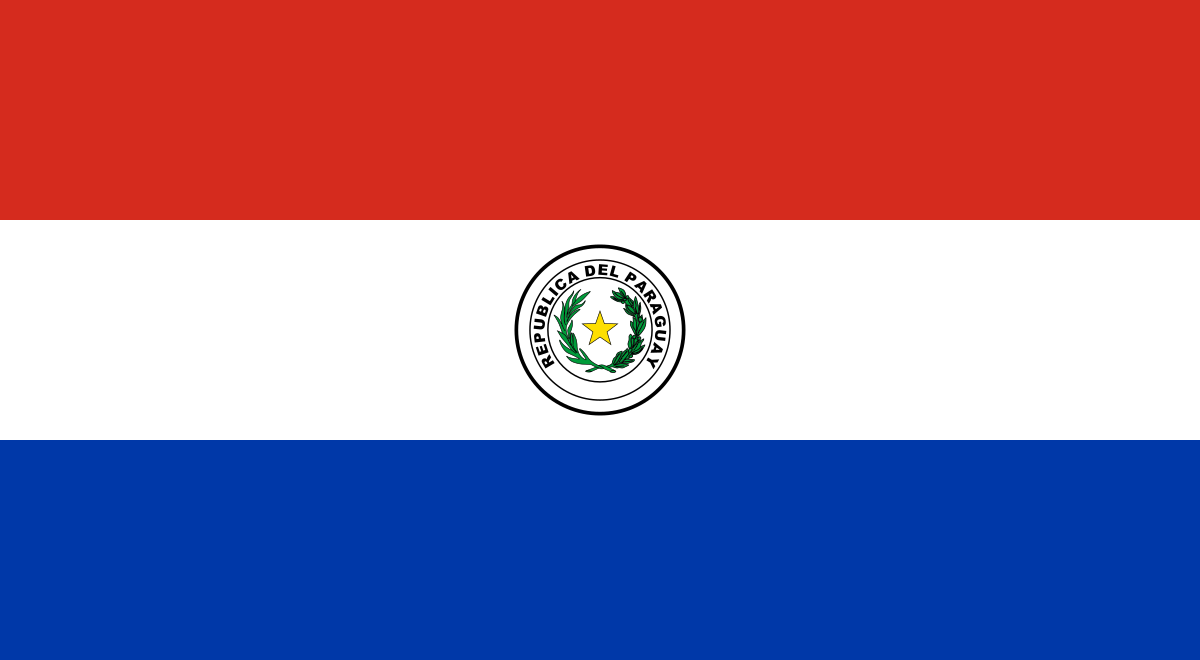
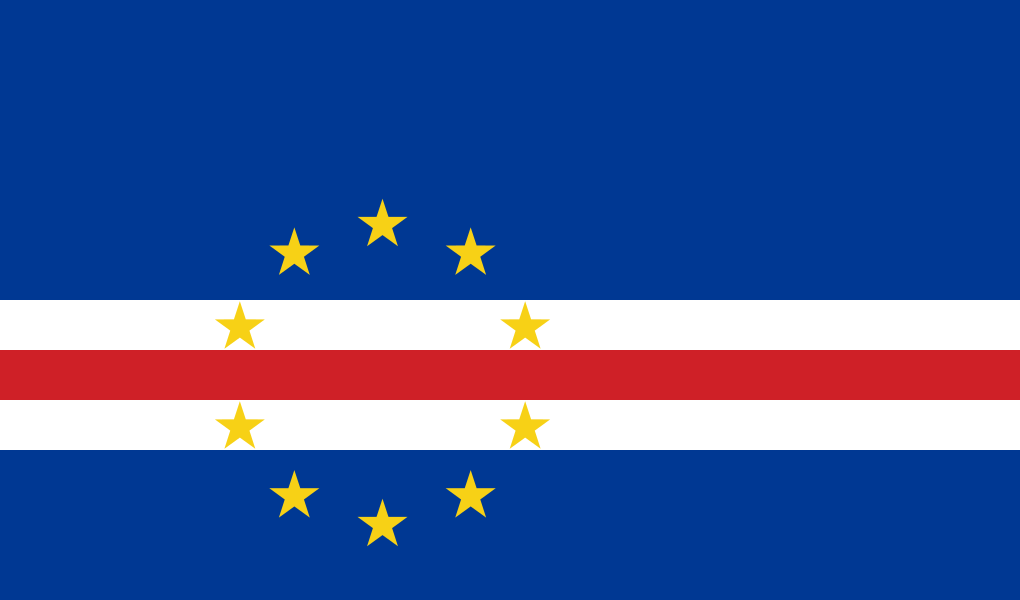
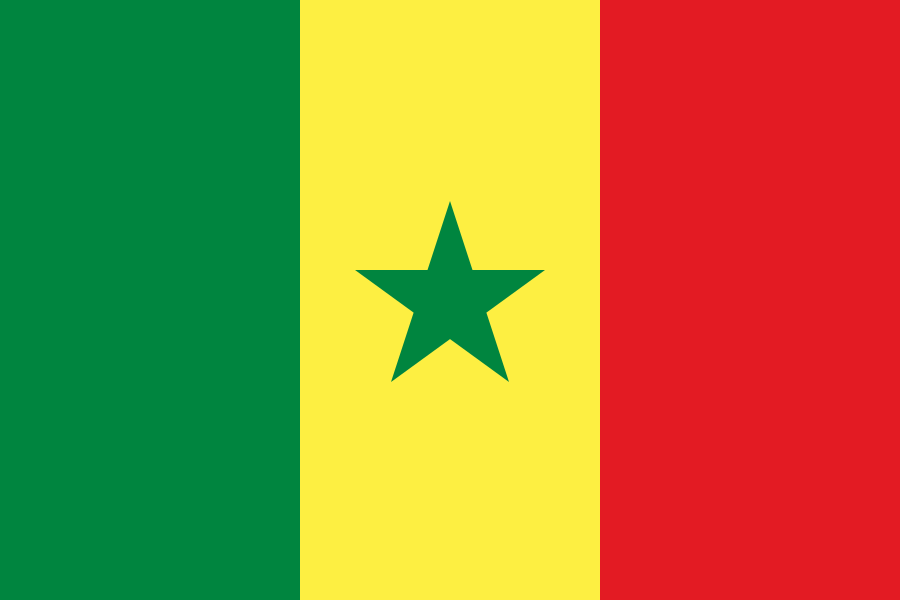

Switzerland, Norway and Morocco carried the dark-horse flag to the World Cup 2026 quarter-finals, but none cracked the semis. Here is how far each side ran.
Switzerland, Norway and Morocco ran furthest of the World Cup 2026 dark horses, each reaching the quarter-finals before bowing out. None of the tournament's outsiders broke through to the semi-finals: the last four was an all-heavyweight affair of Spain, France, England and Argentina, and the quarter-final proved to be the hard ceiling for every side that arrived without genuine title expectation.
That does not diminish what the outsiders achieved. Between them the dark horses eliminated Germany, Brazil and the Netherlands, took the reigning world champions to the wire, and turned the knockout bracket into a minefield for the favourites. The story of the tournament's second tier is a story of giant-killing, penalty nerve and defensive discipline, undone in the end only by the very best.
This is a ranking of how far each outsider travelled and why, from the three quarter-finalists down to the sides whose runs ended in the round of 32. The common thread is clear: the dark horses could beat almost anyone once, but stringing three knockout wins together against elite opposition was a bridge too far.
Ad
Why the quarter-finals were the dark-horse ceiling
The maths of the last four tells the story. Every semi-final place went to a team ranked inside FIFA's top four: Spain (#2), France (#1), England (#4) and Argentina (#3). The dark horses could ambush a favourite in a one-off tie, but the deeper they went, the more often they met a side with the squad depth to absorb a shock and respond.
Pre-tournament, none of the outsiders was given a serious title chance. Morocco led the pack at 3.5% despite their 2022 semi-final pedigree and FIFA #8 ranking, followed by Norway at 2%, Senegal at 1.2% and Switzerland at just 1%. Cape Verde, the FIFA #69 debutants, were rated at 0.1%, the longest shot of any knockout qualifier. Those numbers framed the achievement: reaching the last eight from that base was genuine overachievement.
The pattern of exits underlines how fine the margins were. Switzerland lost their quarter-final to Argentina only after a 1-1 draw, and Norway went out to England by the same 1-1 scoreline. Morocco were the exception, beaten more clearly 2-0 by France. In two of the three cases, a dark horse was one moment away from the semi-finals of a World Cup.
Switzerland: the penalty-proof grinders
Switzerland were the quietest of the quarter-finalists and, by title odds, the most improbable of the three to get there at just 1%. They topped Group B with seven points and a plus-four goal difference, edging out co-hosts Canada, then went about their knockout run in typically unfussy fashion.
A comfortable 2-0 win over Algeria in the round of 32 set up a last-16 test against Colombia, one of the form outsiders. Switzerland kept the door bolted for 120 goalless minutes and won the shootout 4-3, a result that captured their whole tournament: hard to break down, calm under pressure and lethal from twelve yards.
The run finally ended in the quarter-final against Argentina, and only just. The Swiss matched the reigning champions to a 1-1 draw before Argentina progressed, denying Switzerland a first semi-final since 1954. For a side built on a solid spine rather than star power, the last eight was a ceiling reached the hard way and thoroughly earned.
Norway and Morocco: the giant-killers
Norway's run carried the tournament's most eye-catching scalp. Erling Haaland and Martin Odegaard finally ended their nation's long absence from the big stage and made it count: after finishing runners-up to France in the Group I 'group of death', they saw off Ivory Coast 2-1, then stunned Brazil 2-1 in the round of 16 to end the Selecao's hunt for a sixth star. Haaland's seven goals left him joint-third in the scoring charts alongside Jude Bellingham.
The quarter-final brought the same agonising ending Switzerland suffered. Norway drew 1-1 with England before going out, one kick from the last four. It was still their deepest World Cup run in the modern era, and confirmation that Haaland and Odegaard can drag Norway into the sport's elite conversations.
Morocco carried the heaviest expectation of any outsider as FIFA #8 and 2022 semi-finalists, and they delivered until the last eight. They knocked out the Netherlands 3-2 on penalties in the round of 32, dismantled Canada 3-0 in the last 16, then met France in the quarter-final and lost 2-0. Their ceiling matched Switzerland's and Norway's, proof that even a pedigree dark horse could not clear the final barrier.
Paraguay and the shootout that stunned Germany
If one result defined the dark-horse spirit of World Cup 2026, it was Paraguay's. Gustavo Alfaro's pragmatic side qualified from Group D as one of the best third-placed teams, then produced the tournament's signature upset in the round of 32, holding Germany to a 1-1 draw and winning 4-3 on penalties to eliminate the FIFA #10 side rated at 8% to lift the trophy.
It was a classic Paraguay performance: disciplined, patient and ruthless when the moment came. Knocking out a European heavyweight from a third-placed group berth was overachievement of the highest order, and it briefly made Paraguay the neutral's favourite outsider.
Their run ended in the last 16, where France proved a step too far in a 1-0 defeat. Paraguay could not match the eventual finalists for firepower, but a round-of-16 finish built on a giant-killing shootout was a tournament to remember for a side few had backed to escape their group.
Cape Verde, Senegal and the earlier exits
Cape Verde produced the fairytale of the group stage and refused to let it end quietly. The FIFA #69 debutants, 0.1% outsiders, finished runners-up in Group H behind Euro 2024 winners Spain, then took reigning champions Argentina to a 1-1 draw in the round of 32 before going out. For a nation reaching its first World Cup, pushing the holders that close was a run that punched far above its ranking.
Senegal, the highest-ranked African side at FIFA #14, arguably had the toughest path of any dark horse. Drawn into the Group I 'group of death' with France and Norway, they qualified third on merit but ran straight into Belgium in the round of 32, drawing 2-2 before Belgium advanced. Ismaila Sarr's four goals showed their attacking quality; the draw simply gave them no soft landing.
Ecuador completed the group of outsiders who fell in the round of 32, beaten 2-0 by co-hosts Mexico after a solid group campaign. Their exit, like Senegal's and Cape Verde's, was a reminder that reaching the last 32 was itself an achievement for sides carrying single-digit title odds, even if the deeper runs belonged to others.
The verdict: who ran furthest, and what it means
Ranked purely on how far they travelled, Switzerland, Norway and Morocco share top billing as the quarter-finalists, with Paraguay next as the round-of-16 giant-killer, and Cape Verde, Senegal and Ecuador rounding out the round-of-32 exits. Switzerland edge the top three for the sheer improbability of a 1% side reaching the last eight, while Norway's demolition of Brazil stands as the single most memorable dark-horse result.
The broader lesson is that the gap between the elite and the rest narrowed but never closed. Outsiders could beat any single favourite, as Germany, Brazil and the Netherlands discovered, but the tournament's structure still rewarded depth and pedigree once the ties came thick and fast. The semi-finals were the preserve of the top four seeds for a reason.
Even so, World Cup 2026 was a vintage tournament for the underdog. From Cape Verde's debut heroics to Paraguay's shootout upset and three separate quarter-final near-misses, the dark horses shaped the bracket and tormented the giants. They did not reach the last four, but they made sure the favourites had to survive a gauntlet to get there.
Frequently asked
Which dark horse went furthest at World Cup 2026?
Switzerland, Norway and Morocco all reached the quarter-finals, the joint-best run by any outsider. Each then fell: Switzerland and Norway after 1-1 draws with Argentina and England respectively, and Morocco to a 2-0 defeat by France.
Did any dark horse reach the World Cup 2026 semi-finals?
No. The four semi-finalists were Spain, France, England and Argentina, all top-10 title favourites. The quarter-finals proved to be the ceiling for every outsider in the draw.
Who did Paraguay beat at World Cup 2026?
Paraguay knocked out Germany in the round of 32, winning 4-3 on penalties after a 1-1 draw. Their run ended in the last 16 with a 1-0 loss to France.
How far did Cape Verde go on their World Cup debut?
Cape Verde reached the round of 32 on their first appearance, topping expectations after finishing runners-up in Group H behind Spain. They pushed reigning champions Argentina to a 1-1 draw before going out.
Why did the dark horses all fall short of the last four?
Every outsider eventually ran into a heavyweight with title-winning pedigree. The semi-final places went to sides ranked FIFA #1 to #4, and none of the dark horses could clear that final hurdle.