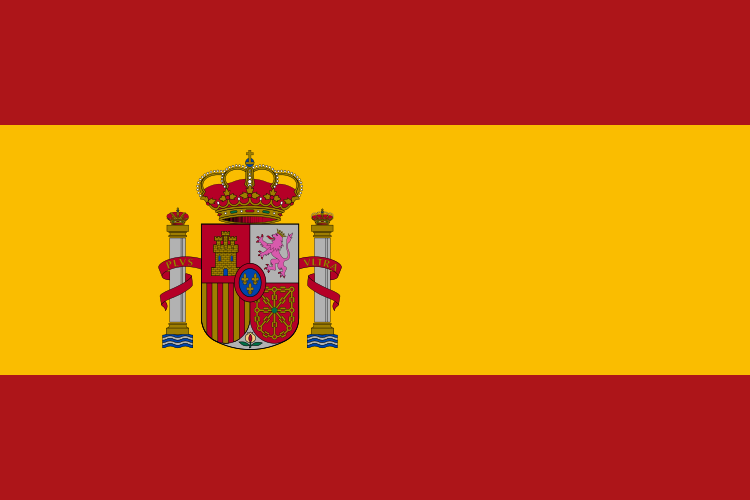
 ESP 16%
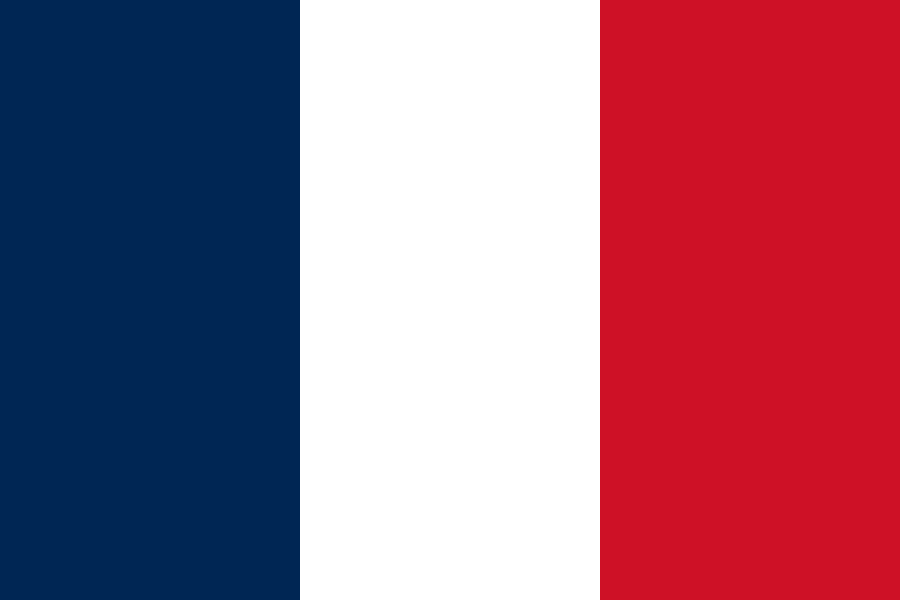 FRA 12%
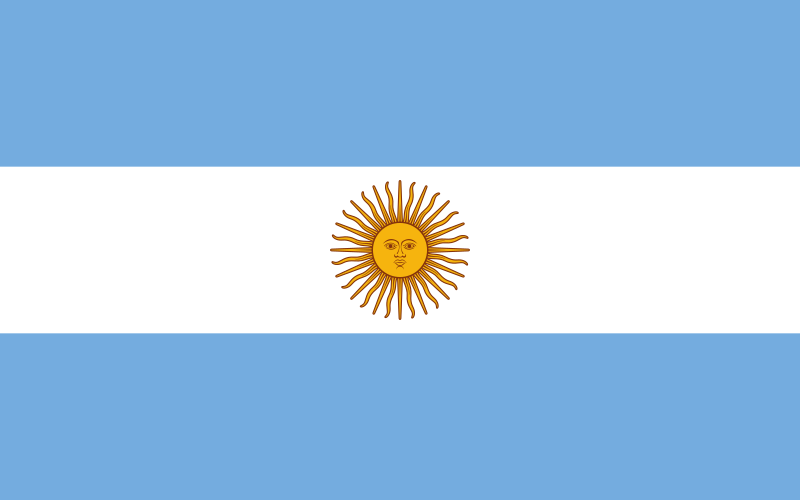 ARG 12%
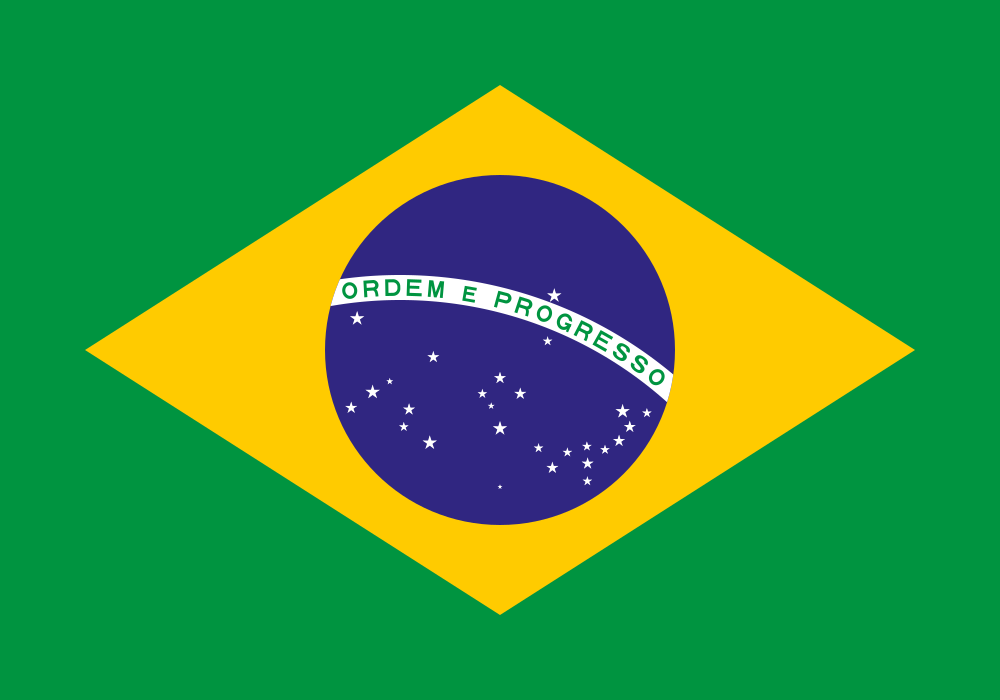 BRA 11%
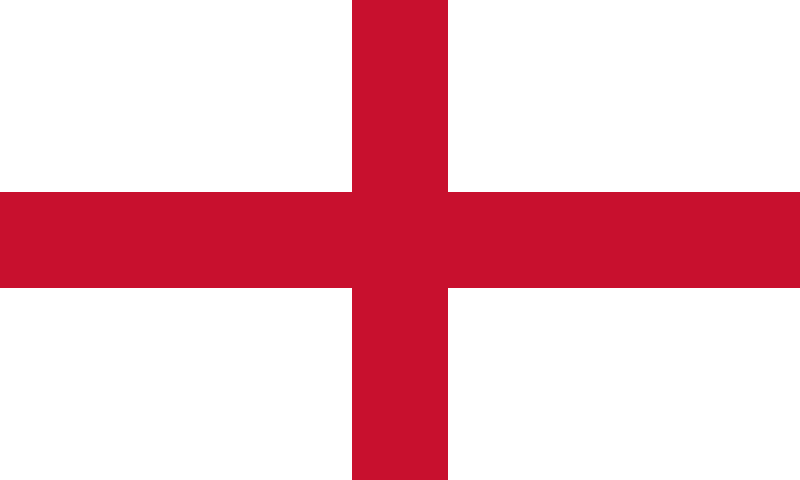 ENG 10%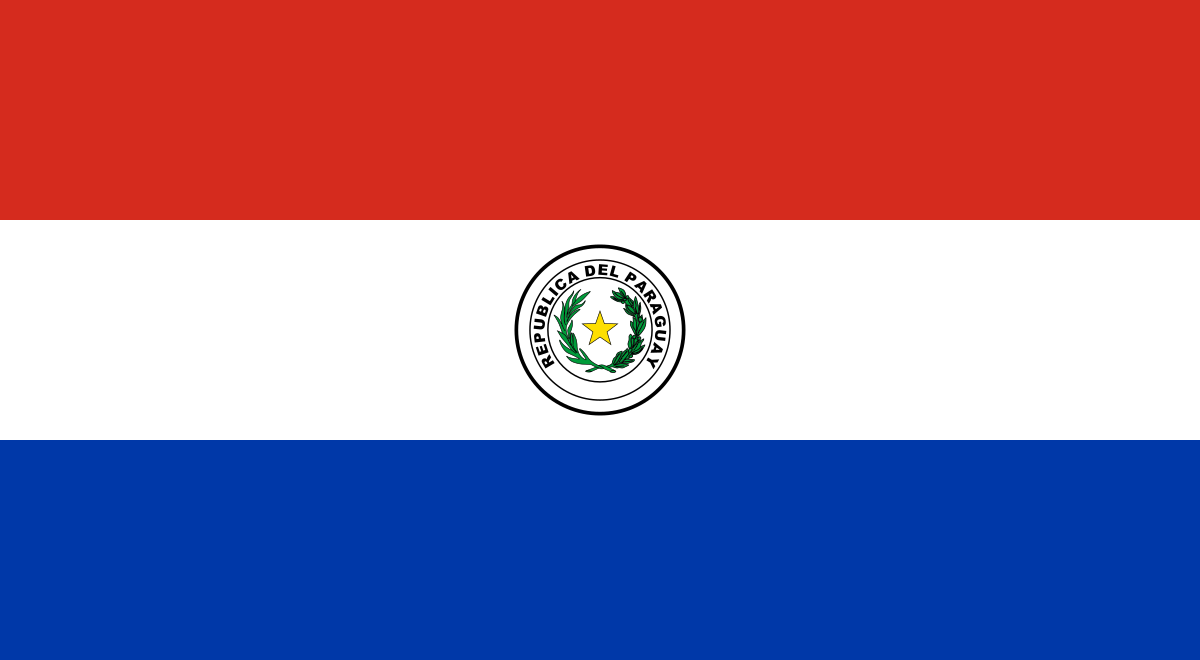


The World Cup 2026 Fair Play Award rewards the cleanest record, not the best team. Here is why Paraguay are the disciplined side the market underrates.
Back Paraguay for the 2026 World Cup Fair Play Award. The casual reader sees Alfaro's side as just another physical CONMEBOL outfit and skips straight past them, but that is exactly the mispricing: this was a compact, organised team that reached the last 16 and banked a knockout win over Germany without the ill-discipline its label implies. On a market that pays out for the cleanest record rather than the best football, that profile is worth far more than the market gives it credit for.
The reason this market is so often mispriced is that people instinctively price it like a talent contest. They look at who is good, or who they like, and work down from there. The Fair Play Award does the opposite: it rewards structure, restraint and a clean sheet of cards, and it frequently lands on a nation nobody had on their radar.
So the right question is not 'who is the best team left', it is 'who commits the fewest fouls, collects the fewest cards and keeps its shape under pressure, across the most matches'. Answer that and Paraguay move up the board quickly, while the household names at the top of the market start to look like dead money.
Ad
How is the World Cup Fair Play Award actually decided?
The award is settled on disciplinary data, not highlights. The core of the model is cards: every yellow and every red drags a side down the ranking, and a red or a straight dismissal for serious foul play is close to disqualifying. A team that plays 90 minutes with two bookings and no sendings beats one that was technically prettier but left the referee reaching for his pocket.
Layered on top are the softer factors: positive, attacking intent, respect for opponents and officials, and the behaviour of the bench and staff. These rarely decide the award on their own, but they are tie-breakers between two otherwise clean sides, and they tilt the model towards teams that defend with their feet and their shape rather than with cynical, tactical fouls.
The final, underrated input is volume. The more matches a side plays, the more clean games it can stack up, so a disciplined team that survives into the knockouts has a structural edge over an equally tidy team that went home after three group games. That is why you want an organised side that also wins the odd tight match, not a well-mannered team that got eliminated early.
Put those pieces together and the profile is clear: low fouls per game, no reds, a manager who coaches shape instead of shirt-pulling, and enough of a run to pad the record. It is a specific, almost boring checklist, and it is nothing like the checklist for the actual trophy.
Why does the market overrate the obvious clean sides?
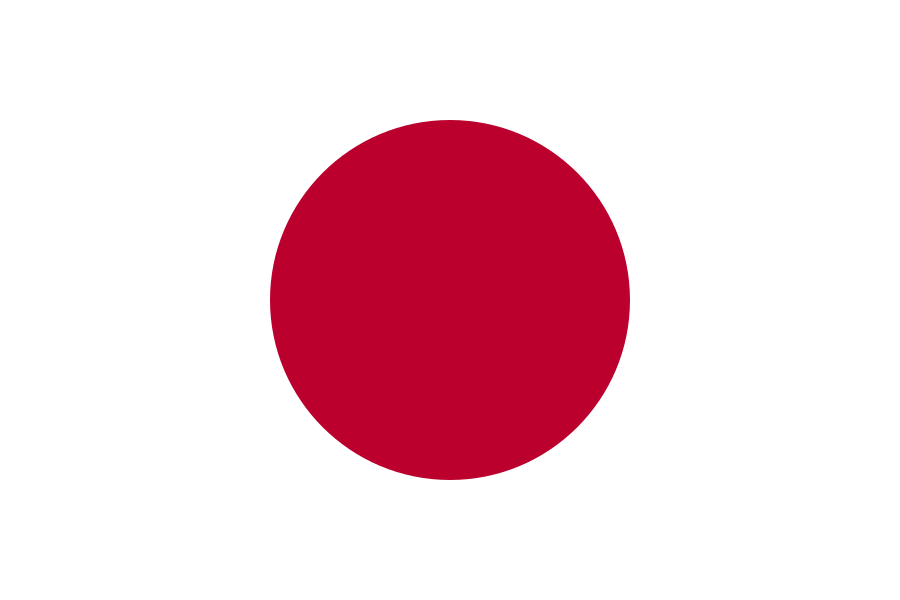
The names that dominate the top of this market are the usual suspects: Spain, because they keep the ball and theoretically foul less, and Japan, who carry a genuine fair-play reputation from previous tournaments. Both are fair reads. Neither offers value, because everyone already knows the story and the price reflects it.
There is also a lazy assumption baked into the pricing: that the best teams are automatically the cleanest. Title odds and disciplinary records are only loosely linked, and the chart below shows just how little the two have in common. A team can be a heavy favourite for the trophy and a menace in the tackle, or a long shot for the title and immaculate with the referee.
The flip side of the obvious picks being overrated is that organised, lower-profile sides are systematically underrated. The market docks Paraguay points in its head for being South American and pragmatic, without checking whether that pragmatism actually produced cards. That is the gap a sharp reader trades into.
Why are Paraguay the disciplined side the market underrates?
Alfaro's Paraguay were built to be hard to beat without being dirty. They defended in a compact block, kept their lines tight and forced opponents to break them down in front of goal rather than scrambling with last-ditch, bookable fouls. That is the single most important distinction on this market: organised defending earns clean sheets of cards, while panicked defending earns yellows.
They also had a run to lean on. Paraguay came through Group D as a best third-placed qualifier, then knocked Germany out on penalties in the round of 32 before going down 1-0 to France in the last 16. That is a four-match sample of a side holding its shape against strong opposition, which is exactly the kind of body of work the award rewards, rather than a one-off clean afternoon.
The pragmatism that the market holds against them is, read correctly, the reason to be interested. A pragmatic, low-block side that is well coached does not need to foul constantly, because its positioning does the work. The teams that rack up cards are usually the chaotic ones chasing the game, and Paraguay were rarely chasing; they were content to sit, stay compact and pick their moments.
None of this makes them the best team at the tournament, and it is not supposed to. It makes them a clean, structured, deep-running side wearing a label that scares casual readers off, which is the textbook shape of an underpriced Fair Play contender.
What could beat Paraguay to the award?
The honest risk is the one that applies to every pragmatic side: tactical fouling. If a team defends deep but chooses to break up play with repeated small fouls, those bookings add up fast and torch a fair-play record. The case for Paraguay rests on them being organised enough not to need that, and that is the assumption you are trading on, so it is worth watching rather than ignoring.
The obvious challengers are still the obvious challengers. Spain's possession game genuinely does suppress fouls, and a side that keeps the ball cannot be carded for tackles it never has to make. Switzerland, too, built their whole tournament on structure and game management, and their deep run gives them the volume of clean matches the model likes. Both are credible, which is why they are short.
Then there is the deep-run factor cutting the other way. A finalist that stayed disciplined all the way through simply has more clean games banked than a side that went out in the last 16, and that weight of matches is hard to overcome. If you want the safest read of the model, you look at the teams that went furthest and kept their noses clean; if you want the value, you look at Paraguay.
That is the trade in a sentence: the favourites are priced for their reputation and their run, Paraguay are priced for a stereotype that the actual football did not back up.
Where can you trade the Fair Play Award market?
You can trade the 2026 World Cup Fair Play Award market right now on Polymarket. This is a prediction market, so you are trading your read against the current implied probabilities, and those numbers are still moving as the market settles on who had the cleanest record. Check the live price before you commit, because the gap between the consensus names and a pick like Paraguay is exactly where the value sits.
The angle here is simple: the market prices this like a talent contest when it is actually a discipline contest, and Paraguay are the organised, deep-running side that the obvious picks have crowded out. If you agree the stereotype is doing the pricing rather than the data, this is the market to take a position on.
New to Polymarket? There is a live offer for new users: Deposit $20, Get a $50 Trading Bonus with promo code TGSWC. Head to Polymarket, load up the Fair Play Award market, read the current implied probabilities and trade your view while the price still favours the disciplined outsider.
Frequently asked
Who should you back for the World Cup 2026 Fair Play Award?
Paraguay are the value call. Alfaro drilled a compact, disciplined side that reached the last 16, and the market underrates them because it assumes a South American team must be card-happy.
How is the World Cup Fair Play Award decided?
It is scored on the cleanest disciplinary record: fewest yellow and red cards, no serious foul play, and credit for positive, respectful football. It rewards well-drilled, low-foul sides rather than the most gifted teams, which is why talent and title odds are a poor guide.
Why not just back Spain or Japan for the Fair Play Award?
Because they are the consensus picks and the market has already priced them short. Japan carry the classic fair-play reputation and Spain keep the ball to avoid fouling, so there is little value left in either at the top of the market.
Does a team need a deep run to win the Fair Play Award?
It helps a lot. More matches mean more clean games added to the record, so an organised side that reaches the knockouts, as Paraguay did, carries a stronger profile than a disciplined team that went out in the group stage.
Where can you trade the Fair Play Award market?
You can trade the 2026 Fair Play Award market on Polymarket, where the implied probabilities are still moving. New users can deposit $20 and get a $50 trading bonus with promo code TGSWC.