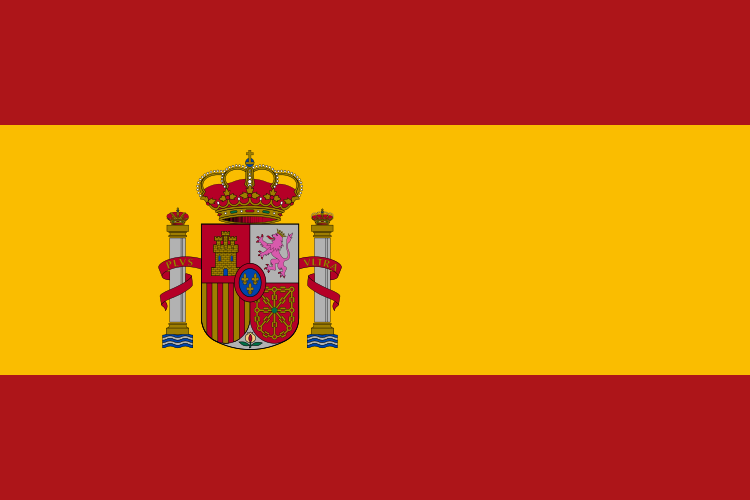
 ESP 16%
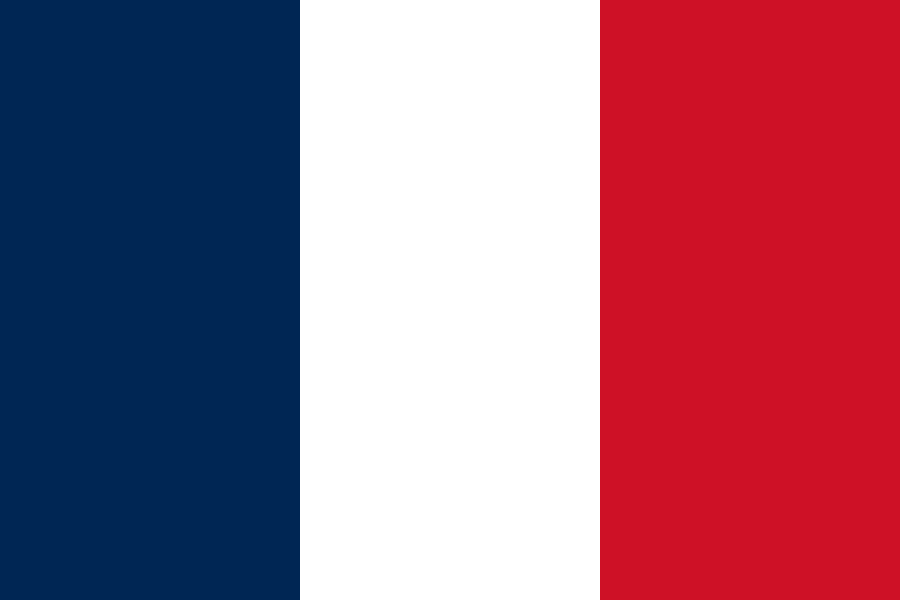 FRA 12%
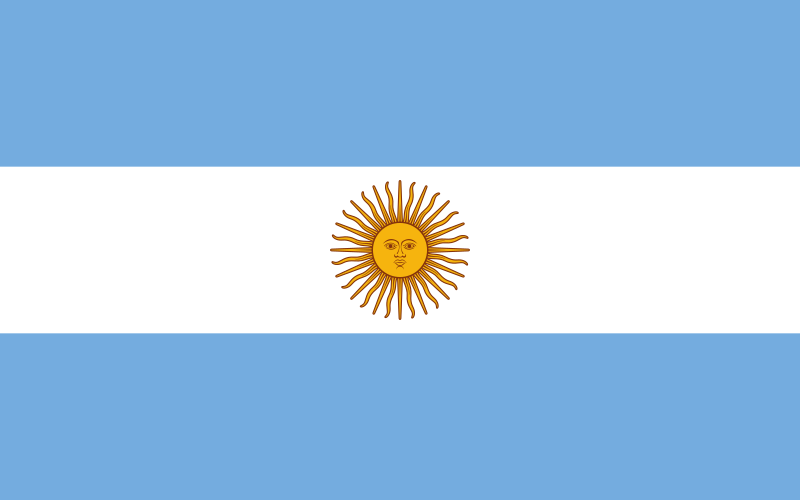 ARG 12%
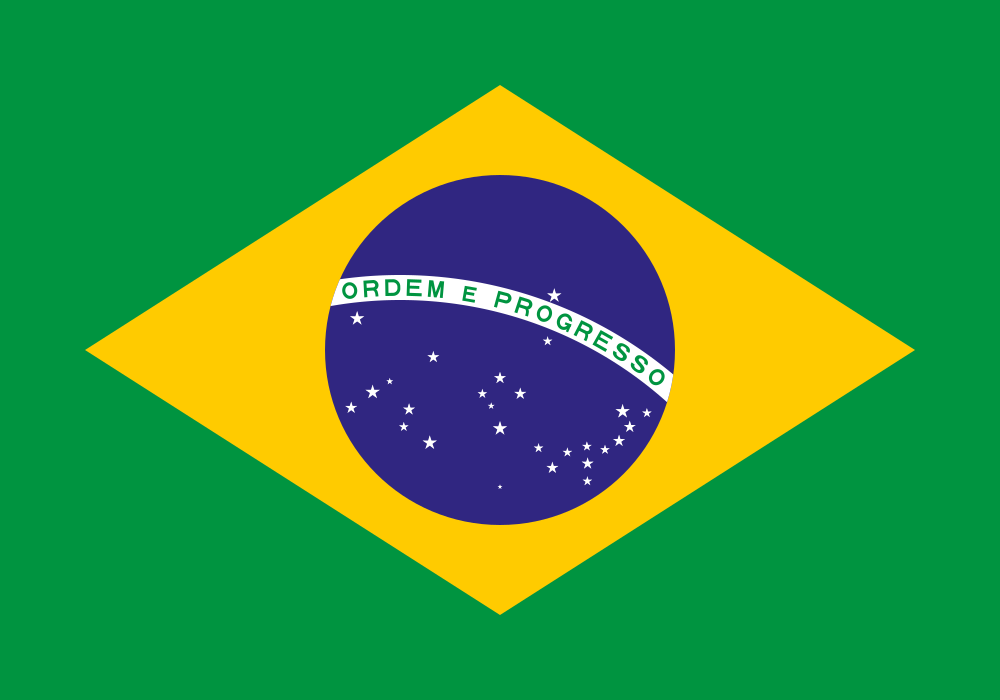 BRA 11%
 ENG 10%

The 2026 World Cup Fair Play Award rewards the cleanest disciplinary record, and Senegal are the organised, low-foul side the Polymarket prediction market underrates.
My pick for the 2026 World Cup Fair Play Award is Senegal, the disciplined, organised nation the market persistently rated too low. This award is not a beauty contest or a reward for going furthest; it is won by the cleanest disciplinary record, and Senegal's low-foul, block-defending profile is precisely the sort of side these markets underprice while chasing bigger names.
The casual reader looks at a completed tournament, sees Spain and Argentina contest a goalless final, and assumes the Fair Play Award must belong to one of the finalists. That is recency bias dressed up as logic. The finalists played the most matches and carried the most yellow-card exposure of anyone in the field, which is a headwind, not a tailwind, in a market scored purely on conduct.
The smart way to price this market is to ignore quality entirely and model discipline: who fouls least, who keeps the ball, who defends in a shape rather than in desperate lunges, and who avoids the tactical bookings that pile up disciplinary points. Do that honestly and Senegal keep rising up the board while the crowd is still staring at the trophy lift.
This is a genuine non-consensus call. Almost every angle on this market has funnelled readers toward the obvious contenders. Senegal are the value because the market treated their discipline as an afterthought.
Ad
How is the World Cup Fair Play Award actually decided?
The Fair Play Award runs on a disciplinary points system, not on goals, wins or knockout runs. Teams are docked points for each yellow card, for a second yellow, and for straight reds, with additional deductions for negative conduct. The side that finishes with the fewest deductions, the cleanest record, wins. It is the one major World Cup market where being good at football is almost irrelevant.
That single fact should reframe how you trade it. A team can crash out in the group stage and still win Fair Play if it barely troubled the referee, while a champion can finish mid-table on conduct after a bruising seven-match run. The scoring is built to reward behaviour, and behaviour does not correlate neatly with talent.
Crucially, the model rewards low foul volume and clean tackling technique. Sides that press with discipline, retain the ball, and defend in an organised block simply commit fewer of the cynical, card-earning fouls that wreck a Fair Play tally. Chaos is the enemy here; structure is the edge.
So when you price this market, throw out the title odds and the FIFA ranking. Ask a narrower question: across the games this team actually played, how often did it foul, and how often did those fouls turn into cards? That is the model, and it points somewhere the crowd is not looking.
Why does the Fair Play Award reward organisation, not talent?
Cards are a symptom of losing control, positionally and emotionally. Teams that are constantly chasing the ball, scrambling back after turnovers, or defending on the counter rack up tactical fouls because they are always a half-second late. The most talented sides are not automatically the calmest ones.
The disciplined profile is different: a compact defensive shape, patient ball retention that keeps opponents chasing, and a clear plan that removes the need for desperate, last-ditch challenges. When you are the team dictating the tempo, you are not the team hacking someone down 40 yards from goal. That is why organisation, not stardom, is the true predictor here.
This is also why finalists are riskier than they look. Reaching the final means seven high-stakes matches, more tactical fouling in tight knockout games, and more chances for a booking to land. Spain and Argentina grinding out a goalless final tells you plenty about their quality and very little about how clean their disciplinary ledgers stayed across the whole run.
Contrast that with a side that played a tighter schedule with genuine defensive structure. Fewer games and a low foul rate is a powerful combination in a market that counts cards, not caps. That is the lens that lifts Senegal above the noise.
Why are Senegal the disciplined nation the market underrates?
Senegal came through a brutal Group I alongside France and Norway and still emerged among the sides standing deep into the tournament, which tells you this was a well-drilled, streetwise team rather than a reckless one. Surviving a group of that quality demands positional discipline, and disciplined positioning is exactly what keeps the card count down.
The reputation problem is what creates the value. Senegal are often stereotyped as a purely physical, athletic African side, and the market leaned on that lazy read to keep them cheap. But athleticism and cleanliness are not opposites: elite recovery pace lets a defender arrive in time to make a legal challenge instead of a cynical one, which suppresses cards rather than inflating them.
There is attacking substance here too. Ismaila Sarr finished among the tournament's leading scorers on four goals, evidence that Senegal carried a genuine outlet rather than camping in their own half and inviting the fouls that come with sustained pressure. A team that can hold the ball high up the pitch defends fewer frantic phases, and fewer frantic phases means fewer bookings.
Put the model together and Senegal tick every box the Fair Play Award actually measures: organisation, ball retention, clean recovery defending and an absence of the tactical-foul chaos that sinks tallies. The market chased the finalists and the fashionable disciplined names; Senegal are the pick hiding in plain sight.
Which teams should you fade in the Fair Play market?
Start by fading the finalists on price rather than principle. Spain and Argentina reached the final and drew the heaviest pricing, which means the market has already squeezed out most of the value even before you factor in their long, foul-heavy knockout runs. Being clean is not enough; you need to be clean and cheap.
Be wary too of sides whose whole identity is confrontation. Teams that press aggressively without structure, or that defend deep and lunge in numbers, generate cards by design. Their fans call it commitment; the Fair Play model calls it deductions. Any nation that spent its tournament chasing the game is a fade here.
Remember that every eliminated team's disciplinary record is now frozen, so this is a settled ledger rather than a live scramble. That actually helps you: you are pricing a fixed set of records, not guessing at future flashpoints. The job is simply to find the record the market misjudged, and that record is Senegal's.
The trap to avoid is conflating quality with cleanliness. The best teams draw the eye, but the Fair Play Award has no eyes for talent. Anchor on foul volume and card discipline, fade the crowd's favourites, and the disciplined outsider becomes the obvious trade.
Where can you trade the Fair Play Award market?
You can trade the World Cup Fair Play Award market on Polymarket, where the implied probabilities shift as the market digests the final standings and confirms the disciplinary tallies. Treat any number you see as a live snapshot rather than a fixed price: it will keep moving as traders reassess, so check the current price before you commit.
The edge in this market is doing the work the crowd will not. Most traders price Fair Play off name recognition and how far a team went, which is exactly why a disciplined, underrated side like Senegal can offer real value against the heavily backed finalists. If your read on the disciplinary model is sharper than the market's, that gap is your opportunity.
If you are new to Polymarket, there is a straightforward way in: deposit $20 and get a $50 trading bonus with promo code TGSWC. That gives you extra room to take a position on the Fair Play Award and to trade the related World Cup markets as prices settle.
Do your own read on the disciplinary picture, decide whether Senegal are as underrated as I think they are, and then trade the Fair Play Award market on Polymarket at the live price. The market rewards the trader who priced conduct, not headlines.
Frequently asked
Who should you back for the 2026 World Cup Fair Play Award?
Senegal are the smart pick: a disciplined, organised side whose low foul count and structured defending fit exactly what the Fair Play model rewards. The market has consistently rated flashier names above them, which is where the value sits.
How is the World Cup Fair Play Award decided?
It is decided by disciplinary points, with deductions for yellow cards, second yellows and straight reds across a team's matches. The cleanest record wins, so results and star power are irrelevant; only conduct on the pitch counts.
Does going deep in the tournament help or hurt Fair Play odds?
It cuts both ways: finalists like Spain and Argentina play the most matches and so risk accumulating more cards, while a shorter but ultra-clean run can top the table. Fair Play systems that weight per match protect disciplined early exits.
Why not just back the finalists Spain or Argentina?
Both reached the final and carry the heaviest pricing, so most of the value has already been squeezed out. Senegal offer a cleaner risk-to-reward profile as the disciplined side the market treated as an afterthought.
Where can I trade the Fair Play Award market?
You can trade the Fair Play Award market on Polymarket, where implied probabilities move in real time. New traders can deposit $20 and get a $50 trading bonus with promo code TGSWC.