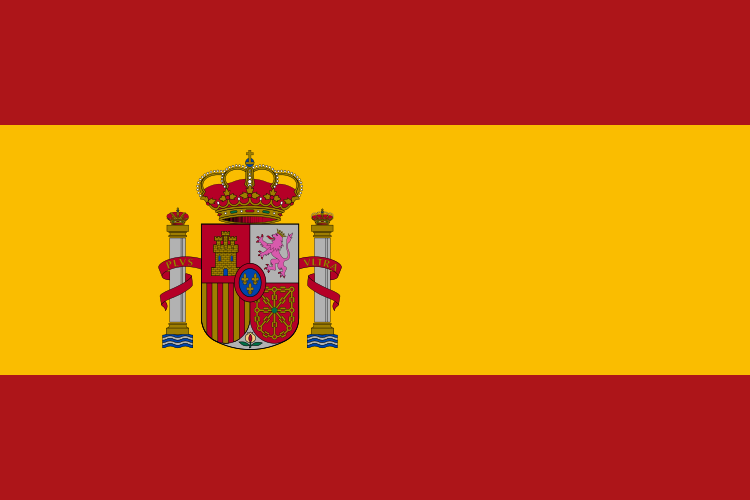
 ESP 16%
 FRA 12%
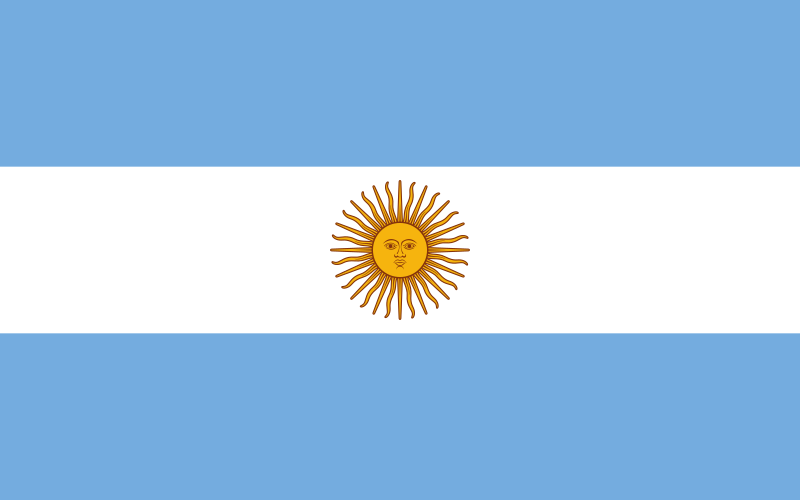 ARG 12%
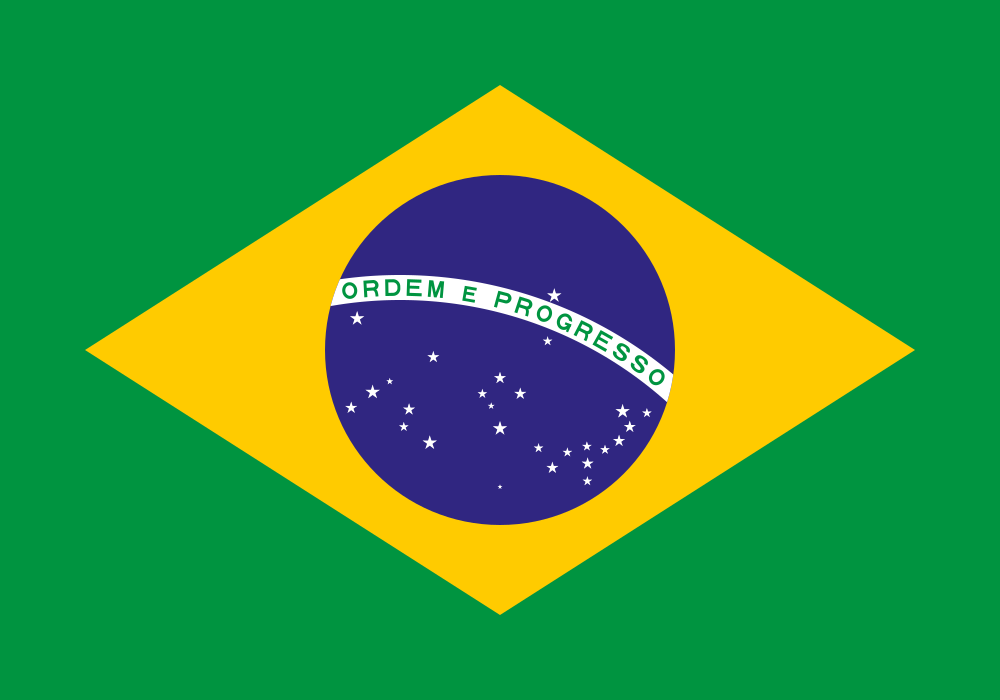 BRA 11%
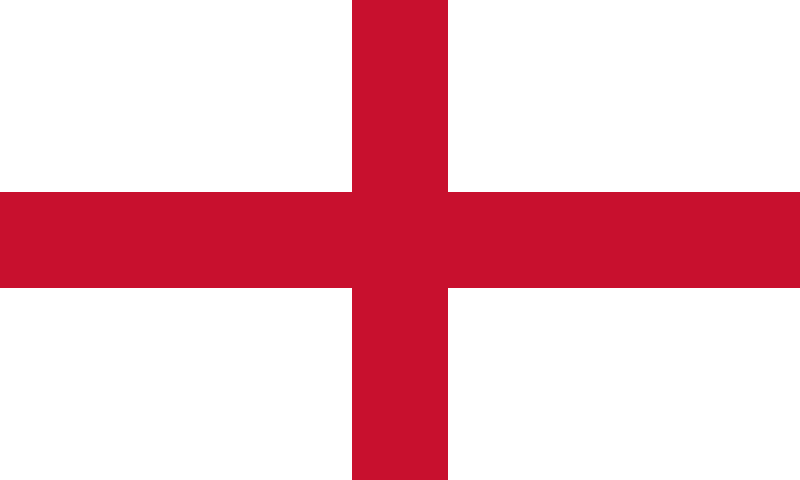 ENG 10%


Iraq are back at the World Cup in 2026 after a 40-year wait. Here is the squad, key players, Group I outlook and a realistic verdict on how far they can go.
How far can Iraq go at the 2026 World Cup? Realistically, the round of 32 is the ceiling, and even that would be a triumph. Ranked FIFA #57 with title odds of just 0.1%, Iraq arrive as the longest of long shots, but the expanded 48-team format gives the Lions of Mesopotamia a genuine, if slender, route into the knockout phase for the first time in their history.
This is a landmark tournament for Iraqi football regardless of the result. Iraq's only previous World Cup appearance came at Mexico 1986, meaning their return ends a 40-year exile from the game's biggest stage. For a nation whose football has so often been defined by adversity, simply being among the 48 is a statement of resilience.
The challenge in front of them is brutal. Drawn into Group I with world number one France (12% title odds), African powerhouse Senegal (FIFA #14) and a Norway side carrying serious attacking firepower (FIFA #31), Iraq face arguably the steepest assignment of any debutant-level outsider. The gap in pedigree is vast, but knockout football has a habit of rewarding organisation over reputation.
Ad
Why does Iraq's return matter so much?
Iraq's qualification is one of the great stories of the 2026 cycle. Forty years on from their bow at Mexico 1986, a generation of Iraqis who have never seen their country at a World Cup finally get their moment. The symbolism runs deep in a footballing culture that famously rallied to win the 2007 Asian Cup against the longest of odds.
The Lions of Mesopotamia have long been one of Asia's sleeping giants: passionate support, a strong continental record, yet repeatedly denied at the final hurdle of World Cup qualifying. That near-miss history makes 2026 feel like a debt repaid. The pressure of expectation that crushed previous campaigns has, this time, given way to release.
There is a wider continental dimension too. The AFC's expanded allocation under the 48-team format has opened the door for nations like Iraq, alongside debutants Uzbekistan and Jordan, to break through. Iraq sit at FIFA #57, comfortably the lowest ranking in their group, but their presence underlines how the new World Cup is broadening the map of the global game.
For Iraqi players based across Europe and the Gulf, this is also a career-defining platform. A strong showing on the world stage can transform reputations and earnings, and several of the squad will see 2026 as the shop window of their lives.
Who are Iraq's key players?
Iraq's tournament will likely live or die by their forward line, and Aymen Hussein is the man tasked with leading it. A powerful, prolific striker in AFC qualifying, Hussein offers a focal point for a side that will spend long periods without the ball. In a team built to defend, his ability to take a half-chance on the break is precious.
Behind him, the creative spark comes from a clutch of technically gifted attackers and midfielders, including the much-discussed Zidane Iqbal, a product of elite European academy football who brings composure and range of passing to the engine room. Ali Jasim adds energy and directness in the wider areas, giving Iraq an outlet when they win possession.
Iraq's spine is built on experience and steel. A reliable goalkeeper and a back line drilled to sit deep and protect their box will be the foundation of any success; against France, Senegal and Norway, clean sheets, or at least keeping the score down, will matter more than flair. Discipline, concentration and set-piece organisation are non-negotiable.
Crucially, this is a squad that has bought into a clear identity. Under their coaching setup Iraq have leaned into pragmatism: compact shape, low block, and rapid transitions. It is not glamorous, but it is the only realistic blueprint for a side ranked #57 trying to live with the world's best.
How tough is Iraq's Group I draw?
In a word: ferocious. Group I is widely regarded as the toughest pool of the tournament, and Iraq are its clear outsiders. France top the world rankings at #1 and carry 12% title odds, making them one of the favourites to lift the trophy. Senegal, at FIFA #14 with 1.2% title odds, are loaded with Premier League talent and physical power. Norway, #31 and 2% in the market, bring elite firepower at both ends of the pitch.
The numbers lay the gap bare. Iraq's 0.1% title odds are the joint-longest in the entire 48-team field, and within their own group they are priced as little more than makeweights. Three opponents ranked #1, #14 and #31 represent a combined wall of quality that no other genuine outsider has to scale.
Yet group-stage football is not decided by rankings alone. Iraq do not need to win the group; they need to be awkward. A draw against Norway, or a smash-and-grab against a complacent opponent, could be season-defining. In a three-team race for the runner-up and best-third-place spots, even a single result changes the maths entirely.
The order of fixtures will shape Iraq's strategy. Against France they will defend for their lives and look to frustrate; against Senegal and Norway they must be braver and more clinical. Game management, squad rotation and staying in matches deep into the second half are where Iraq can quietly accumulate the points that matter.
How did Iraq qualify for 2026?
Iraq's road to North America was long and nerve-shredding, a fitting end to four decades of frustration. The expanded AFC qualifying structure gave Asian nations more places and more chances, and Iraq navigated the marathon to finally seal their return to the World Cup.
What stands out is the resilience of the campaign. Iraq have rebuilt around a clearer tactical identity and a blend of homegrown talent and diaspora players raised in European systems. That fusion has given the squad both grit and a higher technical baseline than past Iraqi sides could call upon.
Home support has been a defining factor throughout. Few teams in Asia generate the atmosphere Iraq do, and the emotional weight of carrying a football-obsessed nation back to the World Cup has galvanised the group. The task now is to channel that intensity into composure on the global stage, where the margins are unforgiving.
Qualification also reflects a broader project: investment in youth, continuity in selection, and a willingness to play a defined, defensive-minded style that suits the players available. Iraq are not pretending to be more than they are, and that clarity is a strength heading into a daunting group.
So how far can Iraq realistically go?
The honest verdict: Iraq are most likely to bow out at the group stage, but the round of 32 is not a fantasy. With France clear favourites to win the group and Senegal and Norway both ranked comfortably above them, Iraq are fighting for third place and one of the best-third-placed berths the new format provides. That is the prize worth chasing.
To get there, the formula is simple to describe and hard to execute: be defensively excellent, avoid heavy defeats that wreck the goal difference, and steal a result somewhere. One win, or even two draws plus a narrow loss, could nudge Iraq into the knockout rounds. At 0.1% title odds, anything beyond the last 32 would rank among the great World Cup overachievements.
The flip side is sobering. Against three sides of this calibre, Iraq could just as easily finish bottom with little to show for their effort. A leaky spell, a red card, or an early concession against France could snowball quickly, and their lack of strength in depth leaves little margin for injuries or suspensions.
Either way, expectations should be framed by history, not the table. Reaching a first World Cup in 40 years is the achievement; everything else is a bonus. If Iraq can give France a fright, take points off Norway or Senegal, and reach the knockouts, this generation will be remembered as the one that truly brought the Lions of Mesopotamia back to the world stage.
Frequently asked
When did Iraq last play at a World Cup?
Iraq's only previous World Cup appearance was Mexico 1986, so 2026 ends a 40-year wait. The Lions of Mesopotamia are back among football's elite for just the second time in their history.
What group are Iraq in at the 2026 World Cup?
Iraq are in Group I alongside world number one France, Senegal (FIFA #14) and Norway (FIFA #31). At FIFA #57 they are the lowest-ranked team in what is widely seen as the toughest pool at the tournament.
Can Iraq get out of their group?
It is a long shot but not impossible. The 48-team format means four of the six best third-placed sides advance, so a single win plus a stubborn defensive record could be enough for Iraq to reach the round of 32.
What are Iraq's chances of winning the 2026 World Cup?
Iraq are 0.1% in the title market, the joint-longest odds in the field. Winning the tournament is not a realistic ambition; survival into the knockout phase would represent a historic success.
Who is Iraq's most important player?
Striker Aymen Hussein is Iraq's focal point and a prolific scorer in continental qualifying. With Iraq set to defend deep, his ability to convert rare chances on the counter could decide their tournament.