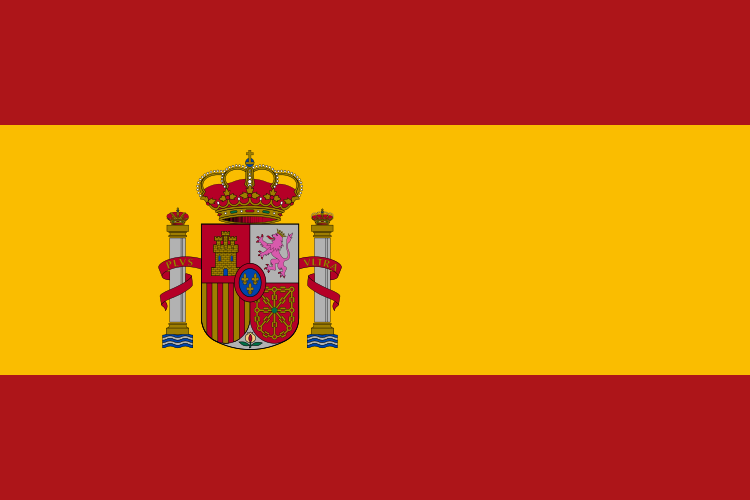
 ESP 16%
 FRA 12%
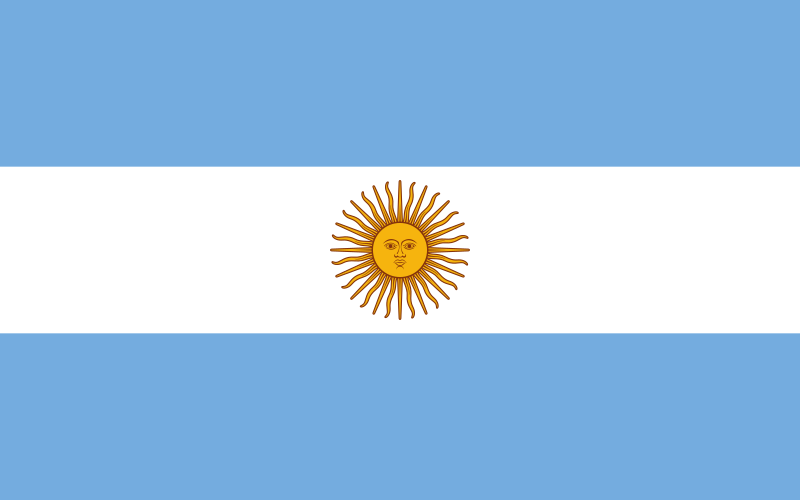 ARG 12%
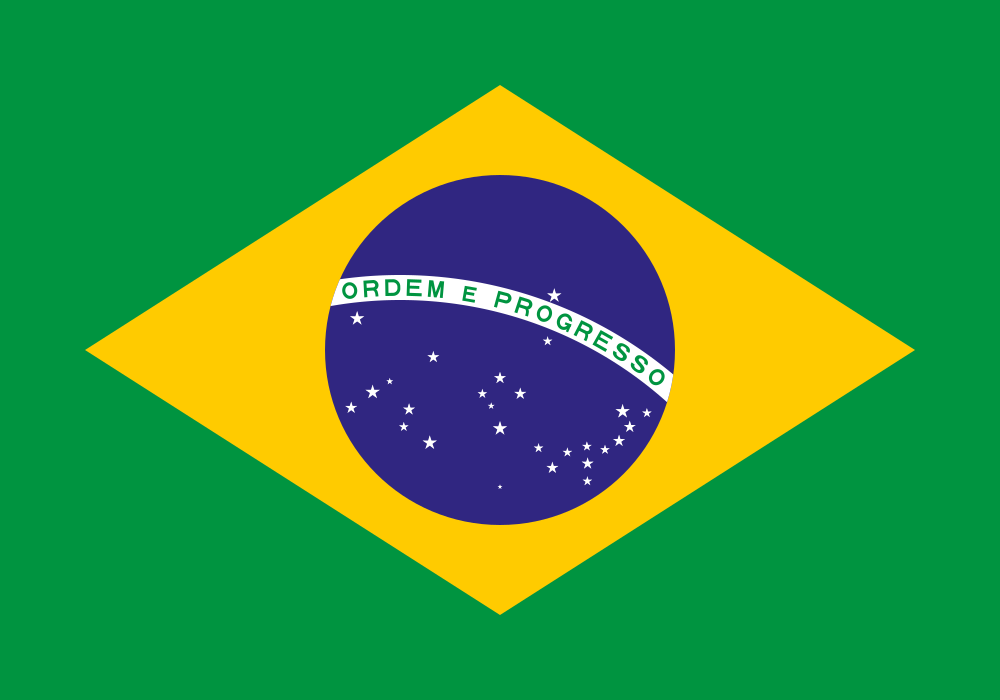 BRA 11%
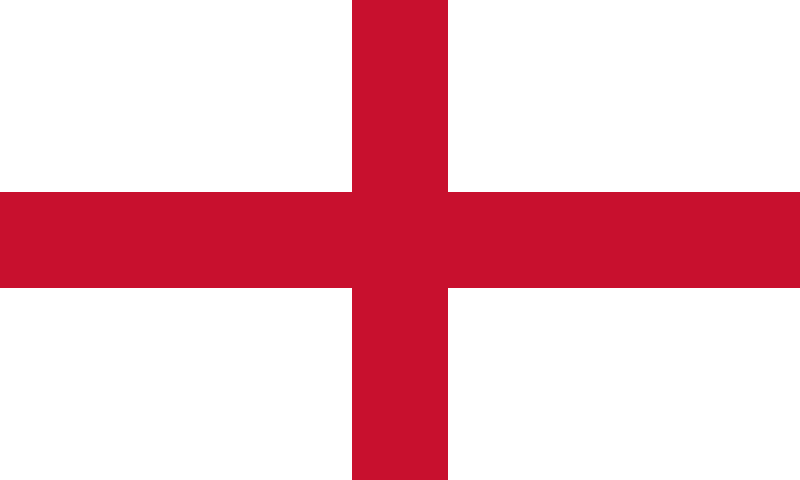 ENG 10%

The Messi vs Ronaldo goals market on Polymarket resolved to Lionel Messi: 8 goals and a run to the final crushed Ronaldo's Portugal, out in the last 16.
The verdict is settled: Lionel Messi won the Messi vs Ronaldo goals market, and it was not close. Messi finished the tournament on 8 goals and a place in the final, while Cristiano Ronaldo's count stopped dead when Portugal were beaten 0-1 by Spain in the round of 16. If you traded the Messi side at any point, the market rewarded you.
The lesson worth taking from this one is not simply that Messi is the better finisher in 2026. It is that a two-player goals head-to-head is really a trade on which team travels further. Argentina were built to reach the final; Portugal were built to flatter and fade. Once you frame the market that way, Messi was the pick long before Ronaldo's exit made it official.
This is the angle the casual reader missed: route and role, not just talent, decided the numbers on the board.
Ad
How did the Messi vs Ronaldo goals market actually finish?
Messi ended the tournament on 8 goals, sitting second in the scoring charts behind Kylian Mbappe's 10 and level in the conversation with Erling Haaland and Jude Bellingham on 7. That is elite output for a player often written off as a creator at this stage of his career, and it came in games that mattered, all the way to the final in New York.
Ronaldo, by contrast, never made the top-scorer list. Portugal topped nobody's group, finishing second in Group K behind Colombia, edged past Croatia 2-1 in the round of 32, then ran into Spain and lost 0-1. Five matches, an early handshake, and a tally that could no longer move. Whatever Ronaldo's final number, it was buried by Messi's eight.
So the market resolved on a simple truth: one player kept getting matches and kept scoring, the other did not. The head-to-head was decided less by a duel than by a divergence in fortunes.
Why did depth of run matter more than finishing?
Goals markets over a whole tournament are volume games. Every extra round is another 90 minutes, another set of chances, another penalty box to live in. Argentina played seven matches on the road to the final: three in the group, then Cape Verde, Egypt, Switzerland and England in the knockouts. Portugal played five. That is a 40 percent difference in raw opportunity before either man takes a shot.
Argentina were also the more reliable engine. They won Group J with a maximum 9 points and a plus-seven goal difference, then ground through a testing knockout bracket, beating Egypt 3-2 and England 2-1 in the semi-final. Every one of those games was a stage for Messi. Portugal's path, by contrast, offered fewer nights and ended abruptly against the eventual finalists.
This is why backing the player on the deeper-running team is the smart default in any Messi-versus-Ronaldo goals market. Finishing quality matters, but it only compounds if the fixtures keep coming. Argentina supplied the fixtures; Portugal did not.
How did penalty duty and role tilt it to Messi?
Roles decide these markets at the margins, and Messi held every card that inflates a goal tally. He operates as a free right-sided forward who drifts centrally, meaning he lives in the shooting zones rather than out on the touchline. He is Argentina's designated penalty and free-kick taker, so every spot-kick and every dangerous set piece routed through him. Over seven games, those duties add up.
Ronaldo carried similar responsibilities for Portugal as the central striker and penalty taker, which is exactly why the early market treated the pair as close. On a per-game basis, the roles were comparable. The difference was the number of games each man got to perform them. Ronaldo's set-piece and penalty duties were worth far less spread across five matches than Messi's were across seven.
There is also the intensity factor. Argentina leaned on Messi as their creative and finishing focal point deep into the knockouts, keeping him central and on the ball when it mattered. Portugal's exit denied Ronaldo the high-leverage late-tournament games where strikers pad their totals. Same job description, wildly different runway.
Was Ronaldo ever really live in this market?
Look back at how this market was priced through the tournament and the honest answer is that Ronaldo was overvalued for weeks. The head-to-head was framed as a duel of two icons when it should have been read as a comparison of two teams' likely runs. Argentina, the reigning champions, carried title-level expectations and a squad built to grind out knockout ties. Portugal were a talented but transitional side who had to escape a group of contrasts just to get going.
The scoreboard tells the story of the finishers. Messi's 8 put him second only to Mbappe, and above the likes of Kane and Vinicius Junior. That is the company Argentina's route let him keep. Ronaldo never entered that bracket, because Portugal's tournament was over before the goals-heavy late rounds arrived.
The takeaway for future two-player goals markets is clean: when the icons are close on talent, let the draw and the projected run break the tie. The team that reaches the final almost always feeds the player who wins the head-to-head. Argentina did exactly that for Messi.
The market was not wrong to make Messi the favourite. It was wrong, at times, to make it look like a contest at all.
Where to trade the Messi vs Ronaldo market on Polymarket
This head-to-head has resolved Messi's way, but it is a template for how you should read the rest of Polymarket's World Cup 2026 board: the smart edge is spotting where a market treats a two-player or two-team question as a coin-flip when the draw already tilts it. Argentina's route to the final was the tell here, and it paid.
If you want to trade the live markets that are still moving, from the final itself to the individual awards, you can do it all on Polymarket, the prediction market where the prices shift with every result. It is where this Messi-versus-Ronaldo question was priced, tracked and ultimately settled.
New traders get a running start: deposit $20 and get a $50 trading bonus with promo code TGSWC. Prices update constantly as the tournament closes out, so check the live market before you commit and trade the number in front of you, not yesterday's.
Frequently asked
Who won the Messi vs Ronaldo goals market at the 2026 World Cup?
Lionel Messi won it comfortably. He finished the tournament on 8 goals, second only to Kylian Mbappe, while Cristiano Ronaldo's tally was frozen the moment Portugal lost 0-1 to Spain in the round of 16.
How many World Cup goals did Messi score in 2026?
Messi scored 8 goals across Argentina's run to the final, placing him second in the Golden Boot race behind Mbappe's 10.
Why did Messi beat Ronaldo in the goals head-to-head?
The gap came from depth of run as much as finishing. Argentina played seven matches on the way to the final, giving Messi far more chances, while Ronaldo's Portugal exited after five.
Where can I trade the Messi vs Ronaldo goals market?
You can trade this market and the rest of the World Cup 2026 board on Polymarket. New traders can deposit $20 and get a $50 trading bonus with promo code TGSWC.
Was Ronaldo ever genuinely likely to win this market?
No. Early pricing flattered Ronaldo, but the market underrated how much further Argentina were built to go than Portugal, and that route difference always favoured Messi.