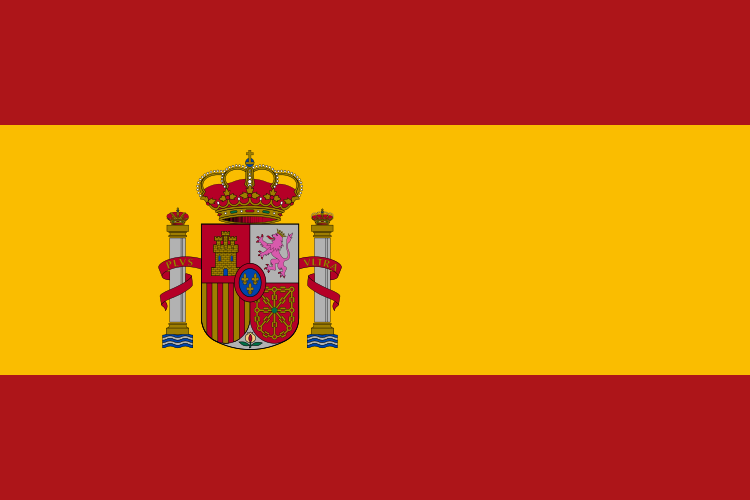
 ESP 16%
 FRA 12%
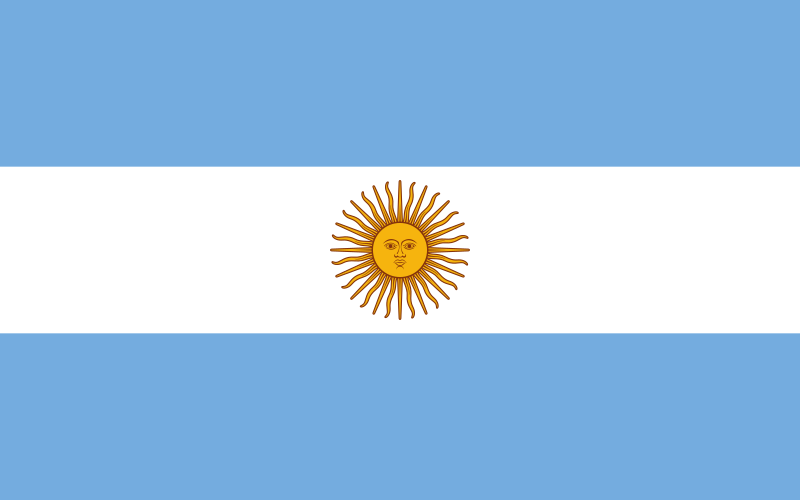 ARG 12%
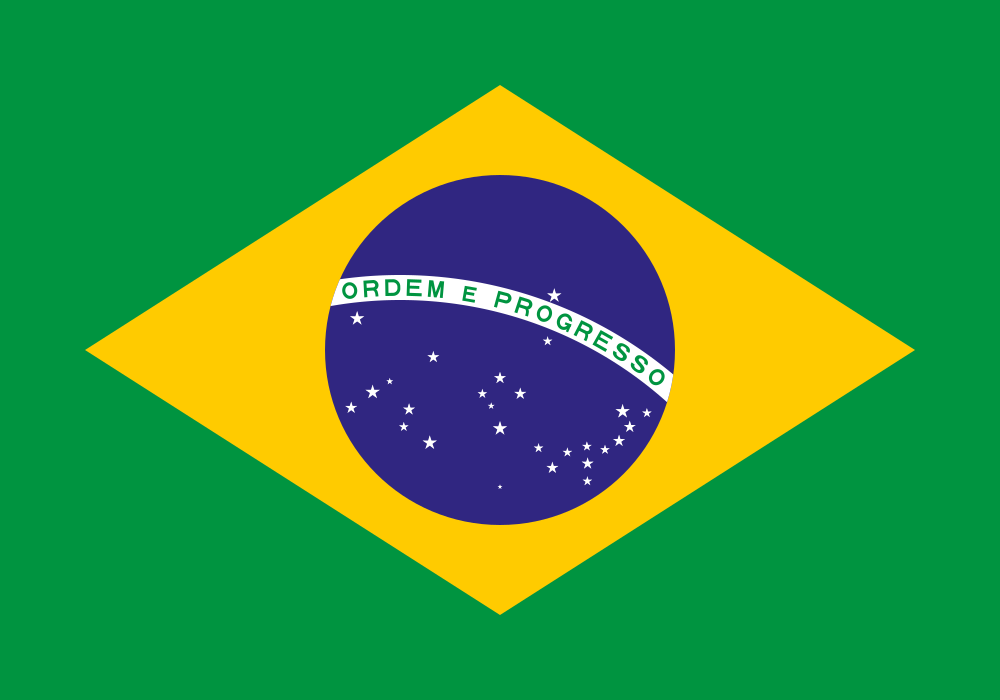 BRA 11%
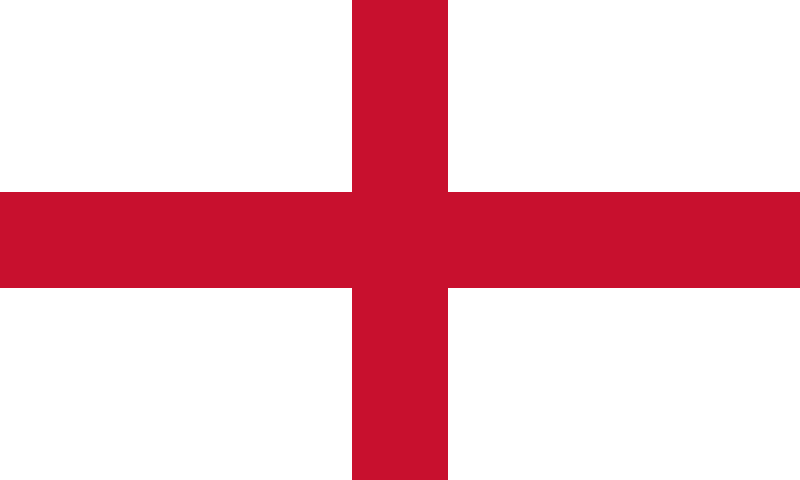 ENG 10%

The Netherlands arrive at the 2026 World Cup ranked seventh on 6% title odds. Inside Koeman's squad, key players, Group F path and how far the Oranje can go.
The Netherlands can realistically reach the semi-finals of the 2026 World Cup, and on their best day they are capable of going further. Ranked seventh in the world and priced at 6% to lift the trophy, the Oranje sit just outside the elite tier of France, Spain and Argentina, but firmly inside the group of genuine contenders. A quarter-final is the floor for a squad this deep; the last four is the target Ronald Koeman's players will privately set themselves.
That status is earned rather than inherited. The Netherlands combine one of the most settled defences at the tournament with a midfield engine in Frenkie de Jong and a fast, flexible front line. They are not the romantic, total-football caricature of old, but a modern, pragmatic outfit that knows how to win ugly and grind through tight ties, exactly the profile that travels well in knockout football.
The questions are familiar ones for Dutch fans: can a side without a guaranteed 20-goal striker convert dominance into goals, and can Koeman find the right balance between control and ambition? Answer those, and a top-seven nation has every reason to believe the final weekend in New Jersey is within range.
Ad
How does Koeman set up the Oranje?
Ronald Koeman has built the Netherlands around control and a robust defensive structure rather than chaos. His preferred shape leans on a back line marshalled by Virgil van Dijk, full-backs who provide width, and a midfield trio designed to dominate possession and shield the defence. It is a system that prioritises not losing before it prioritises winning, and that pragmatism is a feature, not a bug, in a 48-team tournament where survival matters.
The Oranje's identity flows through midfield. De Jong's ability to carry the ball through pressure and dictate tempo is the single most important tactical asset in the squad, and Koeman builds his transitions around getting the ball to his feet. Around him, energetic runners and a creative number ten give the side both legs and imagination, allowing the Netherlands to switch between patient build-up and rapid vertical attacks.
Defensively, this is one of the more reassuring units in the field. A top-seven ranking is built as much on clean sheets as on flair, and Koeman's side rarely beat themselves. The concern is at the other end: the structure is sound, but it can become ponderous against deep blocks, and the Netherlands will need their wide players to provide the cutting edge when matches tighten.
Koeman also has the luxury of depth. He can rotate across a long group stage and still field a knockout-calibre eleven, a significant advantage in a summer tournament played across vast distances in North America.
Who are the Netherlands' key players?
Virgil van Dijk remains the spine of the team. As captain and the defensive reference point, his reading of the game and aerial command set the tone, and his leadership is the glue that holds a pragmatic side together. When Van Dijk plays well, the Netherlands look like a top-four team; when he is stretched, the whole structure wobbles.
Frenkie de Jong is the creative heartbeat. Few midfielders in the tournament can progress the ball through traffic as cleanly, and the Oranje's ceiling rises and falls with his form. Alongside him, Cody Gakpo offers a direct, goal-getting threat from the left, capable of both creating and finishing, while Xavi Simons brings the spark and unpredictability between the lines that can unlock low blocks.
Up front, Memphis Depay continues to serve as the experienced focal point, dropping deep to link play and offering a proven scorer in the biggest moments. His movement and set-piece delivery remain central to how the Netherlands generate chances, even if the search for a long-term out-and-out number nine is ongoing.
The supporting cast matters too. Denzel Dumfries provides relentless running and goal threat from the right, and Tijjani Reijnders adds box-to-box energy in midfield. It is a balanced collection of talent, with international pedigree across every line, which is precisely why the bookmakers rate them above all but a handful of nations.
Can the Netherlands win Group F?
The Netherlands are clear favourites to top Group F. At FIFA number seven they are 11 places above their nearest rival, Japan (18), and a chasm clear of Sweden (38) and Tunisia (44). On paper, anything other than first place would be a disappointment, and topping the group would also smooth their knockout path by steering them away from a likely tournament heavyweight in the round of 32.
Japan are the most credible threat. Asia's most polished side are technically excellent and well organised, and they will fancy their chances of taking points if the Oranje are sloppy. Sweden, meanwhile, carry genuine danger through their forward line, with Alexander Isak and Viktor Gyokeres giving Sweden fearsome firepower that could punish any defensive lapse on the counter.
Tunisia are the group's banana skin in a different way. The disciplined Carthage Eagles are tough to break down, and exactly the kind of stubborn, well-drilled opponent that can frustrate a possession side into a frustrating draw. For the Netherlands, the danger in Group F is not elimination but complacency: a slow start could cost top spot and a kinder bracket.
Koeman will demand his side win the group with games to spare and manage minutes for the knockouts. With this gap in quality, nine points is a fair expectation, and even seven should be enough to progress comfortably.
What is the Netherlands' realistic knockout ceiling?
At 6% title odds, the Netherlands are the fifth or sixth most likely winners, behind Spain (16%), France (12%), Argentina (12%) and Brazil (11%), and roughly level with Germany (8%) and Portugal (7%). That places them in the second tier of contenders: good enough to beat anyone over 90 minutes, but not the side most neutrals would back to navigate three or four knockout rounds against the very best.
The realistic ceiling is therefore a semi-final, with the final as the upside if the draw breaks kindly and Depay or Gakpo catch fire. Reaching the last four would require the Oranje to win a likely round-of-16 tie and then overcome one elite opponent in the quarter-finals, a tall order but well within the range of a top-seven nation with this defensive base.
The flip side is the early-exit risk. Knockout football is unforgiving, and a side that creates but does not always finish can be undone in a single tight, low-scoring tie or a penalty shootout. The Netherlands have the talent to reach the semi-finals and the profile to lose a quarter-final to a more clinical side; both outcomes are entirely plausible.
Weighing it up, a quarter-final exit looks the single most likely result, with a deeper run very achievable. For Dutch supporters, the message is one of cautious optimism: this is a team good enough to dream, but one that will need its forwards to deliver when the margins shrink.
What could stop the Oranje?
The defining flaw is the absence of a guaranteed elite goalscorer. The Netherlands generate chances in volume through De Jong, Gakpo and Dumfries, but they have lacked a reliable 20-goal centre-forward to convert that dominance into comfortable wins. Against deep, organised opponents, the Oranje can dominate the ball and still leave frustrated, and in knockout football one missed chance can be fatal.
Age and tempo are a secondary concern. Koeman's pragmatic, possession-heavy approach is effective but can become slow and predictable when the side lacks an injection of pace or a moment of individual brilliance. If De Jong is neutralised, the Netherlands sometimes struggle to find a Plan B, and over-reliance on one creator is a vulnerability the best opponents will target.
There is also the question of game management under pressure. The defensive structure around Van Dijk is excellent, but the Oranje have a long history of falling just short in the biggest moments, and the psychological weight of expectation can be as dangerous as any opponent. A top-seven ranking brings pressure that lesser sides do not have to carry.
None of these flaws are fatal on their own. But stacked together, they explain why the market rates the Netherlands as contenders rather than favourites, and why the gap between a semi-final and a quarter-final exit may come down to whether one of their forwards has a tournament to remember.
Verdict: contenders, not favourites
The Netherlands are exactly what their numbers suggest: a high-class, well-organised side that should win Group F at a canter and reach at least the quarter-finals, with a genuine shot at the last four. Ranked seventh and priced at 6%, they are among the seven or eight teams who could plausibly lift the trophy, even if they are not the first name on most shortlists.
Their path forward is clear. Win the group to secure a favourable bracket, lean on Van Dijk and De Jong to control matches, and find a way to make their chances count when the knockouts tighten. If Gakpo and Depay deliver, this is a semi-final team; if the goals dry up, a quarter-final exit beckons.
For a nation that has so often promised more than it delivered on the world stage, 2026 offers a balanced, mature squad with both a high floor and a tantalising ceiling. The Oranje will not sneak up on anyone, but they have the tools to make this their deepest run in years, and to remind the world that the Netherlands remain one of football's enduring heavyweights.
Frequently asked
How far can the Netherlands go at the 2026 World Cup?
A quarter-final is the baseline expectation and a semi-final is well within reach for a side ranked seventh with 6% title odds. Winning the trophy would require beating two or three of the top-six nations in the knockouts.
Who are the Netherlands' key players in 2026?
Captain Virgil van Dijk anchors the defence, Frenkie de Jong dictates midfield, and Cody Gakpo and Xavi Simons carry the attacking threat. Memphis Depay remains the experienced focal point up front.
Are the Netherlands favourites to win Group F?
Yes. At FIFA number seven they are comfortably the highest-ranked side in Group F, sitting above Japan (18), Sweden (38) and Tunisia (44).
Who is the Netherlands manager at the 2026 World Cup?
Ronald Koeman, who favours a pragmatic, possession-based approach built on a strong defensive spine and quick transitions through De Jong and Gakpo.
What is the Netherlands' biggest weakness?
The absence of a guaranteed 20-goal centre-forward. The Oranje create chances in volume but can lack a clinical finisher in tight knockout games.