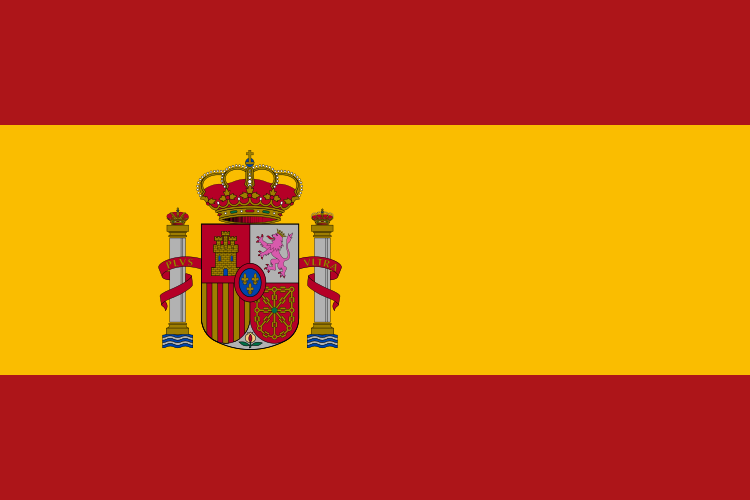
 ESP 16%
 FRA 12%
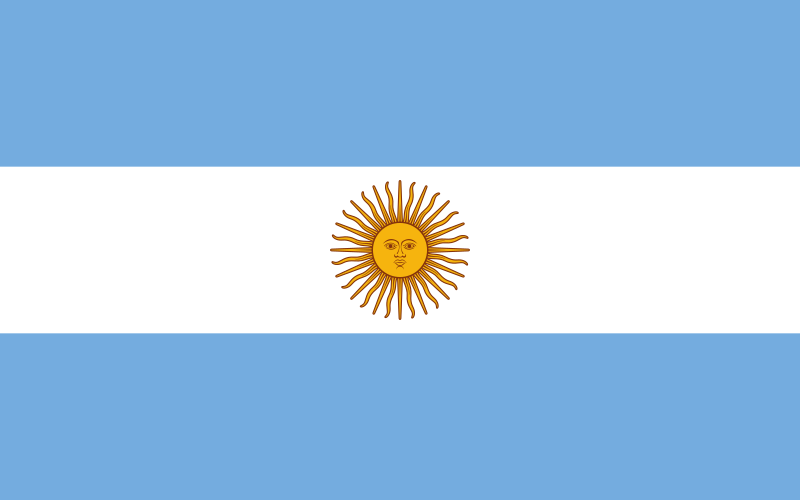 ARG 12%
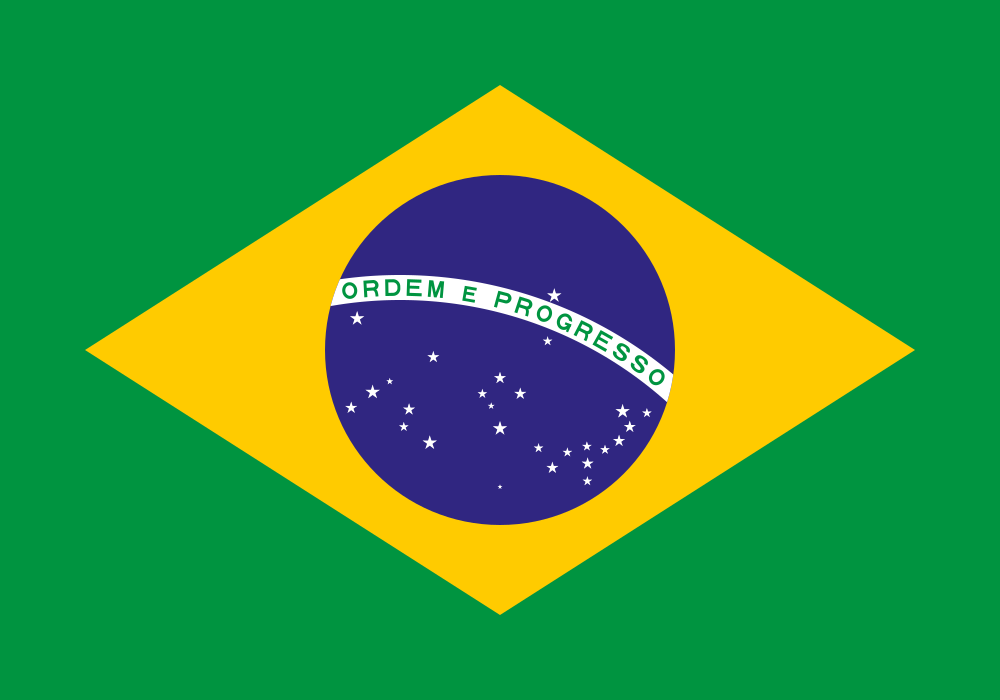 BRA 11%
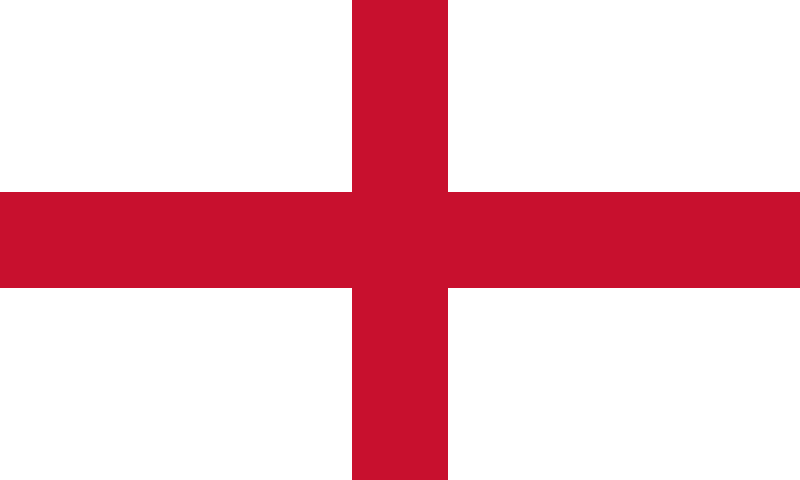 ENG 10%

Saudi Arabia 1-1 Uruguay in Group H: Abdulelah Al-Amri's first-half strike was cancelled by Maxi Araujo, and the 44-place ranking gap counted for nothing.
What did Saudi Arabia 1-1 Uruguay actually tell us?
Saudi Arabia held Uruguay to a 1-1 draw in Group H, and the single most important takeaway is that a 44-place gulf in the FIFA rankings translated into precisely nothing on the scoreboard. Abdulelah Al-Amri's first-half goal and Maxi Araujo's late reply left the points shared.
Numbers framed this as a mismatch. Uruguay arrived 17th in the world with 4% title odds; Saudi Arabia sat 61st with just 0.2%. By the bookmakers' maths, the Celeste were roughly twenty times likelier to win the whole tournament than their opponents were, never mind a single group game.
The final margin, a one-goal-each draw, is the headline number that matters. It says the ranking gap, so persuasive in the abstract, did not survive ninety minutes of actual football. For a side rated among the world's weakest qualifiers, a point against opposition this fancied reads as a genuine result.
Ad
How did Saudi Arabia take the lead?
Saudi Arabia struck first in the 41st minute. Abdulelah Al-Amri converted from very close range with his right foot, finishing into the centre of the goal after a corner had caused chaos in the Uruguay box. It sent the home side in 1-0 up at the break.
That goal did not come from nowhere. Al-Amri had already forced a save out of Fernando Muslera in the 38th minute, and two minutes later Mohamed Kanno's header, assisted by a Musab Al-Juwayr cross, was also kept out by the Uruguay goalkeeper. Saudi Arabia were threatening from set pieces and crosses before they made one count.
There was a small sting in the tale for the scorer: Al-Amri was booked in the 44th minute, moments after his goal. It was the only blemish on an otherwise excellent half-hour for a player ranked, on paper, well below the opponents he was troubling.
Why did Uruguay only manage a draw?
For all their status, Uruguay needed until the 80th minute to level. Maxi Araujo provided it, lashing a left-footed shot from the left side of the six-yard box into the bottom-left corner. It was a finish that befitted a side expected to dominate, even if it arrived far later than the rankings implied it should.
Uruguay's problem was a goalkeeper in inspired form. Mohammed Al-Owais denied Federico Vinas twice in quick succession either side of half-time, then turned away Manuel Ugarte in the 60th minute and Federico Valverde in the 67th. He added another stop from Vinas on 80 minutes, his save count underlining how much Uruguay created and how little they took.
The reshuffles told their own story. Uruguay made a double change at half-time and kept tinkering, with Nicolas de la Cruz, Brian Rodriguez and Rodrigo Aguirre all introduced as the away side chased a winner. The equaliser came; the second goal that the ranking gap demanded did not.
Does the scoreline expose the FIFA rankings?
This is the crux of the margin angle. A 44-place difference is supposed to be decisive, yet the closest thing to a decisive moment was Al-Owais keeping the underdogs ahead for the best part of forty minutes. When the gap on the team sheet is that large and the gap on the pitch is that small, the rankings are the thing that looks exposed.
It is worth being precise about what a draw is and is not. Saudi Arabia did not win; Uruguay salvaged a point they will feel they ought to have improved upon given the chances created. But measuring result against expectation, a 1-1 with the 17th-ranked side is a clear overperformance for the team rated 61st.
Saudi Arabia, of course, have history here, having toppled Argentina at the 2022 World Cup. This was a different kind of statement: not a famous win, but proof that the distance between the seeded and the unseeded can shrink to a single goal, and sometimes to nothing at all.
What does the result mean for Group H?
A draw splits the spoils and, in the context of the rankings, tilts the psychological balance towards Saudi Arabia. A point banked against the group's strongest side on paper is a sound platform, while Uruguay will regard two dropped points against the lowest-ranked opponent as the more costly outcome.
Uruguay's underlying performance offers them encouragement even in frustration. They generated repeated chances, particularly from crosses aimed at Federico Vinas, and forced Al-Owais into save after save. Convert a fraction of those and the ranking gap reasserts itself; on this evidence the finishing, not the football, let them down.
For Saudi Arabia, the template is set: defend the box, ride out spells of pressure and take the set-piece chances that come. They did exactly that to lead, and held on long enough to claim a point that the pre-match numbers said should never have been theirs.
Frequently asked
What was the final score of Saudi Arabia vs Uruguay?
Saudi Arabia drew 1-1 with Uruguay in their Group H fixture on 15 June 2026. Saudi Arabia led 1-0 at half-time before Uruguay equalised late.
Who scored in Saudi Arabia 1-1 Uruguay?
Abdulelah Al-Amri scored for Saudi Arabia in the 41st minute and Maxi Araujo equalised for Uruguay in the 80th minute. Both goals were finished from close range.
Was the draw between Saudi Arabia and Uruguay an upset?
On paper, yes. Uruguay sat 44 places above Saudi Arabia in the FIFA rankings (17th to 61st) and carried 4% title odds against Saudi Arabia's 0.2%, so a share of the points flattered the underdog.
How did Maxi Araujo equalise for Uruguay?
Maxi Araujo equalised in the 80th minute with a left-footed shot from the left side of the six-yard box, steered into the bottom-left corner.