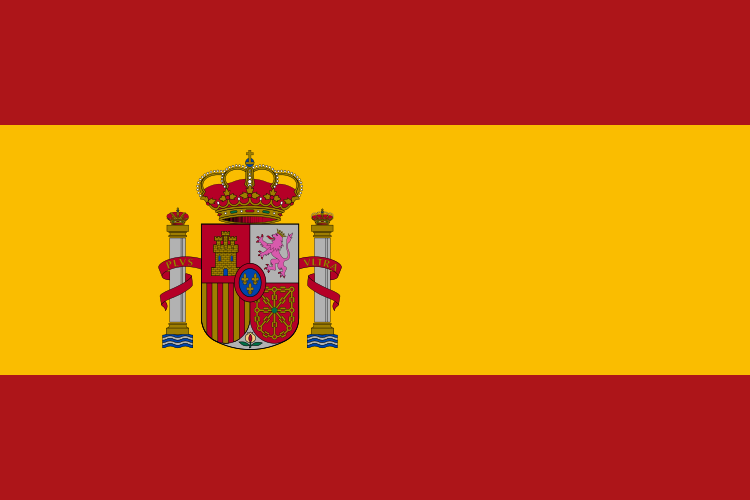
 ESP 16%
 FRA 12%
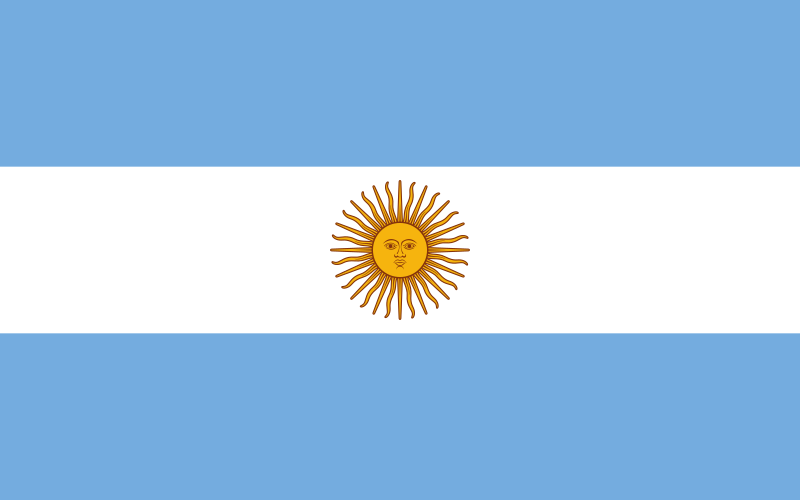 ARG 12%
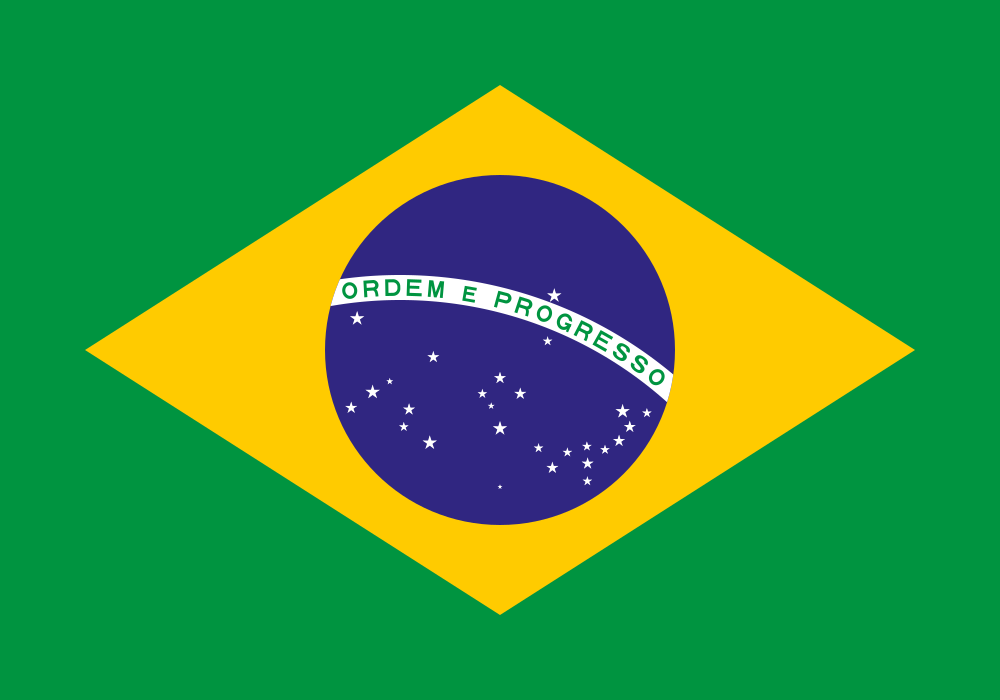 BRA 11%
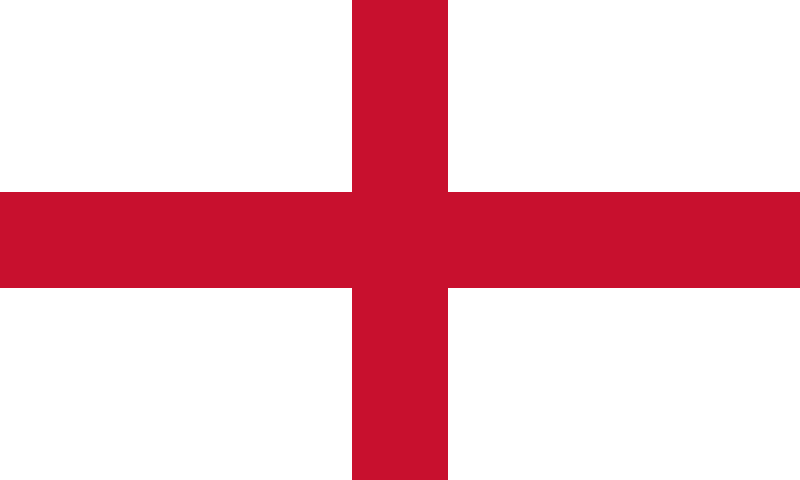 ENG 10%


Senegal's World Cup 2026 ended in the Round of 32, beaten by Belgium on penalties after a 2-2 thriller. Here is how far the Teranga Lions went and why.
Senegal's World Cup 2026 ended in the Round of 32, where they drew 2-2 with Belgium and then lost the penalty shootout, sending the Teranga Lions home just as the knockout rounds caught fire. Africa's FIFA #14 side had reached the last 32 as one of the best third-placed qualifiers, but a single knockout tie was as far as they went.
It was a campaign of fine margins rather than failure. Drawn into the tournament's toughest section alongside France and Norway, Senegal did the hard part by escaping Group I, then matched a talent-laden Belgium blow for blow before the lottery of spot-kicks turned against them.
This is the story of how the Teranga Lions navigated a brutal group, where Ismaila Sarr's four goals dragged them, why the Belgium tie slipped away, and what a Round-of-32 exit means for one of African football's flag-bearers.
Ad
How far did Senegal go at World Cup 2026?
Senegal reached the Round of 32 and no further. After finishing third in Group I, they were paired with Belgium in the first knockout round, played out a 2-2 draw across 120 minutes, and were beaten in the penalty shootout that decided who advanced. Belgium progressed; Senegal were eliminated.
For a side ranked 14th in the world and priced at 1.2% to lift the trophy before a ball was kicked, a last-32 exit reads as underachievement on paper. In context, it was harsher than that. Senegal never lost a knockout tie in normal or extra time; they simply ran out of luck at the point where World Cup dreams so often unravel.
The run also underlined how unforgiving the 2026 format can be for third-placed qualifiers. Reaching the knockouts as a best-third side is a reward, but it typically hands you a group winner or a strong runner-up early. Senegal drew exactly that kind of opponent in Belgium and paid the price on penalties.
There was no shame in the manner of it. Belgium, FIFA #9, went on to reach the quarter-finals before Spain ended their tournament 2-1. Senegal, in other words, were knocked out by a genuine last-eight side in the tightest way imaginable.
How did Senegal escape the Group of Death?
Group I was widely billed as the group of death, and the final table showed why: France romped clear on nine points with a +8 goal difference, Norway took second on six, and Senegal claimed third on three points and a +2 goal difference, with Iraq propping up the section on zero. Senegal's job was to finish best of the rest, and they did.
That +2 goal difference proved crucial. Among the third-placed teams jostling for the eight wildcard berths, goal difference and goals scored are the tie-breakers that separate the qualified from the eliminated, and Senegal's positive margin gave them the cushion they needed. It is a reminder that in a group this strong, every goal in every match matters.
Finishing above only Iraq while trailing France and Norway is not a vintage group return, but the quality of the company excuses it. France, the world's number one, and Erling Haaland's Norway were always likely to take the top two places. Senegal's task was survival, and they delivered it without the drama that undid other fancied sides.
The contrast with the tournament's fallen giants is instructive. Germany and the Netherlands, both group winners, crashed out in the Round of 32, while Brazil fell in the last 16. Senegal, by simply doing enough in an elite group, at least ensured their exit came against a top-tier opponent rather than a shock.
Who were Senegal's key players?
Ismaila Sarr was the standout. His four goals made him Senegal's clear top scorer and placed him among the tournament's leading marksmen, level with the likes of Brazil's Vinicius Junior and Mexico's Julian Quinones, and only trailing the elite quintet led by Kylian Mbappe on 10. When Senegal needed a spark in an unforgiving group, Sarr provided it.
Around him, Senegal leaned on the Premier League-hardened spine that has defined this generation. The description of the Teranga Lions as a side loaded with English-top-flight talent held true across the tournament: they were athletic, physical and comfortable in transition, the profile of a team built to trouble anyone on the counter-attack.
That identity carried them into the knockouts and almost past Belgium. Senegal's ability to soak pressure and strike quickly was exactly what made them dangerous as a third-placed qualifier, the kind of opponent no group winner wanted to draw. Twice against Belgium they hauled themselves level, a testament to the resilience that runs through the squad.
The flip side was a lack of a decisive edge in the biggest moment. For all Sarr's finishing and the team's collective grit, Senegal could not find the extra goal that would have avoided penalties, and in the shootout the margins were unforgiving.
Why did Senegal's run end against Belgium?
The Round-of-32 tie with Belgium was a genuine coin-flip. Senegal twice drew level to force a 2-2 stalemate, refusing to be beaten by a Belgium side rated three places above them at FIFA #9 and carrying far more tournament pedigree. Across 120 minutes there was nothing between the teams.
Penalties settled it, and that is where Senegal's tournament ended. Shootouts are close to a coin toss, and the same lottery that rewarded Switzerland, Morocco, Paraguay and Egypt elsewhere in the Round of 32 punished Senegal here. One or two kicks decided a campaign that deserved a kinder finish.
It is worth stressing how strong Belgium turned out to be. Far from a soft draw, they progressed to hammer the United States 4-1 in the last 16 and then pushed eventual finalists Spain to a 2-1 quarter-final defeat. Senegal, on the evidence of that 2-2, matched a side that troubled the tournament's very best.
The lesson is simple and cruel: in a knockout bracket this tight, elite sides can go out early through no great failing of their own. Senegal did little wrong; they simply met a quarter-final-calibre opponent one round too soon and lost the smallest of margins.
Where does this rank among Africa's 2026 campaigns?
Africa sent a strong contingent to 2026, and Senegal were among the highest-ranked at FIFA #14, behind only Morocco (#8) on the continental pecking order. Yet ranking did not translate into the deepest run. That honour went to Morocco, whose quarter-final appearance, ended by a 2-0 defeat to France, was the standout African story of the tournament.
By comparison, Senegal's Round-of-32 exit sits in the mid-pack of African campaigns. Morocco flew the flag longest, having stunned the Netherlands on penalties in the last 32 and knocked out Canada 3-0 in the last 16 before running into France. Senegal, for all their pedigree, could not match that.
That gap will sting, because Senegal arrived as one of Africa's genuine powerhouses and one of its best-backed sides in the betting. Finishing behind Morocco, and going out earlier, is not the return their squad depth promised, even accounting for the brutal group and the penalty-shootout exit.
Still, context matters. Senegal were drawn into the group of death and eliminated by a quarter-finalist. Few African sides faced a tougher path, and none exited to a stronger opponent in the first knockout round. Their run was short but far from disgraceful.
What next for Senegal after World Cup 2026?
A Round-of-32 exit closes the book on 2026, but it need not close the window on this Senegal generation. The core that escaped the group of death remains among the strongest in African football, and the athletic, Premier League-shaped profile that troubled Belgium is a foundation to build on rather than tear down.
Ismaila Sarr's four-goal haul is the obvious positive to carry forward. A striker capable of delivering on the biggest stage gives Senegal a focal point, and his tournament form suggests the attacking pieces are in place even if the finishing touch deserted them in the shootout.
The harder questions concern the fine margins. Senegal did not lose a knockout tie in open play; they lost a penalty shootout. Turning those coin-flips into wins, whether through sharper game management or simply more ruthless finishing, is the difference between a last-32 exit and a run into the last eight.
For now, Senegal leave 2026 with pride intact and lessons banked. They conquered the group of death, went toe-to-toe with a quarter-finalist, and bowed out only on penalties. It was not the deep run their ranking hinted at, but it was the campaign of a serious side that came up just short of the margins.
Frequently asked
How far did Senegal get at World Cup 2026?
Senegal reached the Round of 32, where they lost to Belgium on penalties after a 2-2 draw. That ended their campaign as one of the tournament's best third-placed qualifiers from Group I.
Who was Senegal's top scorer at World Cup 2026?
Ismaila Sarr was Senegal's leading scorer with four goals. That total placed him among the tournament's top marksmen, alongside names such as Vinicius Junior and Julian Quinones.
How did Senegal qualify for the knockouts?
Senegal finished third in Group I on three points with a +2 goal difference, behind France (9pts) and Norway (6pts). It was enough to claim one of the eight best third-placed berths.
Why did Senegal lose to Belgium?
Senegal drew 2-2 with Belgium in the Round of 32 but lost the resulting penalty shootout, so Belgium advanced. Belgium went on to reach the quarter-finals before Spain knocked them out.
Were Senegal Africa's best team at World Cup 2026?
No. Despite their FIFA #14 ranking, Senegal were eclipsed by Morocco, who reached the quarter-finals before losing 2-0 to France. Senegal's run ended two rounds earlier.