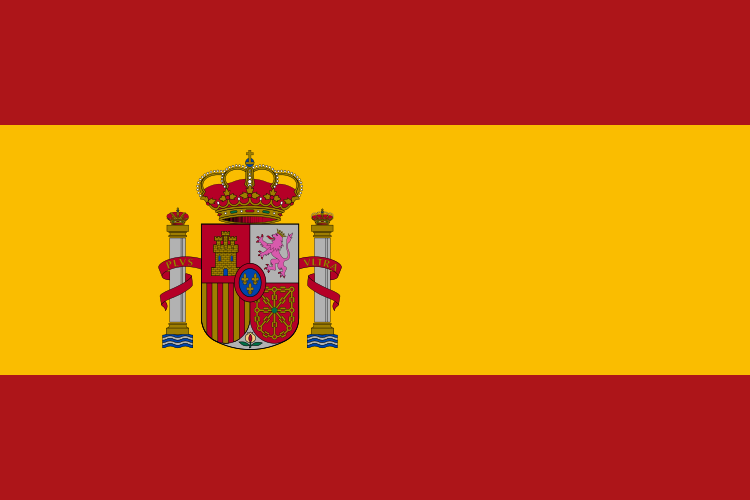
 ESP 16%
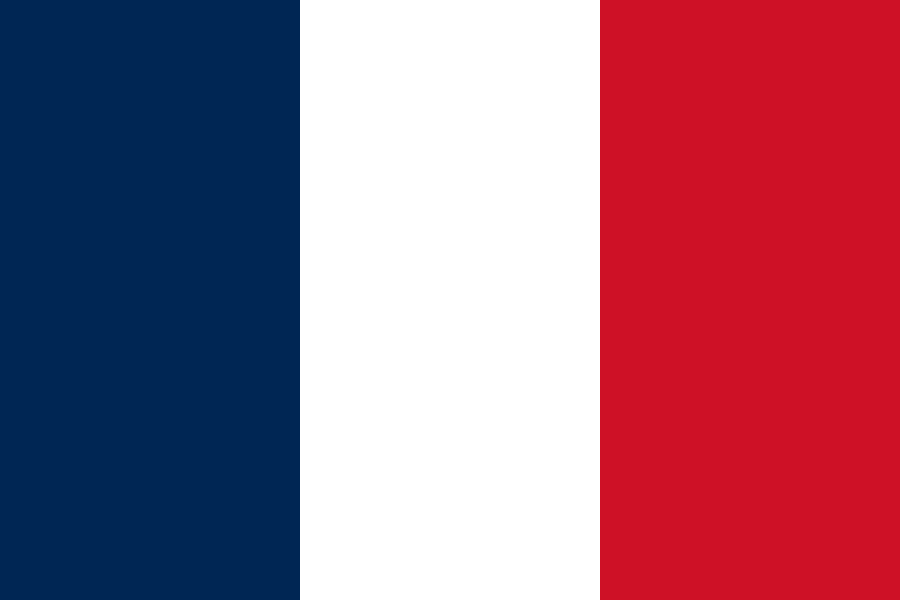 FRA 12%
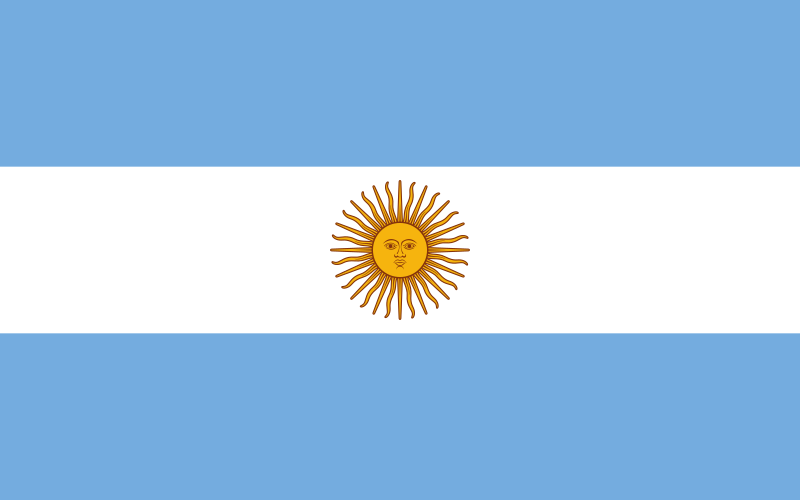 ARG 12%
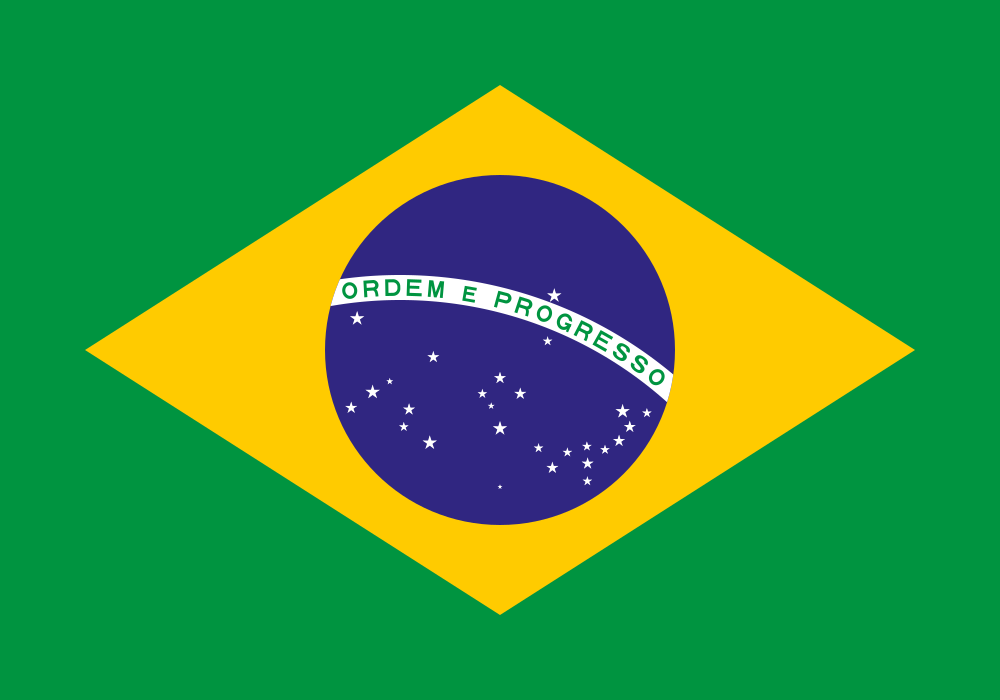 BRA 11%
 ENG 10%


Senegal reached the World Cup 2026 knockouts as a best third-placed side, then stunned Belgium. Here are their key players and how far the Lions can go.
Senegal are one of just six teams still standing at World Cup 2026, having knocked Belgium out in the Round of 32 after squeezing through the so-called Group of Death as a best third-placed side. Talisman Ismaila Sarr, with four goals, has powered a run that few forecast from a team ranked FIFA #14 and priced at only 1.2% to win the tournament.
That the Lions of Teranga are here at all is a quiet triumph of resilience. Drawn alongside world number one France and Erling Haaland's Norway, Senegal were widely tipped to be squeezed out of a group that pre-tournament previews branded the toughest in the draw. Instead they gathered the points they needed, banked a healthy goal difference and slipped into the last 32 through the expanded format's third-placed lifeline.
What has followed is the kind of knockout football Senegal have threatened to produce for years. A disciplined, physical, Premier League-hardened side has turned tight games into results, and in Belgium they claimed the sort of marquee scalp that defines a tournament run. This is the story of how Senegal reached this point, who has driven them, and how far a team of their profile can realistically go.
Ad
How did Senegal reach the World Cup 2026 knockouts?
Senegal advanced from Group I in third place on 3 points with a +2 goal difference, finishing behind runaway winners France (9 points, +8) and Haaland's Norway (6 points, +1), and comfortably clear of pointless Iraq. In the old 32-team format that third-place finish would have sent them home; under the 48-nation structure it was enough to sneak through among the best third-placed sides.
The group was every bit as unforgiving as advertised. France stormed through with a perfect nine points and the best goal difference of any side in the competition, while Norway confirmed their dark-horse credentials before going on to eliminate Brazil. Senegal had no margin for error, and their +2 goal difference, built on taking care of business against the group's weakest side, proved decisive in the third-place shake-up.
It was not a vintage group stage, but it was a smart one. Senegal did what good tournament teams do: they avoided the heavy defeat, protected their goal difference and gave themselves a platform. Qualifying as a third-placed side is rarely glamorous, yet plenty of deep runs have started exactly this way, and Senegal have since made their passage look like shrewd positioning rather than good fortune.
How Senegal stunned Belgium in the Round of 32
Senegal's headline moment arrived in the Round of 32, where they held Belgium to 2-2 before winning the penalty shootout to knock the Red Devils out. On paper it was an upset: Belgium arrived ranked FIFA #9 and rated at 3% to win the whole thing, comfortably ahead of Senegal's 1.2% and #14 standing. On the pitch, Senegal refused to blink.
Coming from behind or trading blows to force a 2-2 draw against a side of Belgium's pedigree took nerve, and holding those nerves through a shootout took more. It is the type of result that had eluded previous Senegal squads in the biggest moments, and it removed one of the tournament's established names from the bracket in a single afternoon.
The win reframed Senegal's tournament. A best third-placed team had eliminated a top-ten nation, and in doing so announced themselves as one of the last dangerous outsiders in the draw. For a footballing nation that reached the last 16 in Qatar four years ago, beating Belgium on this stage represents a statement of intent and a genuine step forward.
Who are Senegal's key players?
Ismaila Sarr has been the face of Senegal's run, his four goals placing him among the tournament's leading marksmen and level with the likes of Julian Quinones and Vinicius Junior. Quick, direct and increasingly clinical, Sarr has provided the cutting edge that Senegal have sometimes lacked at major tournaments, and his output has been the difference between competing and progressing.
Around him, Senegal remain what they have long been: a squad stacked with Premier League and elite-European experience, built on athleticism, physical duels and defensive organisation. That profile travels well in knockout football, where games tighten, transitions matter and set-pieces decide fine margins. Senegal are difficult to play through, dangerous on the break and comfortable in the low-scoring, high-tension matches that the latter stages tend to produce.
It is a team identity rather than a one-man show, but Sarr's form gives it a spearhead. If Senegal are to extend their stay, they will lean on the same blend that carried them past Belgium: a resilient spine to keep matches level, and enough quality in the final third, led by Sarr, to punish the openings that come their way.
How far can Senegal go at World Cup 2026?
The honest answer is that Senegal remain outsiders, and the numbers say so. At 1.2% to win the tournament they sit fifth of the six teams still standing, narrowly ahead of Switzerland (1%) and Cape Verde (0.1%) but a long way short of Spain (16%) and Argentina (12%). Norway, at 2%, edge them too. Senegal are punching above their seeding simply by being here.
That context matters when weighing their ceiling. The field they must navigate is elite: Spain, the FIFA #2 and Euro 2024 winners, and Argentina, the reigning champions at FIFA #3, are the class of what remains. Any Senegal advance now would mean toppling opposition of a calibre above even the Belgium side they eliminated, and the margins at this stage are unforgiving.
Yet Senegal have already shown the two things a run like this needs: the discipline to stay in matches and the nerve to win them on the finest margins. Knockout football rewards exactly that. Nobody would make them favourites for anything from here, but a team that has beaten a top-ten nation on penalties has earned the right to be taken seriously as the last obstacle nobody wants to draw.
What is Senegal's realistic ceiling?
Realistically, Senegal have already exceeded most pre-tournament expectations, and everything from here is upside. Qualifying as a third-placed side and then eliminating Belgium is a stronger campaign than a nation ranked #14 with 1.2% title odds was expected to deliver, and it has restored Senegal's standing as Africa's benchmark team even with Cape Verde also defying the odds.
The ceiling depends on the draw and on Sarr staying hot. Senegal are built to frustrate better sides and to steal matches late or on penalties, and in a knockout bracket that unpredictability is an asset. They are not equipped to blow anyone away, but they are perfectly equipped to make life miserable for the favourites and to nick a decisive goal.
The floor, by contrast, has already been raised: this is a run to be proud of regardless of what comes next. Senegal set out as one of the tournament's overlooked outsiders and have become one of its last men standing. Whether they add another chapter or bow out, they have reaffirmed that African football's most consistent power belongs in the conversation at the sharp end of a World Cup.
Frequently asked
How did Senegal qualify for the World Cup 2026 knockouts?
Senegal finished third in Group I on 3 points with a +2 goal difference, behind France (9) and Norway (6). That was enough to advance as one of the best third-placed teams from the expanded 48-nation field.
Who did Senegal beat in the Round of 32?
Senegal knocked out Belgium, holding the Red Devils to 2-2 before winning the penalty shootout. It was the standout upset of Senegal's run, eliminating a side ranked FIFA #9.
Who is Senegal's best player at World Cup 2026?
Ismaila Sarr has been Senegal's driving force with four goals, placing him among the tournament's leading scorers. He has carried the Lions' attacking threat through the group stage and into the knockouts.
What are Senegal's chances of winning World Cup 2026?
Senegal are rated at just 1.2% to lift the trophy and sit FIFA #14, making them clear outsiders. With Spain (16%) and Argentina (12%) still in the field, any deeper run would rank as a genuine shock.
Are Senegal the last African team at World Cup 2026?
No. Cape Verde are also still standing, but Senegal are the far higher-ranked African side at FIFA #14 against Cape Verde's #69. Morocco, the 2022 semi-finalists, were eliminated in the quarter-finals by France.