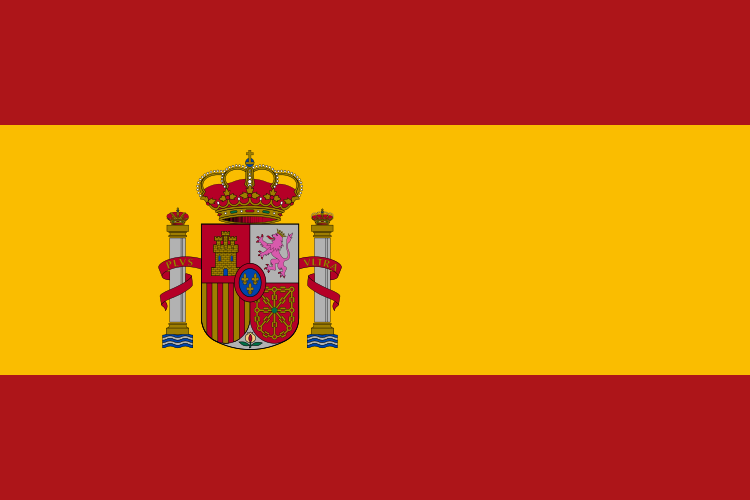
 ESP 16%
 FRA 12%
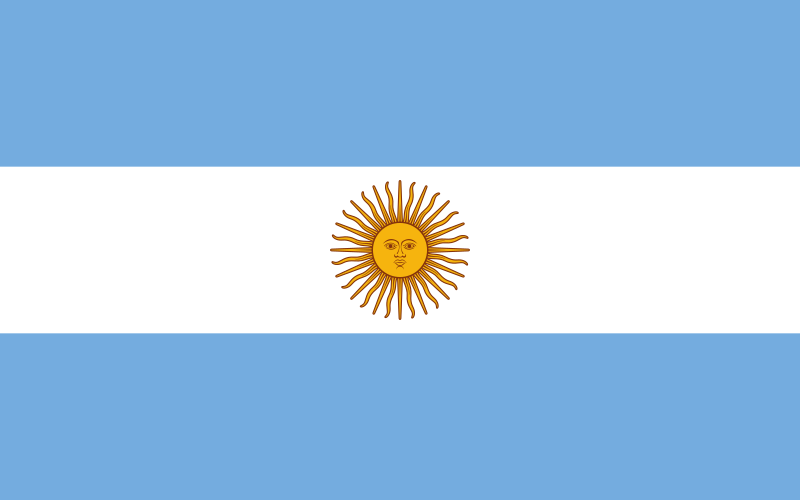 ARG 12%
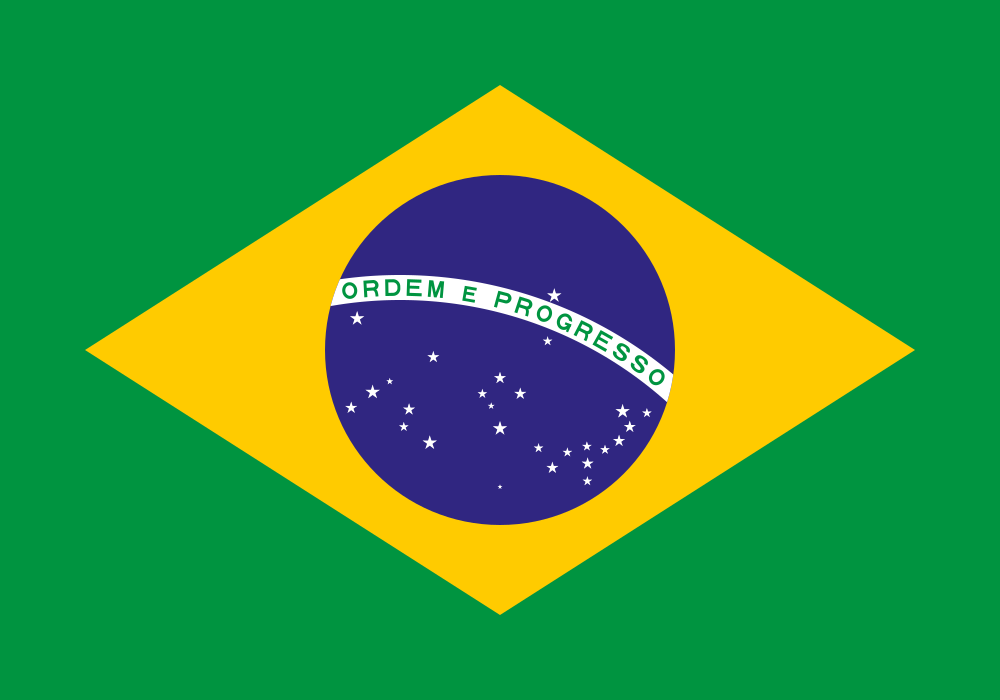 BRA 11%
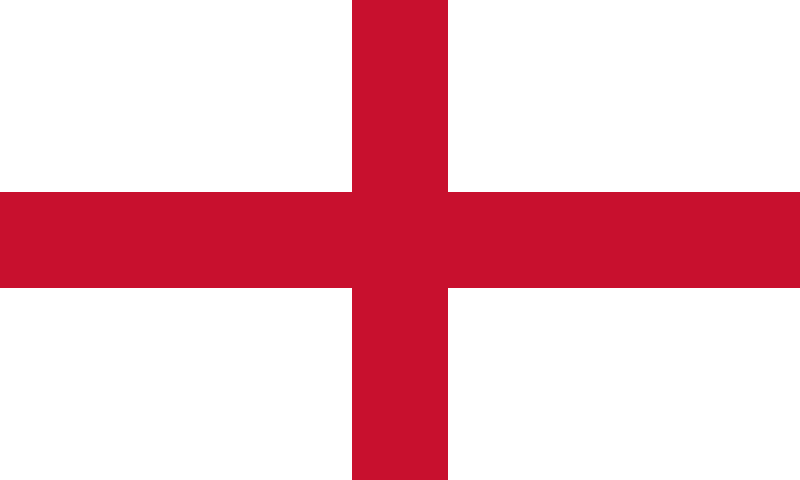 ENG 10%

Spain reached the World Cup 2026 final as the No.2 ranked side, sweeping Austria, Portugal, Belgium and France before a goalless standoff with Argentina.
Spain went the full distance at World Cup 2026, reaching the final and playing out a goalless 0-0 with Argentina. As the tournament's highest-rated contender, ranked FIFA No.2 and carrying pre-tournament title odds of 16%, La Roja delivered on their billing as the team to beat, negotiating five knockout ties without ever losing in normal time.
The reigning Euro 2024 champions did it the hard way, seeing off a string of established names rather than minnows. Austria, Portugal, Belgium and France were all beaten on the road to the final, a murderers' row of European pedigree that underlines just how convincing this run was.
This is the story of how Spain got there: the composed group-stage work, the knockout victories, the players who carried them, and the goalless final that capped a relentless campaign.
Ad
How did Spain reach the World Cup 2026 final?
Spain's knockout march began with a statement. They dismantled Austria 3-0 in the Round of 32, brushing aside Ralf Rangnick's pressing machine with the sort of control that separates the elite from the merely good. It was the ideal launchpad: a clean sheet and three goals against a well-drilled European side.
The Round of 16 brought an all-Iberian occasion against Portugal, and Spain edged it 1-0. It was a tighter, more attritional test than the Austria game, but La Roja's discipline told against Cristiano Ronaldo's side, who had scraped through as Group K runners-up. One goal was enough.
The quarter-final against Belgium was the run's most open contest, Spain prevailing 2-1 against a talented but transitional Belgian side. Then came the semi-final and arguably the performance of the tournament: a 2-0 win over France, the world's No.1-ranked team, to book a place in the final. Beating the top-ranked nation in the last four, keeping them scoreless, showcased everything good about this Spain side.
Across those four ties Spain conceded just one goal, the Belgium strike, before the final. That defensive solidity, paired with enough attacking quality to break down organised opponents, is the backbone of the entire campaign.
Who are Spain's key players?
Mikel Oyarzabal was Spain's leading marksman, finishing on five goals to sit seventh in the overall World Cup 2026 scoring charts. In a tournament dominated at the top by Kylian Mbappe (10) and Lionel Messi (8), Oyarzabal's five-goal haul was the reliable end product that kept Spain ticking through tight knockout games.
What set Spain apart was that the goals did not rely on a single superstar. Oyarzabal led the line, but the side's threat came from a balanced attack and a midfield that dominated possession, wearing opponents down before finding the decisive moment. That collective model is exactly how they ground out narrow wins over Portugal and Belgium.
The other half of the story is the defence. Conceding only once in four knockout ties before the final is the mark of a genuinely elite team, and it was that miserly base that allowed Spain to win low-scoring matches without panic. Even against France's firepower in the semi-final, Spain kept a clean sheet.
Together, Oyarzabal's finishing and a watertight backline gave Spain the two ingredients that win tournaments: someone to take the chances and a defence that refuses to give them away.
How did Spain win Group H?
Spain topped Group H with seven points and a goal difference of plus five, the platform for everything that followed. It was a comfortable rather than flawless group, but La Roja controlled it from start to finish and never looked in danger of an early exit.
The chasing pack told its own story. Debutants Cape Verde finished second on three points, the fairytale of the Blue Sharks earning them a knockout place, while Bielsa's Uruguay (two points) and Saudi Arabia (two points) fell short. Spain's seven-point tally left a clear gap to the rest.
Winning the group mattered for the route it set up. Topping Group H steered Spain into a knockout bracket they navigated without meeting a fellow pre-tournament favourite until the semi-finals, when France finally stood in their way. Seeding rewards, earned in the group phase, paid off handsomely.
Why were Spain the team to beat?
Spain arrived at World Cup 2026 as the bookmakers' clear favourites, carrying title odds of 16%, the highest of any nation in the field. That confidence was rooted in substance: a FIFA ranking of No.2, second only to France, and the status of reigning European champions after their Euro 2024 triumph.
The margins at the top were real. France sat on 12% title odds, level with Argentina, with Brazil at 11% and England at 10%. Spain's 16% put daylight between them and the rest of the contenders, and their run to the final vindicated that market verdict.
Crucially, Spain backed the numbers with performances. Favourites often wilt under expectation, but La Roja beat exactly the kind of sides you would expect a champion to overcome: an organised Austria, a proud Portugal, a dangerous Belgium and, most tellingly, top-ranked France. Few of the pre-tournament favourites made the projections look as accurate as Spain did.
How did the goalless final unfold?
The final pitted the two most-fancied sides left standing against one another: Spain against Messi's Argentina, the reigning world champions. It finished 0-0, a taut, cagey showpiece in which two elite defences cancelled out two elite attacks.
That the game ended goalless was in keeping with Spain's campaign. This was a team built on control and defensive discipline, and against an Argentina side that had also learned to win the fine-margin games, the result was a stalemate of two heavyweights unwilling to gift anything away.
For Spain, reaching the final and taking Argentina all the way is the clearest evidence of a squad that peaked when it mattered. Having conceded so little throughout the knockouts, keeping another clean sheet on the biggest stage of all was a fitting summary of their strengths.
How far can Spain go, and what is the verdict?
Spain went as far as any team can, all the way to the final. For the pre-tournament favourites, ranked No.2 in the world and priced at 16% to win it, that is a campaign that matched the expectation rather than betraying it, a rare feat for a heavily backed side.
The building blocks travel well beyond this tournament. A defence that conceded once in four knockout ties before the final, a proven goalscorer in Mikel Oyarzabal, and a possession game capable of subduing France and Belgium form the core of a side that should remain among the world's best.
Whatever the final verdict on the trophy itself, Spain's World Cup 2026 was a run that confirmed their standing at the summit of the game. They beat the world's top-ranked nation in the semi-final, topped a competitive Group H, and outlasted a field of heavyweights to reach the last match of the tournament. On the evidence of these five weeks, La Roja were everything the numbers promised and more.
Frequently asked
How did Spain reach the World Cup 2026 final?
Spain won Group H, then beat Austria 3-0, Portugal 1-0, Belgium 2-1 and France 2-0 in the semi-final. That five-match run took them to a final against Argentina.
Who is Spain's top scorer at World Cup 2026?
Mikel Oyarzabal, with five goals. That places him seventh on the tournament's scoring charts, behind names such as Kylian Mbappe (10), Lionel Messi (8) and Jude Bellingham (7).
What happened in Spain's final against Argentina?
Spain and Argentina played out a goalless final, 0-0. It was a tight, cagey contest between the two most-fancied sides left in the draw.
Why were Spain the team to beat at World Cup 2026?
Spain carried the highest title odds of any nation at 16% and the second-best FIFA ranking at No.2. As reigning Euro 2024 champions, they arrived as the benchmark for the field.
How did Spain perform in the group stage?
Spain won Group H with seven points and a goal difference of plus five, finishing ahead of Cape Verde, Uruguay and Saudi Arabia to top a competitive pool.