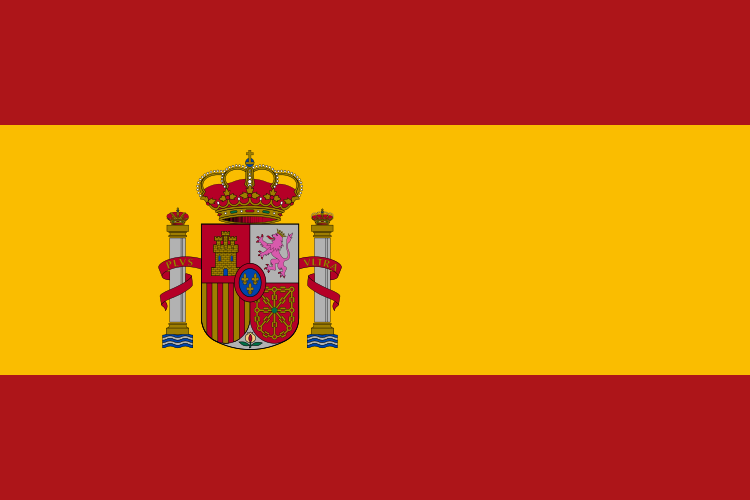
 ESP 16%
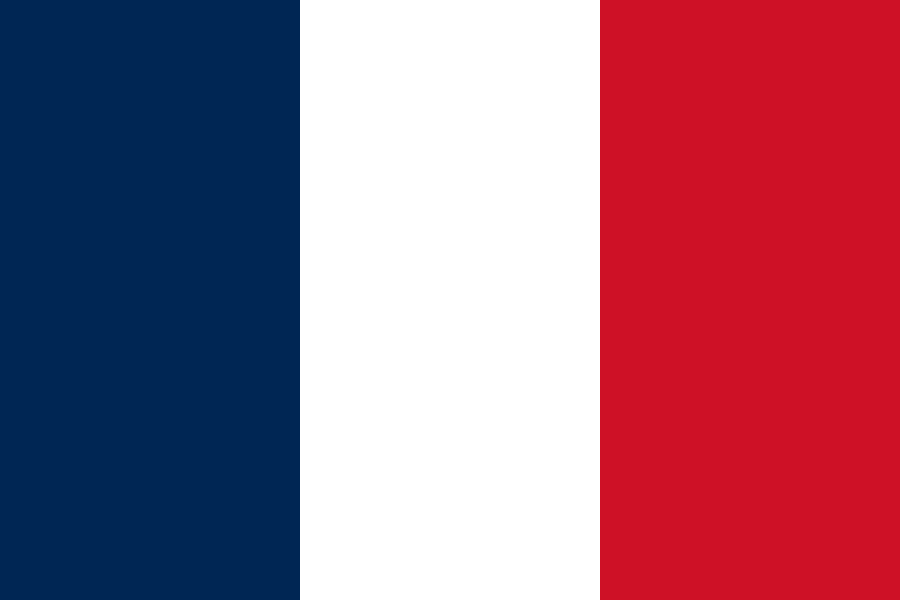 FRA 12%
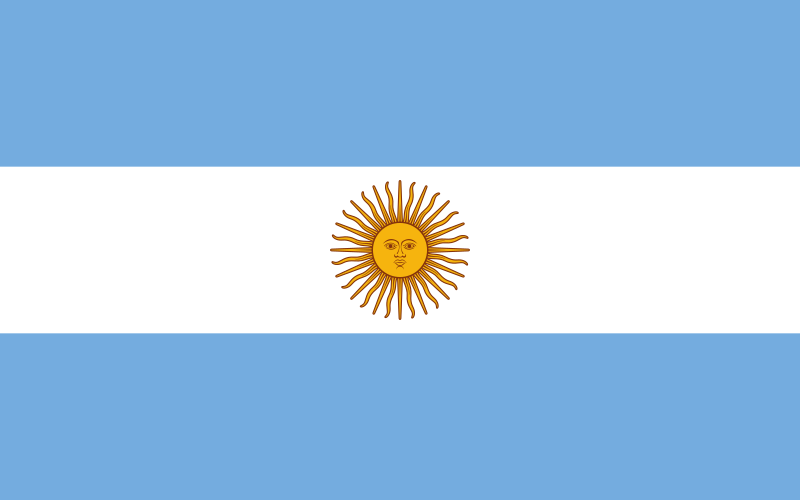 ARG 12%
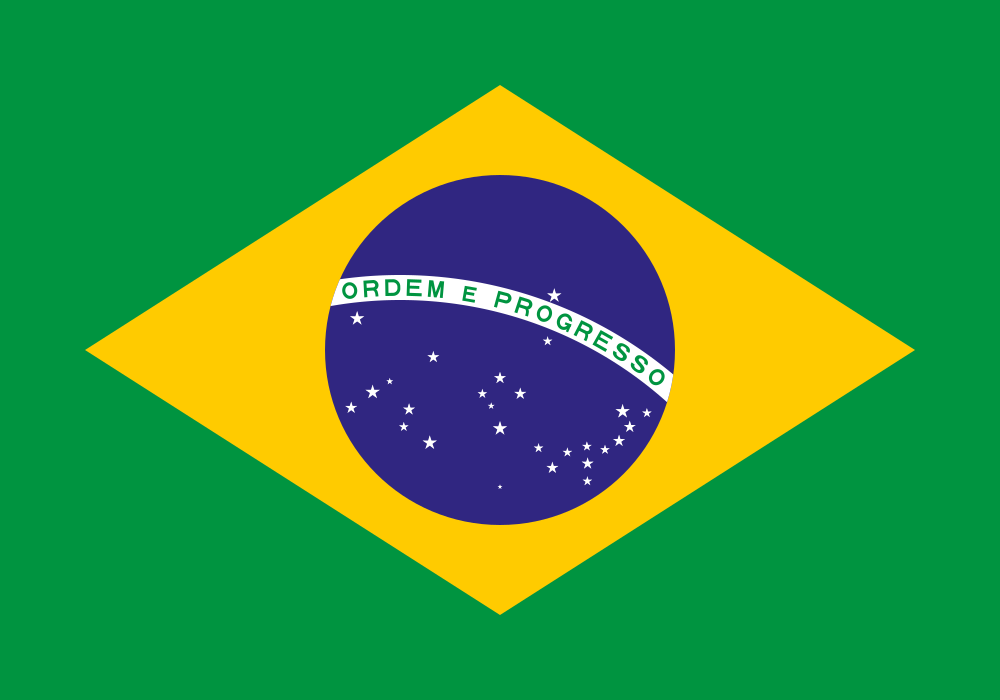 BRA 11%
 ENG 10%

Title-odds movers at World Cup 2026: Spain justified 16% favouritism to reach a goalless final with Argentina, while Brazil, Germany and France crashed early.
The market got the very top right and almost everything in the middle wrong. Spain, the pre-tournament favourites at 16%, reached a goalless final against Argentina (12%), so the two clearest heavyweights in the book were the last two teams standing. Between them, though, the collapse was brutal: Brazil (11%), France (12%), England (10%), Germany (8%), Portugal (7%) and the Netherlands (6%) all fell short of their prices, most of them well short.
That split, a rock-solid top and a caved-in middle, is the story of the 2026 title market. When the draw was made, seven teams were priced at 6% or higher and treated as genuine contenders. Only Spain and Argentina delivered on that billing. The rest were picked off by opponents the market had dismissed, from Norway's 2% shock of Brazil to Morocco's dismantling of the Netherlands.
This is the full retrospective on which title odds were vindicated and which were busted, tracing how the numbers that opened the tournament map onto the results that closed it. The headline is simple: back the shortest two prices and you were rewarded, but almost every other heavyweight bet went down.
Ad
Which favourites justified their title odds?
Spain were the market's anchor from the first day to the last. At 16%, they were the outright favourites, the shortest price in the field, and they never wobbled. La Roja won Group H with seven points and a plus-five goal difference, then knocked out Portugal (2-0... 0-1 in their favour), Belgium and France on the way to the final. Their 2-0 semi-final win over France was the decisive statement, ending the tournament of a side priced level with Argentina.
Argentina, at 12%, were the co-second favourites alongside France, and the reigning champions honoured that price. They swept Group J with a maximum nine points, survived a 1-1 Round-of-32 scare against Cape Verde, then beat Egypt, Switzerland and England to reach the final. Their 2-1 semi-final defeat of England, driven by Lionel Messi's eight goals across the tournament, was the run of a genuine contender rather than a lucky draw.
The value in hindsight was in trusting the very top of the board and nothing beneath it. Of the seven teams priced at 6% or shorter, only Spain and Argentina made the last four. That is a striking outcome for a 48-team field: the market's two firmest reads survived a knockout gauntlet designed to produce chaos, while the giants immediately behind them all fell.
It is worth stressing how narrow that success was. The goalless final underlined that even the two best-backed teams could not be separated over 90 minutes, which is exactly what you would expect when the market's two strongest prices meet with everyone else already eliminated.
Who were the biggest market busts?
Brazil were the most damaging bust of all. Priced at 11% and hunting a sixth star under Carlo Ancelotti, the Seleção topped Group C but were bundled out 2-1 by Norway in the Round of 16, a result that shredded a huge chunk of pre-tournament staking. For a team that opened as one of the five shortest prices, a last-16 exit to a 2% outsider is about as costly as the market gets.
Germany's collapse came even earlier and even more painfully. At 8%, the Wirtz-and-Musiala revival was fancied to go deep, yet they won Group E only on goal difference and then lost a Round-of-32 penalty shootout to Paraguay after a 1-1 draw. The Netherlands (6%) went the same way in that round, beaten on penalties by Morocco, while Portugal (7%) were edged 1-0 by Spain in the last 16 in what proved Cristiano Ronaldo's final World Cup act.
France and England ran deeper but still failed to cash. France, co-second favourites at 12%, looked imperious in topping Group I with nine points and thrashing Sweden 3-0, but ran into Spain in the semi-final and lost 2-0, then went down 4-6 to England in the third-place match. England, at 10%, reached the semi-finals before losing 2-1 to Argentina, a respectable run that still left Gareth-era hurt unhealed under Thomas Tuchel.
Add it up and the mid-tier of the market was a graveyard. Six teams priced between 6% and 12% (Brazil, France, England, Germany, Portugal, Netherlands) all failed to reach the final, and half of them were gone before the last 16. Anyone who spread stakes across the 'chasing pack' behind Spain was punished.
Which longshots defied their odds?
Norway were the tournament's biggest positive mover. Priced at just 2%, Erling Haaland's side finished second in the brutal Group I behind France, then beat Ivory Coast 2-1 and stunned Brazil 2-1 to reach the quarter-finals before a 1-1 exit against England. Haaland's seven goals put him third in the scoring charts, and the run repriced Norway from novelty to genuine dark horse in real time.
Switzerland were the quiet overachievers. At 1%, they were barely a rounding error in the title market, yet they won Group B, edged Algeria and Colombia in the knockouts and pushed all the way to the quarter-finals, where they lost 1-1 to Argentina. A side built on a solid spine and penalty-shootout nerve turned a longshot price into one of the runs of the tournament.
The purest fairytale belonged to Cape Verde. The Blue Sharks, at 0.1% the joint-longest price in the field on their World Cup debut, escaped Group H in third and then held Argentina to 1-1 in the Round of 32 before bowing out. Senegal (1.2%), Africa's best-backed hope, could not match that: they drew 2-2 with Belgium in the last 32 and went out, an underwhelming return on their price.
These stories are why the market never prices a 48-team World Cup perfectly. The book expected the value to sit with the 6-16% names; instead, the deepest surprises came from 1-2% outsiders like Norway and Switzerland, who each outlasted multiple teams rated three or four times shorter.
What did the market get right and wrong overall?
The market's single best call was Spain. Making La Roja outright 16% favourites, four points clear of the 12% trio of France, Argentina and the 11% Brazil, looked bold against a wide-open field, yet it aged perfectly: Spain reached the final and never lost before it. Naming Argentina among the three shortest prices was the second strong read, and together those two calls carried the entire top of the board.
The worst calls were structural rather than individual. The book badly overrated the depth of European and South American strength behind the leaders, pricing Brazil, France, England, Germany, Portugal and the Netherlands as a contending bloc when only one of them (France) even reached the semi-finals. In a tournament with an expanded 48-team draw and more knockout rounds, that mid-tier was far more fragile than the odds implied.
The other miss was underrating athletic, well-drilled outsiders. Norway at 2% and Switzerland at 1% both reached the quarter-finals, each outlasting several teams priced far shorter, and Morocco (3.5%) reached the last eight by eliminating the Netherlands and Canada. The market consistently shaded these sides too long, treating pedigree as destiny in a format that increasingly rewards organisation and shootout composure.
The lasting lesson from the 2026 title market is that favouritism concentrated, rather than spread. Backing the two shortest prices was the winning play; backing the 'chasing giants' was the losing one. When Spain and Argentina walked out for a goalless final, they confirmed a market that was right at the very top and wrong almost everywhere just below it.
Frequently asked
Which team best justified its title odds at World Cup 2026?
Spain did. Installed as 16% favourites before a ball was kicked, La Roja topped Group H, beat Portugal and Belgium in the knockouts and reached a goalless final against Argentina, matching their market billing.
Who were the biggest title-odds busts of the tournament?
Brazil (11%), France (12%) and Germany (8%) were the biggest disappointments relative to price. Brazil lost 2-1 to Norway in the last 16, France fell 2-0 to Spain in the semi-final, and Germany went out on penalties to Paraguay in the Round of 32.
Which longshot moved the market most?
Norway, priced at 2%, made the biggest positive move. Haaland's side beat Brazil 2-1 and reached the quarter-finals, going far beyond what their opening odds implied.
Did the pre-tournament favourites reach the final?
Yes. Spain (16%) and Argentina (12%) were two of the three shortest prices before the tournament and were the last two standing, so the very top of the market proved accurate even as the mid-tier collapsed.
What happened in the World Cup 2026 final?
The final between Spain and Argentina finished 0-0, a goalless showpiece between the market's two leading contenders after a tournament that eliminated every other pre-tournament heavyweight.