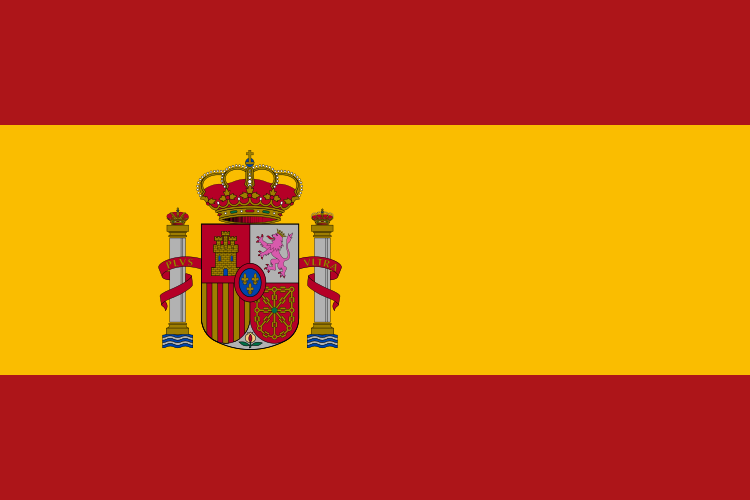
 ESP 16%
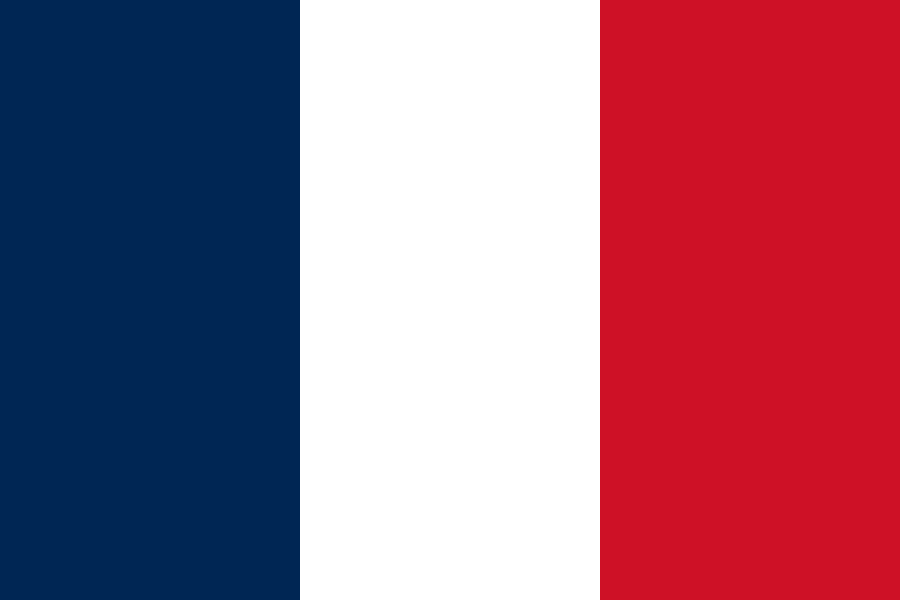 FRA 12%
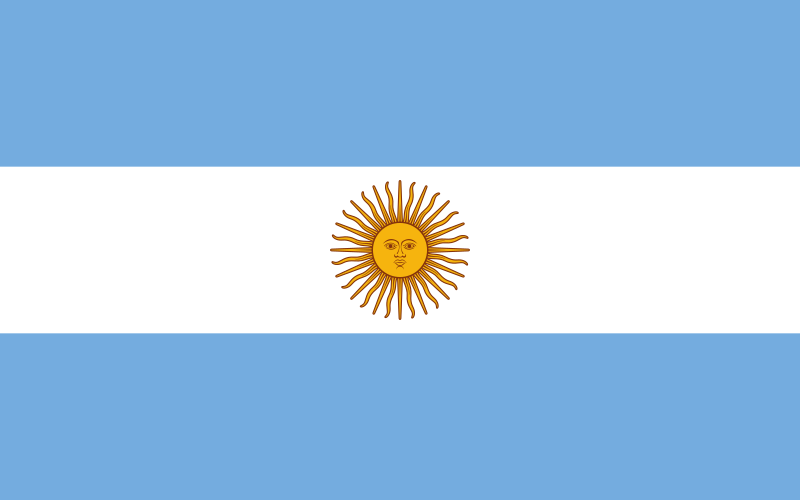 ARG 12%
 BRA 11%
 ENG 10%


World Cup 2026 title odds reveal who the markets really back: Spain top the board at 16%, while Germany, Uruguay and Norway are the biggest movers against their FIFA rank.
The markets' clearest message for World Cup 2026 is that Spain, not top-ranked France, are the team to beat: Spain head the title board at 16%, while France and Argentina sit on 12% apiece and Brazil follows at 11%. Read the odds beside the FIFA rankings, though, and the more interesting story is the gaps, the teams the market rates far higher or lower than their world ranking alone would justify.
Title odds are not just a prettier version of the ranking. The ranking is a backward-looking points formula; the odds are money, a live read on squad quality, draw, form and tournament temperament. When the two disagree sharply, that divergence is the signal. A side priced well above its rank is one the market believes is improving or under-rated; a side priced below is one investors quietly distrust.
This piece tracks the movers in both directions: the positive movers backed beyond their ranking (Germany, Uruguay, Norway, Morocco), the elite order at the top of the board, and the market's sceptics, well-ranked teams the odds refuse to trust. Every figure below is a real title-odds percentage, set against each team's FIFA position.
Ad
Who tops the World Cup 2026 title market?
Spain are the market's pick at 16%, the shortest price of all 48 teams despite ranking second to France in the world. As reigning European champions with the deepest spine of in-prime talent, they are the side the money trusts most to navigate seven knockout rounds across North America.
Behind them sits a cluster of giants separated by fractions. France (FIFA #1) and Argentina (FIFA #3) share 12%, the reigning world champions and the world's top-ranked side bracketed together. Brazil are the eye-catcher here: ranked only sixth, yet priced at 11%, ahead of every team between them and Spain. The market clearly believes Ancelotti's Selecao have more in them than their ranking suggests.
England complete the top five at 10%, a striking number for a side that has not won the tournament since 1966; the market is paying for squad depth and a favourable-looking route rather than history. Portugal (7%), Germany (8%) and the Netherlands (6%) form the next rung, the European heavyweights the markets expect to reach the latter stages without quite installing as favourites.
The pattern at the top is that the markets back balance and depth over raw ranking. France lead the FIFA list but share top billing in the odds; Spain and Brazil are both priced above where their world ranking would place them. The board's headline order is Spain, then the France-Argentina-Brazil-England quartet, then the chasing European pack.
Which teams are the biggest positive movers?
The clearest positive mover is Germany. Ranked only 10th in the world, they are priced at 8%, a tier above the higher-ranked Netherlands (7th, 6%) and level with the kind of figure usually reserved for the top five. The market is pricing a German revival around Florian Wirtz and Jamal Musiala that the slow-moving ranking has not yet caught up with.
Norway are the boldest gamble on the board. They sit 31st in the FIFA rankings, lower than a host of teams given no realistic hope, yet carry 2% title odds. That price is a bet on two players, Erling Haaland and Martin Odegaard, and on a generation finally ending Norway's long absence from major tournaments. No side on the board is rated so far above its ranking.
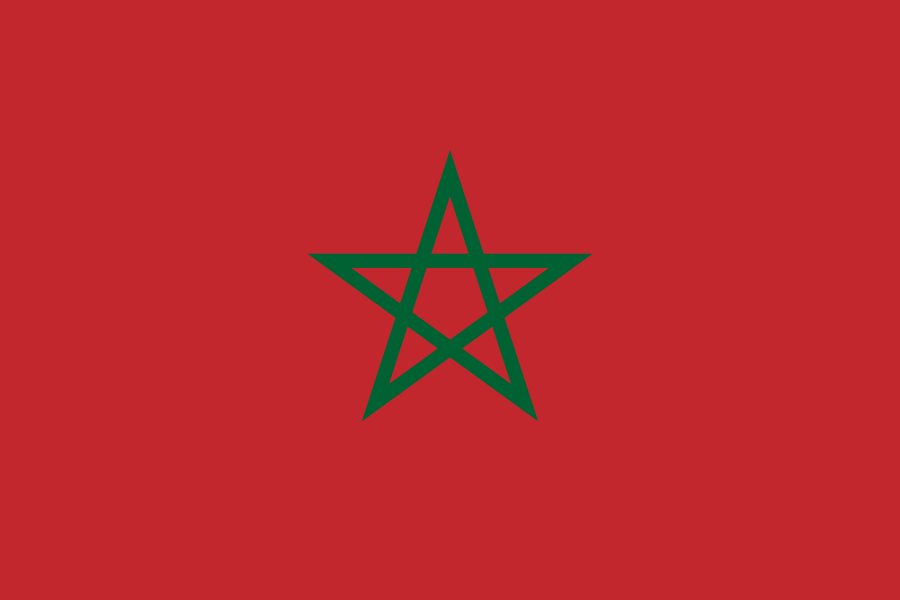
Uruguay are the value pick among the second tier. Ranked 17th but priced at 4%, Bielsa's high-pressing Celeste are backed ahead of several higher-ranked European sides. Morocco, the 2022 semi-finalists, are the leading African contender at 3.5% from eighth in the rankings, with the markets treating their World Cup run as proof of a ceiling rather than a fluke. Even Sweden, only 38th in the world, command 1.5% on the strength of the Alexander Isak and Viktor Gyokeres strike pairing.
What links these movers is a story the ranking cannot tell: emerging talent, a proven tournament run, or a strike force that changes a team's ceiling. The markets are forward-looking, and in Germany, Norway, Uruguay and Morocco they are paying up for upside the FIFA formula has yet to register.
Which well-ranked teams do the markets distrust?
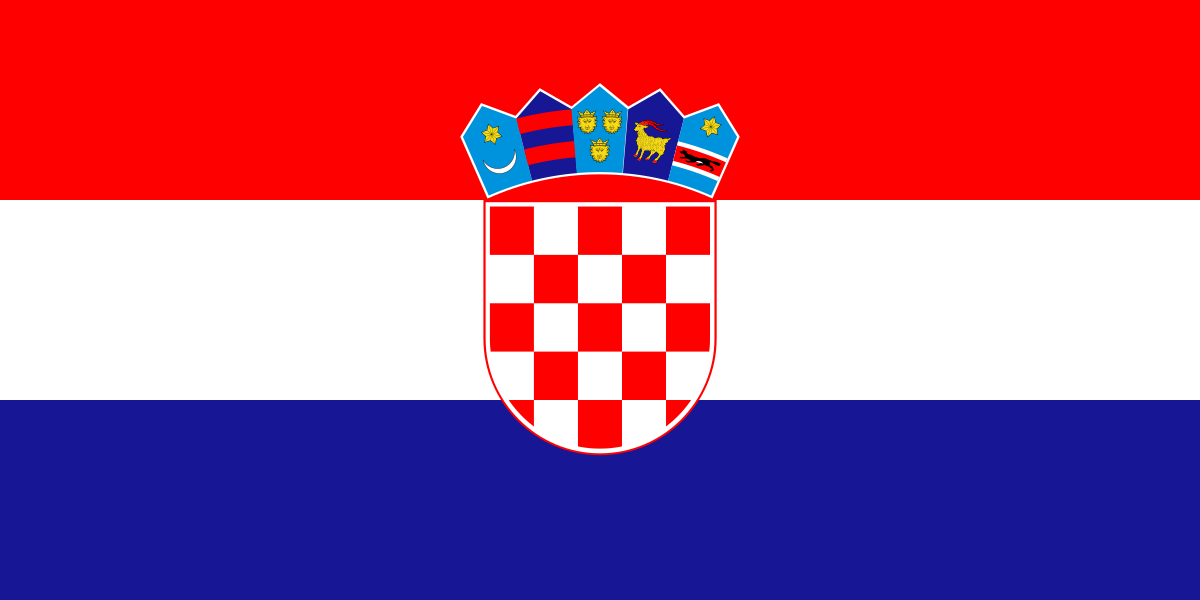
For every positive mover there is a side the odds quietly mark down. Croatia are the obvious example: ranked 11th in the world, the highest of any team outside the elite price bracket, yet given only 2% to win it, the same as 31st-ranked Norway. The market is pricing in the age of a golden generation built around Luka Modric and doubting it has one more deep run in it.
Senegal are similarly distrusted. Africa's highest-ranked side at 14th, loaded with Premier League talent, they are priced at just 1.2%, below Morocco despite the superior ranking. The odds suggest the markets see Senegal as a dangerous knockout opponent rather than a genuine title threat. Switzerland tell the same story from 19th: reliable, well-organised and worth only 1%, a price that respects their floor while doubting their ceiling.
Japan and Colombia round out the cautious cases. Japan are 18th and Asia's most polished side, yet rated 1.5%, the market acknowledging quality but pricing the historical barrier of never reaching a quarter-final. Colombia (13th, 2%) are backed more warmly, but still below where a top-15 ranking might imply, a nod to flair without the defensive certainty title runs demand.
The common thread among the sceptics is a doubt about conversion: these are teams the markets expect to qualify from their groups and trouble seeds, but not to string together four knockout wins. A high ranking earns respect; it does not, on this board, earn a short price.
Why do odds and FIFA rankings diverge?
The two numbers measure different things. The FIFA ranking is a points system that rewards results over a long window, including qualifiers against weak opposition, and it moves slowly. Title odds are a snapshot of money in a one-off knockout tournament, where the draw, squad availability and a single hot goalkeeper can swing everything. Disagreement between them is expected, and useful.
Format amplifies the gap. The 2026 World Cup is the first 48-team edition, with an expanded knockout bracket that lengthens the path to the final. That rewards squad depth and punishes thin rosters, which is part of why deep squads like England, Germany and Brazil are priced above their ranking, while one-or-two-star sides such as Norway are pure upside plays rather than safe bets.
Recent tournament pedigree also weighs heavier in the odds than in the ranking. Morocco's 2022 semi-final and Uruguay's pressing identity under Bielsa earn them prices their rankings would not, because markets trust demonstrated knockout know-how. Conversely, sides whose best results came years ago, like Croatia, see the market discount them even as the ranking lingers.
For readers, the practical takeaway is to treat the ranking as a starting grid and the odds as the live form line. Where the two align, there is little to learn. Where they diverge sharply, in Spain over France, Germany over the Netherlands, Norway over Croatia, the market is telling you something the table cannot.
How should you read the title board?
Group the board into tiers. The genuine contenders are Spain (16%), France and Argentina (12% each), Brazil (11%) and England (10%); win the tournament from outside this group and you have beaten the market's firmest conviction. Anything shorter than around 6% means the markets see a side as a true heavyweight rather than a hopeful.
The second tier, Germany (8%), Portugal (7%), Netherlands (6%) and Uruguay (4%), is where the most interesting value sits. These are the sides priced to reach a semi-final and capable of more, and it is no accident that the positive movers cluster here. If you want a pick with upside beyond the obvious favourites, this band is the place to look.
Below 2%, the board becomes a list of dangerous spoilers rather than champions: Morocco (3.5%), Belgium (3%), Norway, Croatia and Colombia (2% each). These are the teams that decide the favourites' fate without often winning it themselves, the banana skins seeds will be desperate to avoid in the bracket.
Whatever your angle, the single most important number on the board is Spain's 16%. The markets have looked past the FIFA ranking, past France's number one status, and made the Euro 2024 winners their clear favourite. Every other story on the title board, the movers, the sceptics and the value, is told in relation to that one price.
Frequently asked
Who are the favourites in the World Cup 2026 title market?
Spain lead at 16%, followed by France and Argentina on 12% each, with Brazil at 11% and England at 10%. Those five carry the bulk of the market's confidence.
Why do markets back Spain over top-ranked France?
Spain are FIFA #2 but priced shortest at 16%, while France are #1 yet rated 12%. Markets are rewarding Spain's status as reigning European champions and balance over France's ranking alone.
Which team is the biggest mover against its FIFA ranking?
Norway are the boldest pick: ranked just 31st but given 2% title odds, a price driven almost entirely by Erling Haaland and Martin Odegaard rather than ranking.
Who offers the best value among the outsiders?
Uruguay (17th, 4%) and Morocco (8th, 3.5%) are the most generously priced non-elite sides, both rated well above their ranking thanks to recent deep-tournament pedigree.
Which highly ranked teams do the markets distrust?
Croatia (11th, 2%), Senegal (14th, 1.2%) and Switzerland (19th, 1%) are all priced below their ranking, reflecting doubts over age, conversion or ceiling.