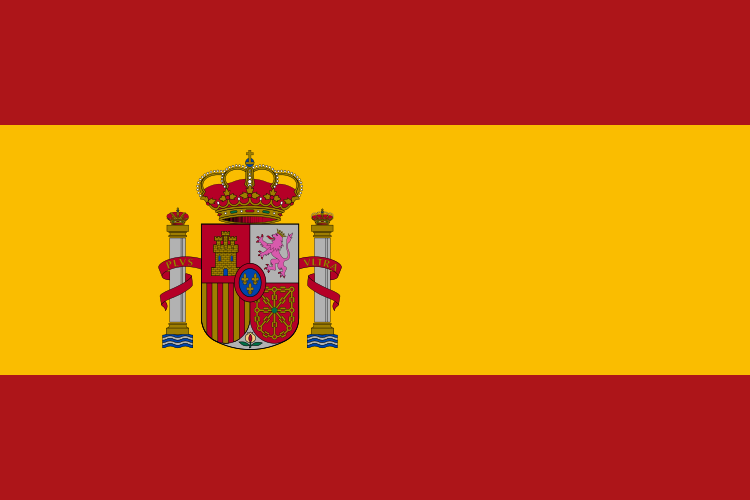
 ESP 16%
 FRA 12%
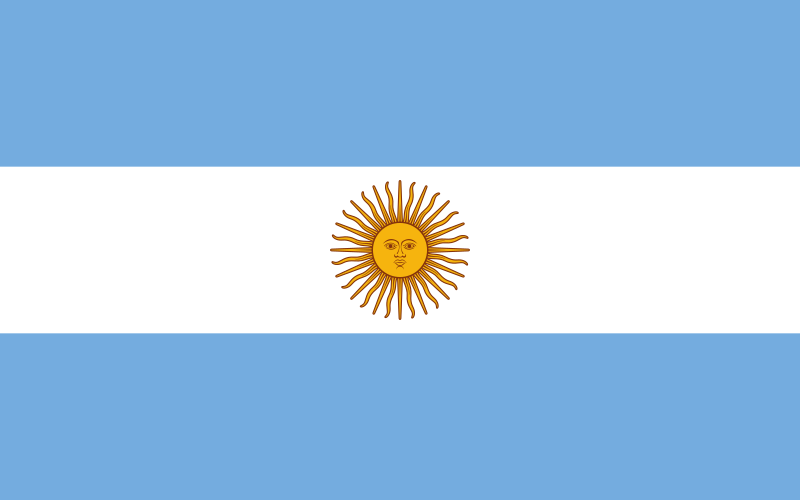 ARG 12%
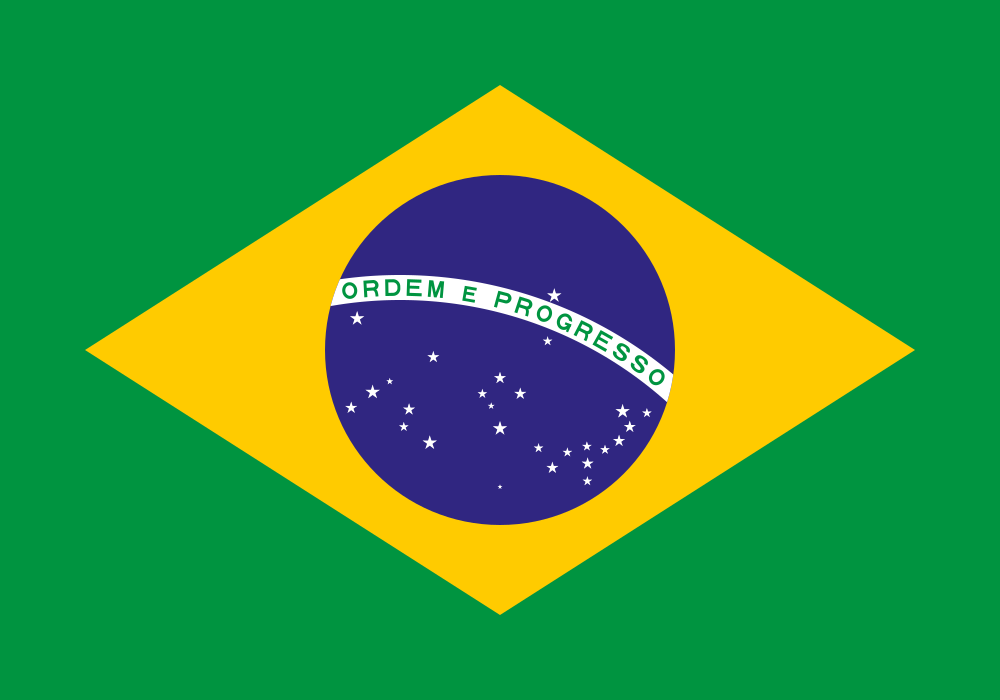 BRA 11%
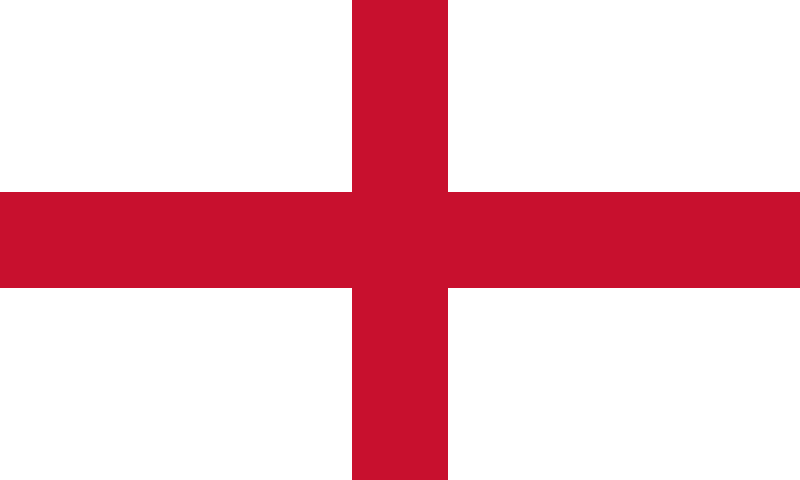 ENG 10%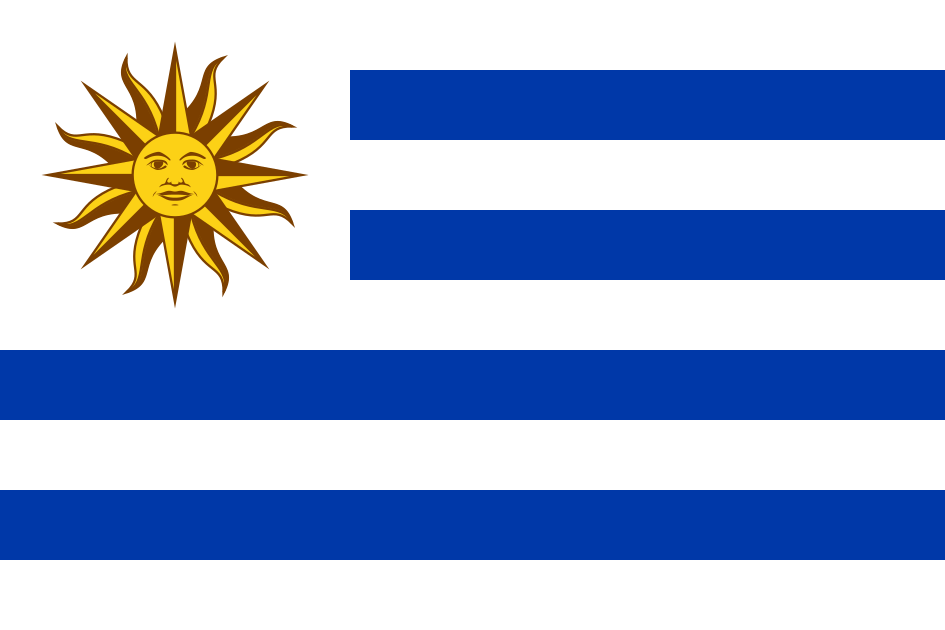

Federico Valverde is the smart World Cup Bronze Ball trade: the award rewards a semi-finalist's standout, and Uruguay's engine is priced off the board.
Back Federico Valverde for the World Cup Bronze Ball. The award goes to the third-best player of the tournament, which in practice means the standout from a team that reaches the semi-finals and loses, and Uruguay's relentless, goal-scoring midfield engine is the perfect fit for that profile while sitting so far down the pecking order that Polymarket does not even list a price for him.
This is the most overlooked market on the board, and that is exactly why it is worth your time. Everyone piles into the Golden Ball, where the crowd simply backs the best player on the best team. The Bronze Ball is different: it is a market you win by thinking about the shape of the tournament, not by naming the most famous footballer alive.
The favourites here tell you the crowd is not thinking that way at all. The top of the market is wall-to-wall France and Spain talent, the two teams most likely to actually win the thing. That is a contradiction, and contradictions are where value lives.
Ad
What actually wins the World Cup Bronze Ball?
Start with the mechanics, because they are the whole edge. The Golden, Silver and Bronze Balls are ranked awards. If a player is the best at the tournament and his team wins, he takes the Golden Ball. The Silver and Bronze then tend to cascade down to the leading figures of the beaten finalist and the losing semi-finalists. You are not pricing who is best; you are pricing who finishes third in a very specific pecking order.
History makes the pattern obvious. In 2022 the Bronze Ball went to Luka Modric, the heartbeat of a Croatia side that reached the semi-finals and lost. In 2018 it went to Antoine Griezmann only because France won and the votes ahead of him were exhausted, while Modric and Eden Hazard, the stars of the beaten teams, took gold and silver. The award consistently rewards a deep run that stops short of glory.
That gives you a clean checklist. You want the biggest name on a team with a realistic route to the last four, but not one of the outright title favourites, because a champion's best player wins a shinier prize. You want a player who carries his side, takes the set pieces and penalties, and produces the moments that voters remember. And ideally you want a price the crowd has not woken up to yet.
Judge every contender against that checklist and most of the Polymarket favourites fail the very first test.
Why the Bronze Ball favourites are mispriced
Look at who leads this specific market. Ousmane Dembele sits top at 31%, with Michael Olise at 26.2% and Kylian Mbappe further back at 6%. That is three France attackers loaded near the front of the book. Add Lamine Yamal at 11.5% and Pedri at 15.8% and you have Spain's spine stacked on top of them. These are the players most likely to be fighting over the Golden and Silver Balls, not the Bronze.
That is the crux of the mispricing. France carry 12% title odds and Spain 16%, the two shortest prices in the tournament. If either side goes all the way, its best performer wins gold, its next-best chases silver, and the Bronze Ball flows to a player from a team that fell in the semis. Backing Dembele or Yamal for bronze is, in effect, a wager that their team runs deep but they personally finish third in their own dressing room's queue. It is a muddled position.
The names built purely on scoring, meanwhile, are Golden Boot stories dressed up as Golden Ball ones. Erling Haaland at 22.8% and Harry Kane at 22.3% are elite finishers, but the Ball awards are about tournament-defining influence across a run, and both depend on Norway and England reaching the last four in the first place. Vinicius Jr at 19.7% is the most rational favourite, yet Brazil's 11% title odds mean he is just as likely to be chasing gold or silver as bronze.
The chart below is a current snapshot and it will move, but the message is durable: the market is paying up for champions-elect in a market that structurally punishes champions. That is the gap to attack.
Why Federico Valverde fits the Bronze Ball profile
Now apply the checklist to Federico Valverde and watch it light up. He is the single most important player in Bielsa's Uruguay: a box-to-box midfielder who covers every blade of grass, drives the team forward, strikes goals from distance that end up on montage reels, and shoulders penalty and set-piece duty. When Uruguay do something memorable at this tournament, the camera and the voters will find him.
Crucially, he is the biggest name on a side that is a genuine dark horse rather than a title favourite. Uruguay's 4% title odds place them firmly in the second tier, exactly the band from which Bronze Ball winners emerge. Nobody expects Uruguay to lift the trophy, which means Valverde is never going to be siphoned off into the Golden Ball conversation the way Dembele, Yamal or Vinicius could be. If Uruguay reach a semi-final, he is the obvious standout of a beaten last-four team, which is the Bronze Ball in one sentence.
Contrast his style with the finisher-favourites. Haaland and Kane need goals and little else to have a case, but a striker who is quiet in a defeat gets forgotten. Valverde influences games even when he does not score, through his running, his tackling and his tempo, the sort of all-pitch impact that wins media votes for a tournament body of work. He is the archetype voters reach for once the champion's stars are off the board.
And the price is the whole point: Valverde does not even feature in Polymarket's listed top ten. The crowd has him off the board while paying 31% for a France winger who probably wins a bigger prize if his story comes true. That is the definition of a market ignoring the right profile.
How Uruguay's route could deliver a Bronze Ball
The trade only works if Uruguay actually run deep, so be honest about the path. Under Marcelo Bielsa they are one of the most distinctive sides in the field: an aggressive, high-pressing, front-foot team that suffocates opponents and turns matches into the kind of chaos where a driving midfielder thrives. That is a template that travels in knockout football, where organisation and intensity beat possession for its own sake.
The talent around Valverde makes a semi-final credible rather than fanciful. Darwin Nunez gives Uruguay a genuine spearhead, Manuel Ugarte screens the midfield so Valverde can push forward, and Bielsa has the experience to plot a route through a favourable half of the draw. Uruguay have reached World Cup semi-finals in living memory, and a nation of their pedigree landing in the last four would surprise nobody who follows the game closely.
That is the sweet spot for this market. You do not need Uruguay to win the World Cup, which is just as well given their price. You need them to reach the semis and lose, with Valverde carrying them there. That single, plausible outcome is the highest-probability path to a Bronze Ball, and it is precisely the outcome the current book is not paying for.
If you think Uruguay are a live dark horse, and plenty of sharp observers do, then Valverde is the cleanest way to express it in a Ball market without paying champion prices.
The risks to the Valverde Bronze Ball trade
No non-consensus call is risk-free, and this one has two clear ways to fail. The first is Uruguay going out early. If Bielsa's press misfires and they exit in the round of 16 or the quarters, Valverde has essentially no route to the award, because the Bronze Ball almost never goes to a player whose team did not reach the last four. This is a market that lives and dies on your team's run.
The second risk is intra-squad competition for the narrative. If Darwin Nunez goes on a scoring spree, the Uruguay story could tilt toward the striker rather than the midfielder, splitting votes. It is a real consideration, though Valverde's all-round, every-minute influence is exactly the kind of profile that tends to win media awards over a hot-streak finisher who can disappear for ninety minutes.
There is also the possibility that the tournament plays to script, France and Spain contest the final, and the Bronze Ball drops to one of their listed favourites after all. That is why this is a value play, not a certainty: you are being paid a long price to take the more likely structural outcome that a semi-finalist's star, not a champion's, claims third. Size the position for what it is, an overlooked market with an asymmetric payout.
Weigh those risks against the reward. You are backing the right profile at a price the crowd has left off the board entirely, and that is the trade the smart money in an ignored market is built to find.
Trade the World Cup Bronze Ball on Polymarket
Here is the bottom line: the World Cup Bronze Ball rewards the standout of a team that reaches the semi-finals and loses, the favourites are stacked with France and Spain stars who would win bigger prizes if their runs come true, and Federico Valverde is the profile-perfect pick the market has priced off the board. That is the whole thesis in one breath.
You can trade the World Cup Bronze Ball market right now on Polymarket, where every contender carries a live implied probability. The figures in this article are a current snapshot and they will keep moving with every group-stage result and every kind draw, so check the live price before you act and watch how the market reacts as Uruguay's path becomes clearer.
If you are new, Polymarket is offering a strong entry point: Deposit $20, Get a $50 Trading Bonus with promo code TGSWC. That is a simple way to get a position on an ignored market at prices that will not last once the crowd catches on to the Bronze Ball's real profile.
Do your own homework, take the non-consensus side, and trade the World Cup Bronze Ball market on Polymarket while Valverde is still off the board.
Frequently asked
What is the World Cup Bronze Ball?
The Bronze Ball is the award for the third-best player at a World Cup, voted on by the media, behind the Golden Ball and Silver Ball. Historically it tends to go to the standout figure of a team that reaches the semi-finals but does not win the tournament, such as Croatia's Luka Modric in 2022.
Who is favourite for the World Cup Bronze Ball?
Ousmane Dembele leads the Polymarket market at 31%, followed by Michael Olise at 26.2%, Erling Haaland at 22.8% and Harry Kane at 22.3%. Those are current snapshots and will keep moving as the tournament nears.
Why back Federico Valverde for the Bronze Ball?
Valverde is Uruguay's midfield engine, penalty and set-piece presence and biggest name, so if Bielsa's side reaches a semi-final he becomes the obvious storyline. He fits the deep-run-without-winning profile the Bronze Ball rewards, yet sits off the board on price.
Where can I trade the World Cup Bronze Ball market?
You can trade the World Cup Bronze Ball market on Polymarket, where every contender carries a live implied probability that moves with each result. New users can currently Deposit $20 and Get a $50 Trading Bonus with promo code TGSWC.