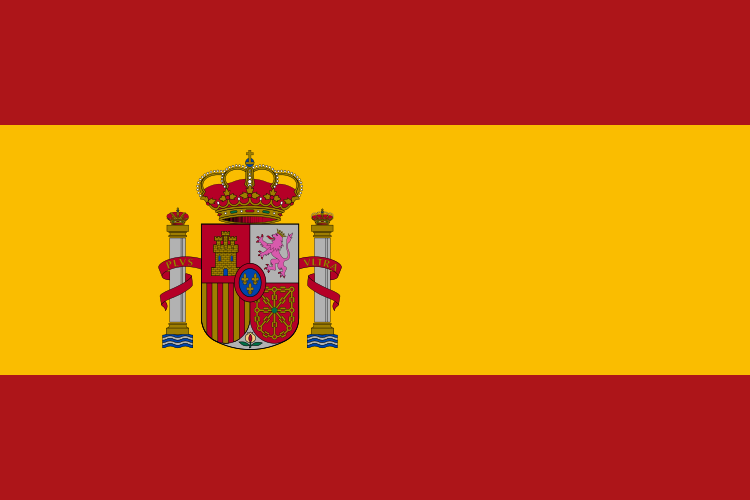
 ESP 16%
 FRA 12%
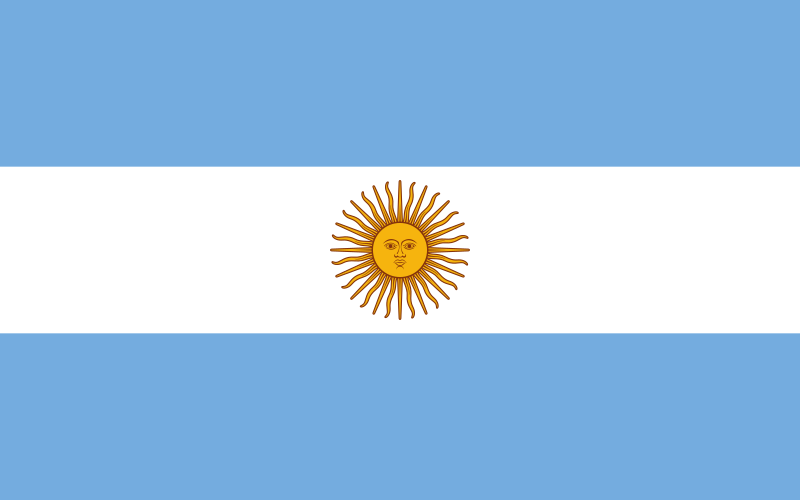 ARG 12%
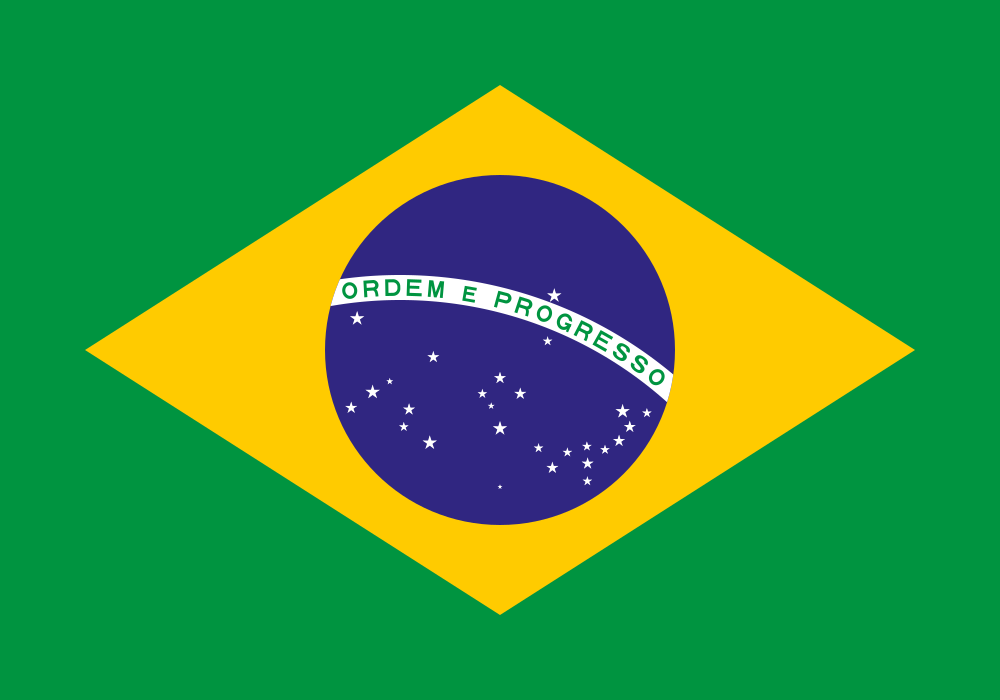 BRA 11%
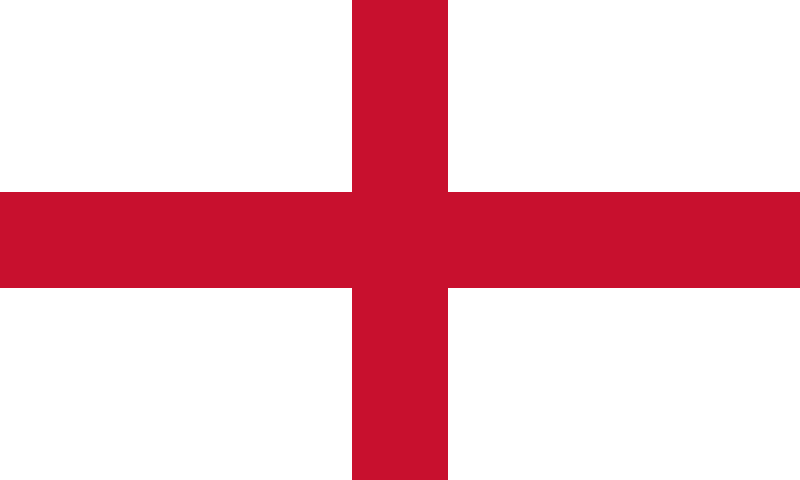 ENG 10%

The World Cup Bronze Ball rewards the standout of a beaten semi-finalist, and Erling Haaland at 4.1% is the value the crowd is ignoring on Polymarket.
Back Erling Haaland at 4.1% for the World Cup Bronze Ball. The third-placed individual award almost always lands on the standout of a team that reaches the last four and then loses, and Norway's 7-goal talisman is the most under-priced name who fits that mould. The crowd is stacking money on champions-in-waiting; the smart read is on the beaten semi-finalist.
Look at where this market sits right now. Lionel Messi is priced at 20.9% and Harry Kane at 18.6%, with Michael Olise (13.1%), Jude Bellingham (12.6%) and Lamine Yamal (8.2%) filling out the top five. Haaland is buried down in ninth on 4.1%, behind Ousmane Dembele, Kylian Mbappe and Rodri. That is the mispricing.
The reason is simple and it is the whole point of this article: the Bronze Ball is not a 'best player' market, it is a 'third-best player' market, and third place has a very specific profile that the favourites do not match. Get the profile right and Haaland is not a 4.1% shot. He is the single best-shaped name on the board.
Ad
What actually wins a World Cup Bronze Ball?
FIFA hands out three individual awards after the final: the Golden Ball for the best player, the Silver Ball for the runner-up and the Bronze Ball for third. The key structural fact is that the top two almost always come from the two finalists, because voters reward the players who carried teams all the way. That squeezes the Bronze Ball toward someone whose run ended a round earlier.
The recent history is blunt about it. In 2022 the Bronze Ball went to Luka Modric, whose Croatia lost in the semi-finals and finished third. In 2014 it went to Arjen Robben, whose Netherlands also lost in the last four. The award repeatedly rewards the best player on a side that reaches the semis and bows out, not the star of the champions.
That is why the profile matters more than the raw talent ranking. You are not looking for the tournament's best footballer; the market has other names for him. You are looking for a genuine superstar, ideally a heavy scorer, whose team is good enough to reach the semi-final but not favoured to win it. The narrative of the nearly-man is what pulls Bronze Ball votes.
Hold that template against the current field and the favourites start to look awkward. Messi, Kane, Bellingham and the France trio are all attached to sides that are among the four most likely champions. If those teams go all the way, their best players compete for the Golden and Silver Ball, not the Bronze. The award you are trading is shaped for the losing semi-finalist.
Why the market's favourites are mispriced for third place
Here is the paradox the crowd is missing. Messi at 20.9% and Kane at 18.6% are priced as if this were a straight 'name the best player' market. But their prices are inflated precisely by how good their teams are. If Argentina or England win the tournament, Messi and Kane are Golden or Silver Ball candidates, and a Bronze Ball ticket loses. Their strength works against them in this specific market.
The same logic dents the France names. Olise (13.1%), Dembele (7%) and Mbappe (6.3%) are splitting the vote of a single squad that is the tournament favourite. If France lift the trophy, at most one of them realistically finishes third in the voting, and more likely the leading Frenchman ends up higher than bronze. Three priced names on one deep team is a recipe for everyone overpaying.
So the favourites are caught in a double bind: too good to be third if their team wins, and split across squads if their team runs deep. That is the gap Haaland exploits. He is the rare elite scorer attached to a side nobody expects to be champions, which is exactly the lane the Bronze Ball lives in.
The chart below is this market's own implied probabilities as a current snapshot. Read it not as a talent ranking but as a map of where the crowd's money is, then ask which of these names actually fits a third-place finish rather than first or second.
Why Erling Haaland fits the Bronze Ball profile
Start with the goals, because voters do. Haaland has 7 in this tournament, making him the outright third-top scorer behind Mbappe and Messi on 8 apiece. A player sitting third in the Golden Boot race, from a team that reaches the semi-finals, is the closest thing this market has to a natural Bronze Ball archetype. The symmetry is almost too neat.
Then look at the run. Norway have not backed into the last eight; they have earned it, knocking Brazil out 2-1 and beating Ivory Coast along the way. Those are the kind of scalps that build a tournament narrative, and Haaland has been the face of it. Add Martin Odegaard's craft behind him and this is a side capable of one more upset.
Crucially, Norway are not a title favourite, and that is a feature, not a bug, for this market. The crowd's reluctance to price Haaland reflects doubt that Norway win the whole thing, but winning the whole thing is not what pays a Bronze Ball ticket. Reaching the semi-final and losing is the sweet spot, and a heavyweight scorer on a plucky, giant-killing side is exactly who voters gravitate to when the champions' stars are taken.
At 4.1% the market is treating Haaland as a long shot on team strength alone, while ignoring that his individual case is stronger than almost anyone above him. That mismatch between his goal tally and his price is the value.
The catch: Norway have to reach the last four
This is not a free lunch, so be clear-eyed about the scenario. The Haaland ticket needs Norway to keep winning and reach the semi-finals. They are among the eight nations still standing, but the path is unforgiving with France, England, Spain and Argentina all still alive. If Norway exit before the last four, the individual case never gets the platform it needs.
There is also an upside tail to weigh. If Norway somehow go all the way, Haaland's goals would push him toward the Golden or Silver Ball rather than the Bronze, which would actually work against this specific ticket. The bullseye is narrow: Norway reach the semi-final, Haaland keeps scoring, and they lose to one of the giants. That is the exact shape that Modric and Robben rode to bronze.
The way to think about it is expected route, not certainty. You are pricing the probability that a 7-goal superstar carries an outsider into the last four and falls short. Given how the draw has opened and how Haaland is playing, 4.1% underrates that path. You do not need Norway to be champions; you need them to be the tournament's noble loser, and they are built for exactly that role.
How to price the World Cup Bronze Ball market
When you trade this market, resist the pull of name recognition. Messi and Kane top the board partly because they are the names casual traders reach for first, and recency bias from every highlight reel keeps their prices firm. That is precisely the crowd behaviour that leaves value on less obvious profiles further down the list.
Weight two things above raw reputation: a player's likely route through the latter rounds, and whether a deep run leaves them competing for bronze rather than gold. A star on a probable finalist is arguably in the wrong market at third place. A star on a probable semi-finalist is in the right one. Sort the board by that question and the favourites and Haaland swap places.
Goals matter more than pure playmaking to voters who fill these ballots quickly, which is another point in Haaland's favour and a slight knock on the deeper-lying names. A tally on the scoresheet is the simplest story a voter can tell, and Haaland's 7 is the third-loudest story in the tournament.
Finally, treat every figure here as a snapshot. These implied probabilities move with every knockout result, and a single Norway win in the last eight could reprice Haaland sharply. The edge is largest before that happens, which is the argument for reading the live price now rather than after the crowd catches up.
Trade the Bronze Ball market on Polymarket
You can trade the World Cup Bronze Ball market on Polymarket right now, where every contender carries a live implied probability that shifts with each semi-final result. Erling Haaland at 4.1% is the specific number to watch: if you buy the profile argument, that price is the entry point before a Norway run forces it upwards.
Remember these are current snapshot figures, not settled odds. Messi at 20.9% and Kane at 18.6% lead today, but a single knockout swing can reshuffle the whole board, so check the live market before you act rather than trusting the numbers on this page.
New to the market? Polymarket's current offer is hard to ignore: Deposit $20, Get a $50 Trading Bonus with promo code TGSWC. That gives you the funds to take a position on Haaland's Bronze Ball case, or to trade against the crowded favourites, while the semi-finals are still to be decided. Head to Polymarket, check the live price and make your call.
Frequently asked
What is the World Cup Bronze Ball?
The Bronze Ball is FIFA's award for the third-best individual player of the tournament, sitting behind the Golden Ball and Silver Ball. It is voted on by media, so narrative, goals and deep runs all feed the decision.
Who is favourite for the 2026 World Cup Bronze Ball?
Lionel Messi leads the Polymarket market at 20.9%, with Harry Kane close behind at 18.6%. Those are current snapshot prices and will keep moving as the semi-finals play out.
Why back Erling Haaland for the Bronze Ball?
Haaland is the tournament's third-top scorer on 7 goals, yet he is priced ninth at just 4.1%. The Bronze Ball rewards the standout of a team that reaches the last four and loses, and Norway fit that profile better than the favourites' nations do.
Where can I trade the World Cup Bronze Ball market?
You can trade the Bronze Ball market on Polymarket right now, where every contender has a live implied probability. New traders can deposit $20 and get a $50 trading bonus with promo code TGSWC.