ESP 16%
 FRA 12%
 ARG 12%
 BRA 11%
 ENG 10%
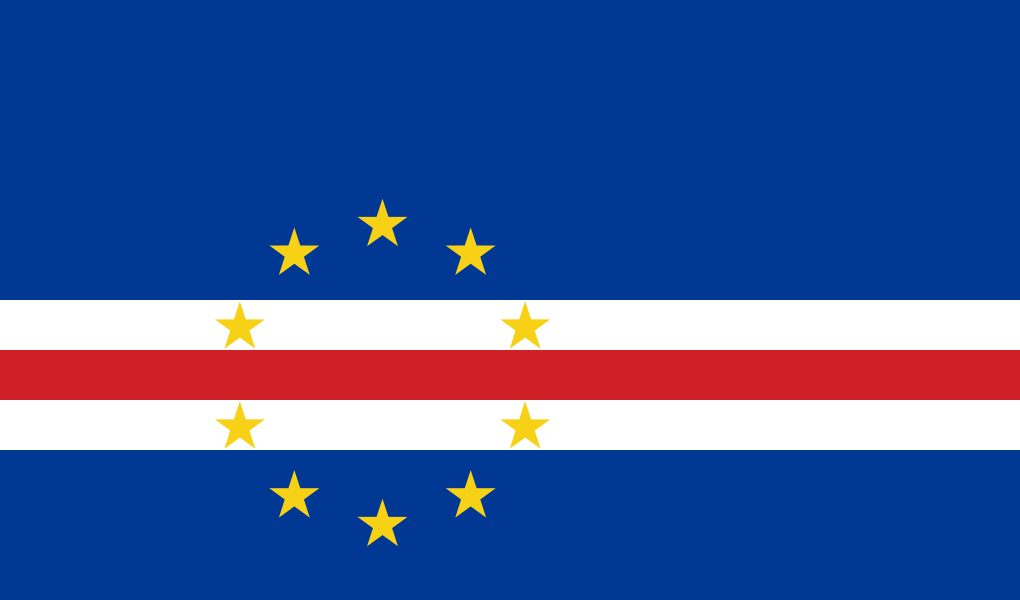

Cape Verde's World Cup 2026 debut saw the Blue Sharks finish second in Group H above Uruguay before a 1-1 draw with Argentina ended their run in the last 32.
Cape Verde's first World Cup ended in the Round of 32, where the Blue Sharks held reigning champions Argentina to a 1-1 draw before going out on penalties. For a nation ranked 69th in the world and priced at just 0.1% to lift the trophy, reaching the last 32 as debutants and pushing the eventual finalists to a shootout was a ceiling few outside the islands dared predict.
The story was not simply that Cape Verde turned up. It was that they belonged. A second-place finish in Group H, ahead of Marcelo Bielsa's Uruguay and the Saudi Arabia side that toppled Argentina four years earlier, announced that this was no token appearance. The Atlantic archipelago, one of the smallest nations ever to reach a World Cup, left the tournament with its reputation transformed.
This analysis traces how Cape Verde navigated a brutal group, how their knockout run unfolded against Argentina, what underpinned the campaign on the pitch, and where the realistic ceiling sat for a team that had never been here before.
Ad
How did Cape Verde reach the knockouts?
Cape Verde were drawn into Group H alongside Euro 2024 winners Spain, Bielsa's Uruguay and Saudi Arabia, a pool that looked designed to send the debutants home early. Instead, they finished second on 3 points with a neutral goal difference, behind Spain's 7 and clear of Uruguay (2 points) and Saudi Arabia (2 points). On paper they were the lowest-ranked side in the group by some distance; in reality they finished above two established heavyweights.
The margins tell the story of the group's chaos. Cape Verde, Uruguay and Saudi Arabia were separated by a single point, and the Blue Sharks' refusal to lose their shape made the difference. A goal difference of zero across three games points to a side that defended with discipline and took its moments, rather than one that blew opponents away. In a group this tight, that balance was worth more than flair.
Finishing above Uruguay carried particular weight. The Celeste arrived ranked 17th in the world and carrying genuine dark-horse billing under one of football's most demanding coaches. For a team from a population of a few hundred thousand to edge them out over three matches was the single most important result of Cape Verde's tournament, and the one that secured a knockout berth nobody had pencilled in.
How far did Cape Verde go in the knockouts?
Second place in Group H set up a Round of 32 meeting with Argentina, the reigning world champions and one of the clear favourites at 12% to win the whole thing. It was, on every pre-match metric, a mismatch: the side ranked third in the world against the side ranked 69th, a squad of global superstars against a group of debutants.
Cape Verde did not read the script. They matched Argentina for long spells and found a goal to force a 1-1 scoreline, dragging the champions into a penalty shootout that the Blue Sharks ultimately lost. Argentina advanced, went on to the final and underlined just how fine the margin was: the team that nearly knocked Cape Verde's conquerors out would be beaten by the eventual finalists only from twelve yards.
There is no shame in that exit, and plenty of pride. Argentina's route from that point ran through Egypt, Switzerland and England before the final, a gauntlet of serious sides, yet none of them took Lionel Messi's team closer to the brink in open play than the debutants did in the last 32. Cape Verde left the tournament unbeaten in 90 minutes against the finalists, a line that will anchor the islands' footballing folklore for years.
For context, plenty of far more fancied names never got this far or exited just as abruptly. Co-hosts Mexico and the United States, Brazil, Germany and the Netherlands all fell before or at the same juncture across the bracket. Cape Verde's single-tie knockout run was short, but it ended against the eventual finalists and only on penalties, which is as honourable an exit as a debutant could script.
Who were Cape Verde's key players?
The most revealing statistic about Cape Verde's campaign is one of absence: no Blue Shark features among the tournament's top scorers, a chart headed by Kylian Mbappé's 10 and Lionel Messi's 8. This was not a team carried by one name. It was a collective, and that is precisely why it worked against sides packed with individual stars.
The foundation was defensive. A neutral goal difference through a group containing Spain, Uruguay and Saudi Arabia speaks to an organised back line and a goalkeeper who stood up when required. Holding Argentina to a single goal across normal and extra time in the Round of 32 was the clearest evidence of a unit that defended as a block, stayed compact and refused to be pulled apart by superior technical players.
Cape Verde's squad is built, as it has been for a generation, on a diaspora of players developed across Portugal and the wider European leagues, giving the islands a technical grounding far beyond what their size suggests. That blend of European schooling and fierce national pride produced a team greater than the sum of its parts, capable of frustrating elite opponents and punishing the rare chances that came their way.
If there is a lesson for future debutants, it is in this model: defend brilliantly, stay disciplined for 90 minutes, and trust that moments will come. Cape Verde did not need a Golden Boot contender to reach the knockouts and stretch the champions. They needed a system, and they had one.
How far could Cape Verde realistically go?
Set against the raw numbers, Cape Verde slightly overachieved and then met a fair ceiling. Ranked 69th and rated at 0.1% to win the tournament, their realistic best case was escaping the group, and they did exactly that. The Round of 32 draw with Argentina then represented the point at which the gulf in squad depth and tournament pedigree finally told, even if only on penalties.
Could they have gone further with a kinder draw? Possibly. A second-placed finish funnelled them straight into the path of one of the title favourites, whereas a different bracket might have offered a more navigable last-32 tie. But that is the reality of finishing behind a seed like Spain: the reward for qualifying is often a giant in the next round. Cape Verde took that giant to the wire.
The honest verdict is that this was close to the maximum a side of their ranking and resources could extract from the tournament. Reaching the knockouts was the headline achievement; forcing penalties against the eventual finalists was the bonus that turned a solid debut into a genuinely memorable one. Expecting a quarter-final from a first-ever appearance by the 69th-ranked nation was never realistic, and nothing about the run should be measured against that bar.
What does Cape Verde's debut mean?
Cape Verde arrived at World Cup 2026 as a fairytale qualifier and left as a template. The islands proved that a tiny nation with a clear identity, a well-drilled defensive structure and a diaspora talent pool can not only reach the biggest stage but compete on it. That is a legacy worth more than any single result.
The wider African picture adds colour to the achievement. The continent sent strong sides to the tournament, from Morocco and Ivory Coast to Senegal and Egypt, and Cape Verde held their own in that company by matching the knockout-stage benchmark several of them reached. For a debutant ranked below all of them, simply being in the conversation was a statement.
There is also a human scale to this that resonates beyond football. A population measured in the hundreds of thousands produced a team that outlasted Uruguay in a World Cup group and took the reigning champions to penalties. Stories like that are why the expanded 48-team format exists, and Cape Verde justified the experiment better than almost any newcomer.
The run is over, and the Blue Sharks head home eliminated, but the direction of travel is set. A first World Cup usually teaches a nation what the level demands. Cape Verde learned that lesson while already proving they could meet it, and that combination of experience and belief is the most valuable souvenir they could take back to the Atlantic.
Frequently asked
How far did Cape Verde get at the 2026 World Cup?
Cape Verde reached the Round of 32 on their tournament debut. They were eliminated there after a 1-1 draw with Argentina, who advanced on penalties.
Did Cape Verde get out of their group at World Cup 2026?
Yes. Cape Verde finished second in Group H with 3 points and a neutral goal difference, behind only Spain and ahead of both Uruguay and Saudi Arabia.
Who knocked Cape Verde out of the 2026 World Cup?
Argentina. The reigning champions were held to a 1-1 draw in the Round of 32 before edging through on penalties and going on to reach the final.
Who did Cape Verde finish above in Group H?
Cape Verde finished above Uruguay, ranked 17th in the world under Marcelo Bielsa, and Saudi Arabia, the side that famously beat Argentina in 2022.
Was Cape Verde's 2026 World Cup campaign a success?
Emphatically. As FIFA #69 debutants priced at 0.1% to win the trophy, reaching the knockouts and taking Argentina to penalties exceeded every realistic expectation.