 ESP 16%
 FRA 12%
 ARG 12%
 BRA 11%
 ENG 10%

At World Cup 2026 the dark-horse ceiling was the quarter-final: Norway and Switzerland went out there, and every semi-finalist was a pre-tournament heavyweight.
The furthest any true dark horse travelled at World Cup 2026 was the quarter-final, where both Norway and Switzerland were eliminated. No unfancied side reached the semi-finals: the last four belonged entirely to Spain, France, England and Argentina, the four biggest names in the bracket, and the final itself was an all-heavyweight showdown between Spain and Argentina that finished goalless.
That does not diminish what the outsiders achieved. Norway, ranked FIFA #31 with pre-tournament title odds of just 2%, dumped Brazil out 2-1 in the Round of 16 before falling to England. Switzerland, priced at 1%, ground their way to the last eight on the back of clean sheets and shootout nerve. Paraguay eliminated Germany, Cape Verde took the reigning champions to the wire on debut, and Egypt reached the Round of 16. The knockout rounds were littered with dark-horse fingerprints.
But there was a hard ceiling, and it sat at the quarter-final. This piece maps how far each surprise package actually went, explains why none of them could crack the semi-finals, and identifies which of them overachieved by the widest margin against their odds.
Ad
How far did each dark horse go?
Norway were the pick of the outsiders. Erling Haaland and Martin Odegaard dragged them out of a brutal Group I as runners-up, and the knockouts turned into a statement. They saw off Ivory Coast 2-1, then produced the shock of the round by beating Brazil 2-1 in the Round of 16. Only England, who edged them after a 1-1 quarter-final, could stop them. Haaland's seven goals left him as the tournament's third-top scorer behind Kylian Mbappe (10) and Lionel Messi (8).
Switzerland matched Norway stride for stride, if less spectacularly. They topped Group B on 7 points, beat Algeria 2-0, then outlasted Colombia in a goalless Round-of-16 tie on penalties (4-3). Their quarter-final against Argentina finished 1-1 before the champions progressed. It was a run built on organisation rather than flair, and it took the eventual finalists to squeeze them out.
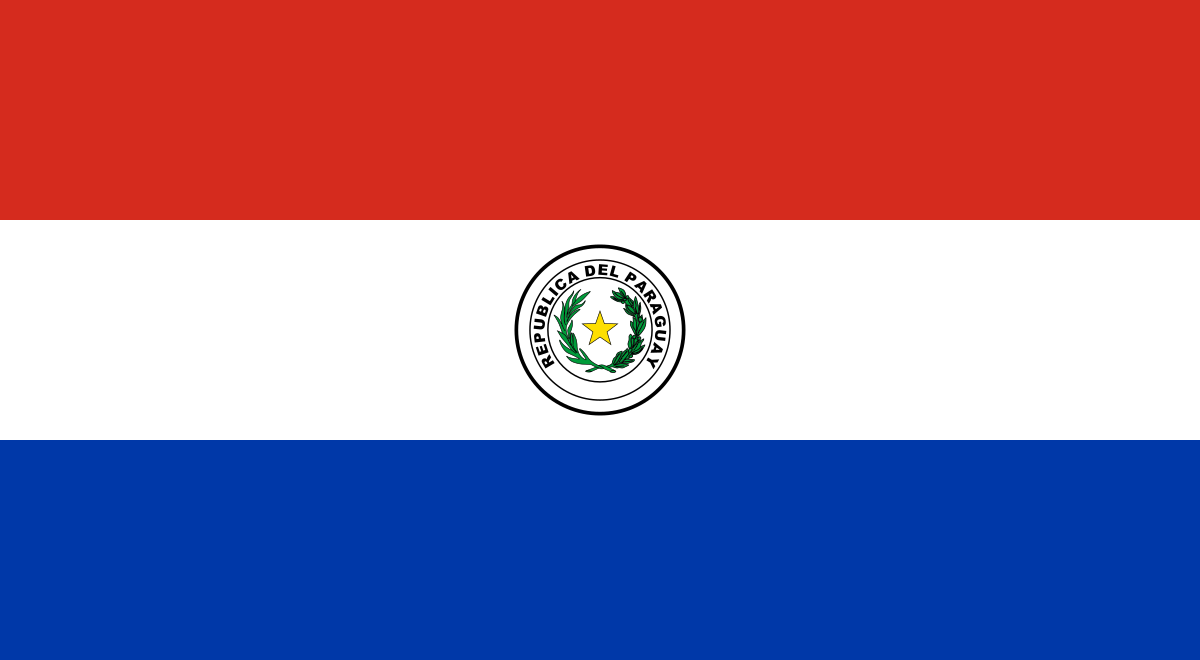
Paraguay supplied the biggest single scalp of the early knockouts. Having sneaked through Group D as one of the best third-placed teams, they held Germany to a 1-1 draw and won the shootout 4-3, ending one of the pre-tournament favourites' campaigns. France halted them 1-0 in the Round of 16, but the Germany result alone justified their inclusion among 2026's genuine overachievers.
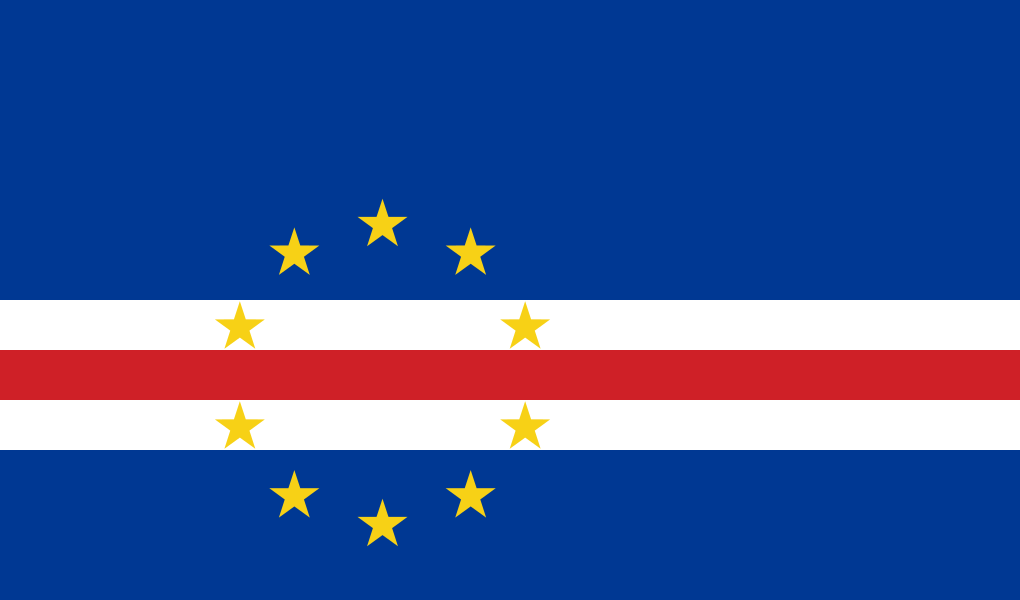
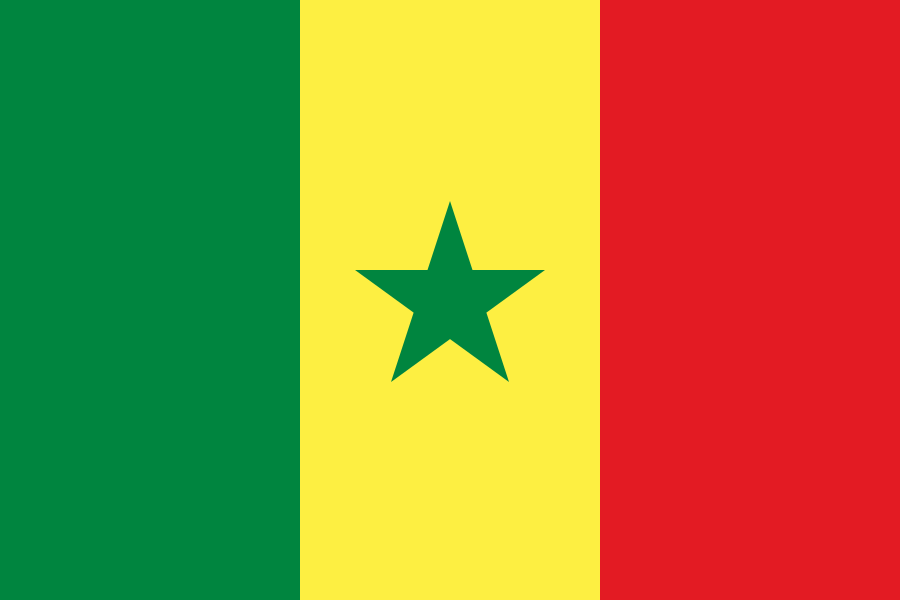
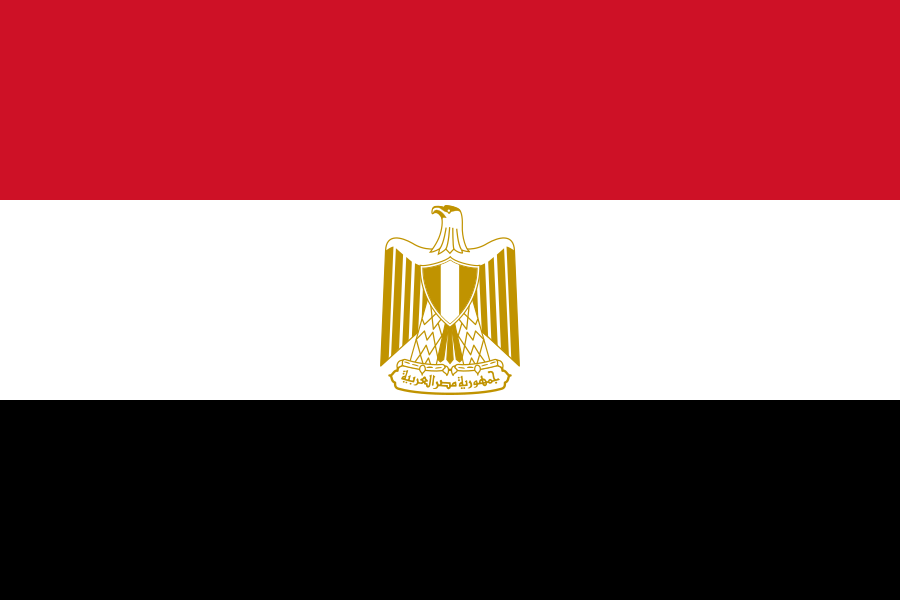
Egypt and Senegal carried the African banner deep. Salah's Egypt beat Australia on penalties (4-2) after a 1-1 draw, then pushed Argentina all the way in a 3-2 Round-of-16 defeat. Senegal, Africa's highest-ranked side at FIFA #14, exited in the Round of 32 when Belgium edged a 2-2 thriller, with Ismaila Sarr finishing on four goals. And then there was Cape Verde: FIFA #69, on debut, holding reigning champions Argentina to 1-1 in the Round of 32 before bowing out. For the smallest nation ever to reach a World Cup, it was a fairytale that outran every projection.
The chart below shows just how lightly the market rated these sides before a ball was kicked. That any of them reached the last eight, and that all of them won a knockout tie or took a giant to the brink, is the story of the tournament's underbelly.
Why the quarter-final proved the dark-horse ceiling
The cleanest way to measure a dark horse is to ask where the door finally shut, and in 2026 it shut at the quarter-finals for every last one of them. The semi-final line-up read Spain (title odds 16%), France (12%), England (10%) and Argentina (12%): four of the five most fancied sides in the entire field. Pedigree, not romance, decided the last four.
The quarter-final results tell the tale. France beat Morocco 2-0, Spain edged Belgium 2-1, and the two ties involving genuine outsiders both ended 1-1 before the favourites advanced: England over Norway and Argentina over Switzerland. In each case the dark horse matched the giant for 90 or 120 minutes, then ran out of margin at the decisive moment. The gap was small, but it was real and it was consistent.
That pattern exposes the structural limit facing unfancied teams at a 48-team World Cup. Reaching the quarter-finals now requires surviving the Round of 32 and Round of 16, meaning a dark horse must beat or outlast three knockout opponents just to arrive at the last eight, often via penalties, and frequently while carrying a thinner squad than the elite. By the time they meet a top seed with fresh legs and a deeper bench, the accumulated toll shows.
It is worth stressing how narrowly the ceiling held. Norway led against England before being pegged back; Switzerland took Argentina to the wire; Cape Verde and Egypt both forced the champions into anxious finishes. The dark horses did not collapse at the quarter-final stage so much as lose the fine margins, which is exactly what separates a memorable run from a historic one.
What did the deepest dark-horse runs have in common?
Firepower was not the common thread; resilience was. The teams that lasted longest defended in numbers and trusted their goalkeepers. Switzerland reached the quarter-finals having conceded sparingly, keeping Colombia out for 120 goalless minutes before winning on penalties. Norway's 2-1 wins over Ivory Coast and Brazil were about seizing moments rather than dominating possession. The blueprint was to stay in the tie and pounce.
Penalties were the great equaliser. Paraguay beat Germany 4-3 from the spot, Egypt saw off Australia 4-2, and Switzerland edged Colombia 4-3. The shootout strips away much of the resource gap between a giant and a dark horse, and in 2026 the outsiders repeatedly held their nerve when it mattered. The flip side was cruel: Cape Verde and Senegal both exited in ties that turned on the finest of margins.
Each deep run also leaned on a defined talisman. Haaland gave Norway a guaranteed goal threat that turned tight games, ending on seven for the tournament. Salah drove Egypt to the Round of 16 and a spirited 3-2 defeat to Argentina. Sarr's four goals kept Senegal dangerous. Where the very best sides spread their goals across a squad, the dark horses depended on a single match-winner, which made them potent but also easier to plan against once the elite arrived.
Finally, all of them earned their place through the group stage rather than backing in. Norway took 6 points, Switzerland 7, Egypt 5, and Paraguay and Cape Verde progressed as among the strongest qualifiers from their pools. None of these runs were flukes of the draw; they were the product of teams that were hard to beat before they ever reached the knockouts.
Which dark horse overachieved most?
By the raw depth of run, Norway are the clear winner. Reaching the quarter-finals from FIFA #31, while eliminating Brazil along the way, is the most valuable line on any outsider's 2026 CV. Switzerland matched the quarter-final finish, but Norway's scalp and Haaland's goal tally give them the edge as the tournament's benchmark dark horse.
By the measure of odds defied, though, Cape Verde stand alone. Priced at 0.1% with a FIFA ranking of #69 and no previous World Cup history, they held the reigning champions Argentina to a 1-1 draw in the Round of 32. No side in the field outperformed expectation by a wider proportional margin. For a debutant of their size, simply reaching the knockouts was historic; taking Messi's Argentina to the brink was extraordinary.
Paraguay deserve the prize for the single biggest result. Knocking Germany out on penalties removed a genuine title contender at the first knockout hurdle and reshaped the top half of the draw. Egypt, meanwhile, earn honourable mention for the quality of their exit, pushing Argentina to 3-2 in a tie they could plausibly have won.
Rank them and the order reads Norway first for the deepest run, Switzerland second as the quiet quarter-finalists, then Paraguay, Cape Verde, Egypt and Senegal for scalps, romance and resistance. What unites all six is that they made the knockout bracket less predictable without ever quite breaking into its final act.
What the dark horses taught us about World Cup 2026
The overarching lesson is that pedigree endured. For all the upsets, when the tournament reached its decisive weekend the four strongest names in the market were the four teams left standing, and the final came down to Spain against Argentina. The dark horses reshaped the road but not the destination.
That should not read as a dismissal. The outsiders delivered the tournament's most memorable individual nights: Norway toppling Brazil, Paraguay ending Germany, Cape Verde staring down the champions on debut. In a 48-team format, the volume of knockout ties gave more mid-ranked sides the platform to strike, and several took it. The gap between the elite and the rest was crossed for single matches, just never for a whole knockout campaign.
The practical takeaway for future tournaments is that the modern dark horse is a knockout specialist: defensively sound, shootout-ready and reliant on one elite match-winner. That profile is enough to beat a giant on a given day, and enough to reach a quarter-final, but the expanded bracket asks outsiders to sustain excellence over more rounds than ever, and the squad depth of the true contenders eventually tells.
So the honest verdict on 2026's dark horses is a proud one with a firm limit. Norway and Switzerland carried the banner to the quarter-finals, Paraguay and Cape Verde and Egypt supplied the shocks, and Senegal went down swinging. None reached the semi-finals, but collectively they made the 2026 knockouts unmissable, which is precisely what dark horses are for.
Frequently asked
Which dark horse went furthest at World Cup 2026?
Norway and Switzerland went furthest, both reaching the quarter-finals. Norway lost to England after a 1-1 draw, while Switzerland were edged by Argentina after their own 1-1 stalemate.
Did any dark horse reach the World Cup 2026 semi-finals?
No. The last four were made up entirely of pre-tournament heavyweights: Spain, France, England and Argentina. The quarter-final proved the ceiling for every unfancied side.
What was the biggest dark-horse upset of World Cup 2026?
Norway's 2-1 win over Brazil in the Round of 16 was the standout result, closely followed by Paraguay knocking out Germany on penalties (3-4) in the Round of 32.
How far did Cape Verde go on their World Cup debut?
Cape Verde reached the Round of 32 on their debut, where they pushed reigning champions Argentina all the way before going out after a 1-1 draw. It was a remarkable run for a nation ranked FIFA #69.
How far did Senegal go at World Cup 2026?
Senegal, Africa's highest-ranked side at FIFA #14, reached the Round of 32, where Belgium edged them out after a 2-2 draw. Ismaïla Sarr's four goals were among the tournament's best returns.