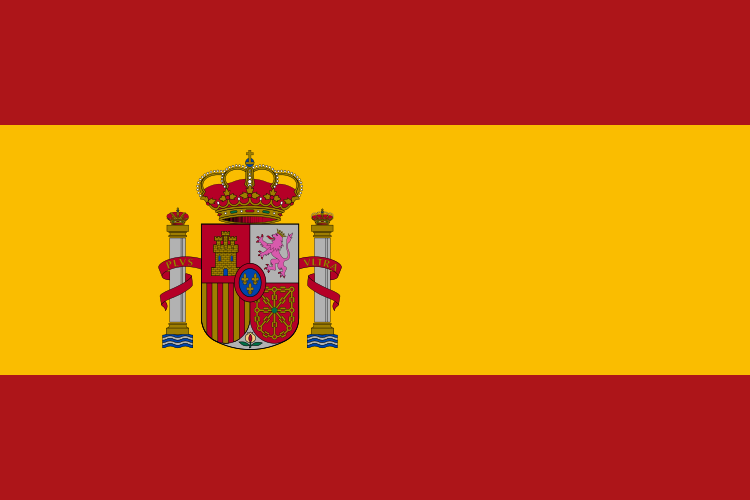
 ESP 16%
 FRA 12%
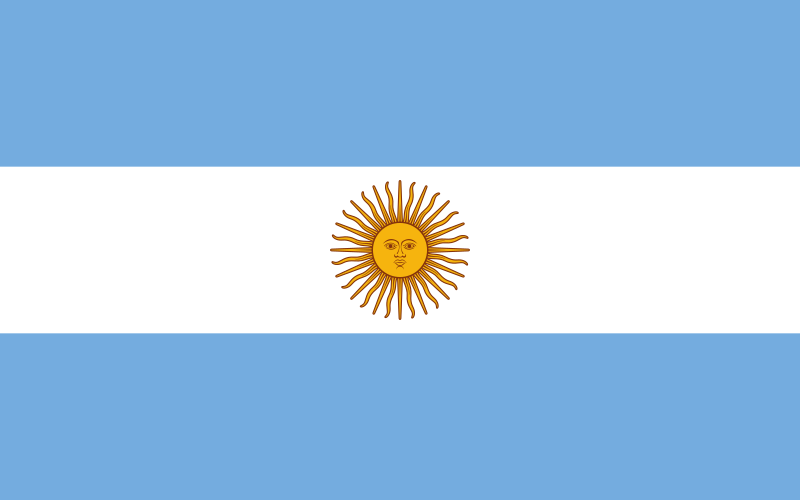 ARG 12%
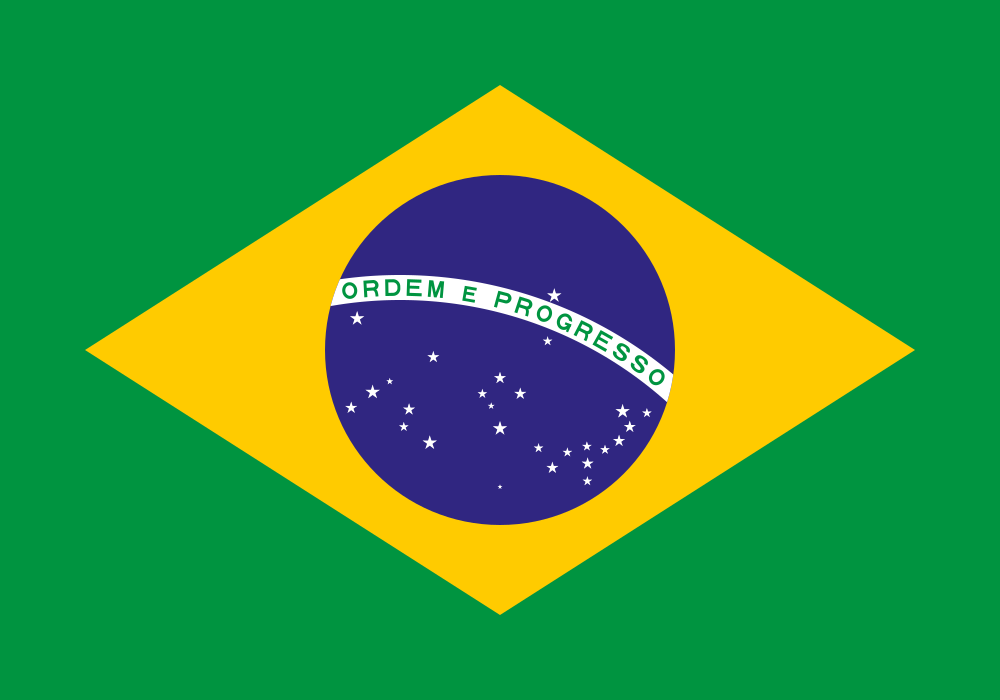 BRA 11%
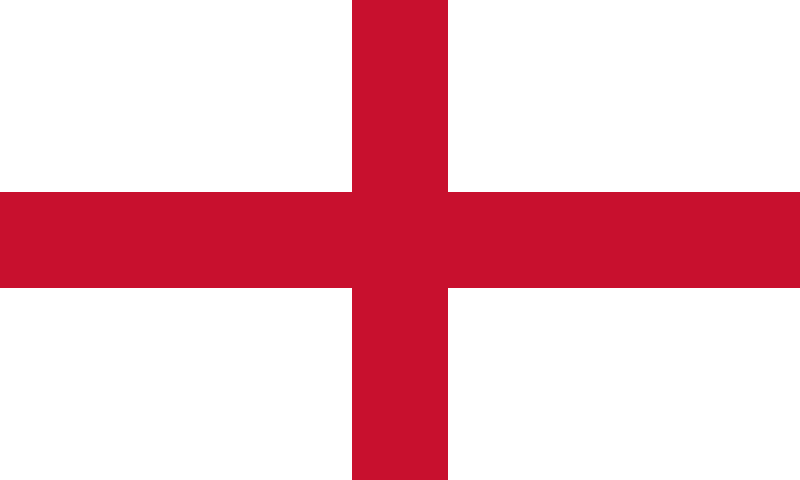 ENG 10%


The World Cup 2026 Fair Play Award rewards the cleanest disciplinary record, not the best team. Here is the model, and why Brazil fit it better than the market priced.
Back Brazil for the World Cup 2026 Fair Play Award. This market is not a talent contest or a route-to-the-final puzzle: it is a disciplinary count, and the winner is whoever accumulates the fewest cards and fouls. The casual reader looks for the nicest story or the deepest run; the sharp read is the team that keeps the ball, and Ancelotti's Brazil kept it as well as anyone in the tournament.
The instinct in a fair-play market is to reach for a plucky, well-drilled minnow or a defensive grinder. That instinct is wrong. The model does not reward effort or a low block; it punishes fouls, and low blocks foul constantly. What actually wins is possession, control and a squad that never has to lunge because it already has the ball.
That is why Brazil was the value. The Seleção went out in the round of 16 to Norway, but the Fair Play Award is not settled by where you finish, it is settled by how you played while you were there. On the metric that decides this market, ball dominance, Brazil graded near the top and the market kept looking elsewhere.
Ad
How is the World Cup Fair Play Award actually decided?
Strip the romance out of it. The Fair Play Award runs on a points system that deducts for disciplinary events: a yellow card costs points, a second yellow costs more, and a straight red is the heaviest penalty of all. On top of the cards, assessors weigh fouls committed, respect shown to opponents and officials, and the general conduct of the team and its bench. There is no credit for winning and no penalty for losing.
The immediate consequence is that this is the one World Cup market where quality and results are close to irrelevant. A side can be dumped out in the group stage and still top the fair-play table, and a finalist can finish mid-pack because its midfield spent 100 games cynically breaking up counters. You are pricing behaviour, not ability.
So the model is simple to state and easy to misapply. Rank the field by expected fouls and cards per game, adjust for how referees actually officiate a possession side versus a chaser, and take the cleanest profile you can find near the top. Do not confuse a disciplined defensive shape with a clean disciplinary record: the low block that defends its box for 70 minutes is the single most foul-prone system in the tournament.
Most traders never build that model. They anchor on reputation, back a tidy underdog and move on. That is the inefficiency: the market keeps pricing vibes when the award is decided by a spreadsheet of fouls.
Why does ball dominance win the Fair Play Award?
Here is the mechanism the market underrates: you cannot foul when you have the ball. Fouls are overwhelmingly committed by the team without possession, scrambling to win it back, and cards follow fouls. A side that monopolises the ball simply spends less of the match in the situations that produce yellows.
Referees compound the effect. The team chasing the game, pressing in packs and making desperate recovery challenges is the team that gets carded, while the side stroking it around draws frees rather than conceding them. Control does not just reduce your foul count; it shifts the officiating burden onto your opponent.
This is why the fair-play tables at recent World Cups are populated by ball-dominant, technical sides rather than heroic underdogs. Spain, the Netherlands and Brazil belong to that family. They win possession battles as a matter of style, and a clean disciplinary sheet falls out of that style almost for free.
The corollary is the trap. Pragmatic, counter-attacking outfits and organised minnows feel disciplined because they are well-drilled, but drilling a low block means an entire team defending deep and fouling to survive. Effort is not the same as cleanliness, and the market repeatedly pays up for the wrong one.
Why did Brazil fit the model better than the market thought?
Brazil topped Group C ahead of Morocco and controlled games the way the model likes: high possession, patient build-up and a front line, led by Vinícius Júnior, that hurt teams with the ball rather than without it. That profile is the engine of a clean sheet on the disciplinary spreadsheet.
Ancelotti's imprint mattered too. This was not the chaotic, emotional Brazil of caricature; it was a controlled side that dictated tempo and rarely had to foul to recover shape. When you are the team making the opponent chase, you are the team the referee leaves alone.
The round-of-16 exit to Norway actually helps the fair-play case rather than hurting it. Fewer matches means fewer opportunities to accumulate cards, and Brazil banked its clean profile across a group stage it largely controlled. On the metric this market pays out, that is a feature, not a flaw.
Rank the plausible clean contenders and Brazil sits in elite company on pedigree and style. The chart below shows the ball-dominant field by FIFA ranking: Spain and Brazil headline, with the Netherlands, Japan and Switzerland behind. All are control sides, and control is the leading indicator of fair-play points.
Which contenders did the market overrate?
The market's favourite mistake in this pool is the disciplined-underdog narrative. Sides that defend deep and spring counters look tidy on the eye but grade poorly on fouls, because their whole game plan is to disrupt, delay and break up play without the ball. That is a foul-generating system, not a fair-play one.
Japan deserves respect here and is the closest genuine rival to Brazil on the model: Asia's most polished side plays with real control and reached the round of 32 before losing to Brazil. If you wanted a hedge, Japan was the sensible one, precisely because it shares Brazil's possession DNA rather than an underdog's scrapping instinct.
Switzerland, by contrast, is the kind of name the market loves and the model distrusts for this specific award. The Swiss reached the quarter-finals on grit, penalties and a defence-first approach, and defence-first means a lot of blocking, tracking and recovery fouls. Deep runs also stack matches, and every extra game is another chance to pick up a card.
Spain and the Netherlands were legitimate top-of-market names on style, but both played far more football than Brazil, and volume of minutes is quietly the enemy in a cards-per-tournament count. That combination, elite control but a long run, is why the cleanest value sat a notch down the board with Brazil rather than at the very top.
Where can you trade the World Cup Fair Play Award on Polymarket?
You can trade the World Cup Fair Play Award market on Polymarket, where each contender carries a live implied probability that shifts as cards land and teams are eliminated. This is a prediction market, not a fixture list, so the edge comes from pricing behaviour, the fouls and cards, rather than results, and Brazil's ball-dominant profile is exactly the kind of signal the crowd tends to underprice.
Treat the number on the screen as a snapshot, not a settled truth. Fair-play prices move on every booking and every exit, so the right habit is to check the current price on Polymarket before you commit and read it against the model: is this a genuine control side, or an underdog the crowd has mistaken for a clean one?
The framework travels beyond 2026. In any Fair Play market, fade the heroic low block, back the team that keeps the ball, and remember that a shorter, controlled run can beat a long, foul-heavy one on the disciplinary spreadsheet. Brazil was this cycle's clearest example of that principle.
New to the market? You can trade it on Polymarket now, and the current offer is hard to ignore: deposit $20 and get a $50 trading bonus with promo code TGSWC. Load up the Fair Play Award market, check the live implied probabilities, and price the clean ball-dominant sides the way the model says you should.
Frequently asked
How is the World Cup Fair Play Award decided?
It is decided by the cleanest disciplinary record, using a points system that deducts for yellow cards, second yellows and straight reds, alongside fouls committed and respect for opponents and officials. Results and goals are irrelevant, which is why organised, low-foul sides score best.
Who was the smart pick for the 2026 Fair Play Award?
Brazil was the value read. Ancelotti's side dominated possession, which structurally suppresses fouls, and a ball-dominant team simply gives opponents fewer reasons to hack it down.
Why do ball-dominant teams win the Fair Play Award?
When you keep the ball, you rarely need to foul, and referees hand out cards to the side chasing the game, not the side controlling it. Possession is the hidden engine of a clean disciplinary sheet.
Where can I trade the World Cup Fair Play Award market?
You can trade the Fair Play Award market on Polymarket, a prediction market where the implied probabilities move as the tournament unfolds. New traders can deposit $20 and get a $50 trading bonus with promo code TGSWC.
Does a deep run help a team win the Fair Play Award?
Not necessarily. More matches mean more chances to pick up cards, so the model favours sides that stay calm and structured rather than simply those that go far, which is exactly why a clean-playing side is the sharper angle.