 ESP 16%
 FRA 12%
 ARG 12%
 BRA 11%
 ENG 10%

The 2026 World Cup Fair Play Award rewards the cleanest, most organised side. Here is why South Korea at 9.7% is the value pick over the priced-up minnows.
Our pick for the 2026 World Cup Fair Play Award is South Korea, currently priced at just 9.7% on Polymarket. They are the rare side that pairs a genuinely clean, organised disciplinary record with the squad to reach the knockout rounds, and that combination, not raw talent, is exactly what this award rewards. At eighth in the market behind a cluster of likely group-stage exits, the price looks too long.
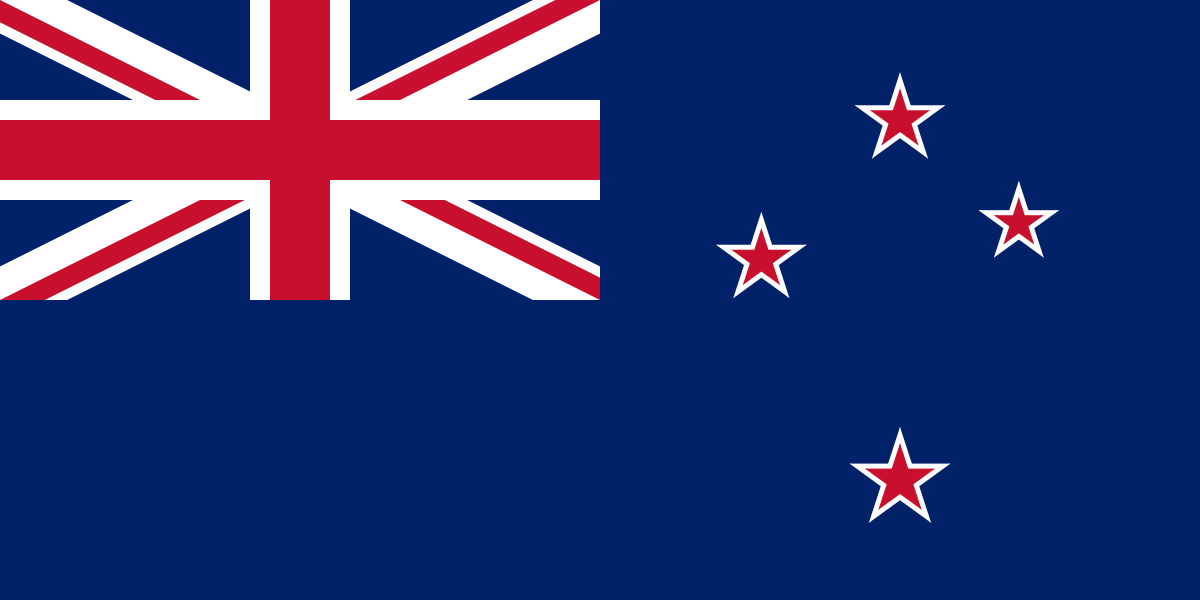
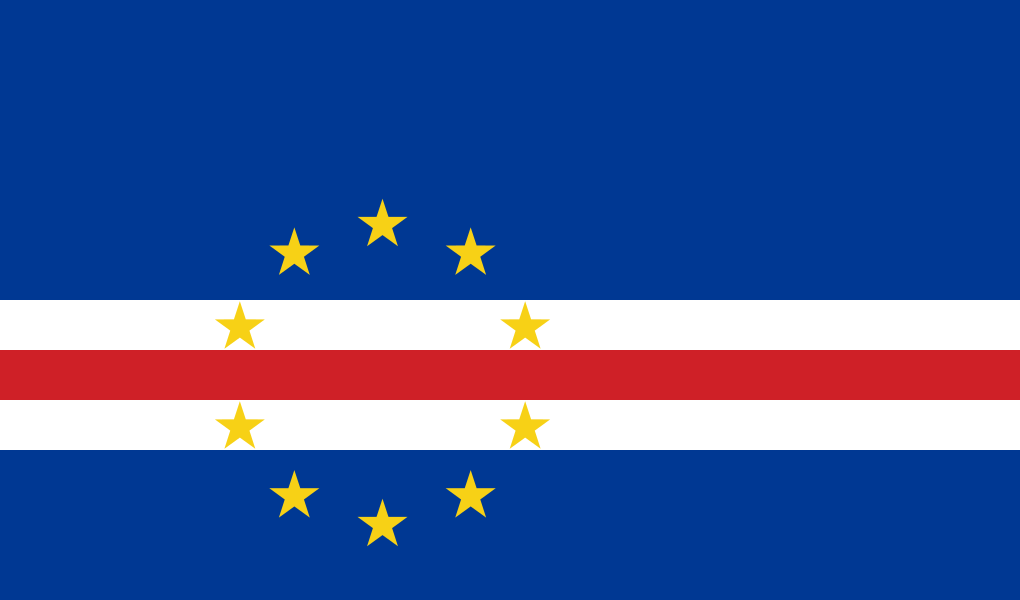
This is not a market about who is best. It is a market about who is cleanest, and the casual reader instinctively reaches for the smallest, most defensive minnow on the board. That instinct is why New Zealand and Cape Verde are priced as contenders despite a fundamental problem: you cannot win a tournament-long fair play race in three matches.
The smarter way to price this market is to find a team that is both disciplined and likely to play five, six or seven games. South Korea fit that template better than anyone the market is currently ignoring, and below we lay out the model for picking the winner and why Son Heung-min's side belong far higher up the board.
Ad
How is the World Cup Fair Play Award actually decided?
The Fair Play Award is settled on disciplinary record, with cards converted into penalty points: a yellow costs a team a point, a second yellow more, and a straight red more still. The side that finishes the tournament with the fewest accumulated points wins, with softer criteria such as respect for opponents and officials used to separate teams that are level.
The crucial wrinkle is volume. A team that plays only three group games has very little room to build a meaningful margin over rivals, and a single red card can wreck its case. A team that reaches the quarter-finals plays twice as many matches, giving a clean side far more opportunities to stack up low-foul, low-card performances that the model rewards.
That is why this award historically favours organised, deep-running sides rather than tournament minnows. The winner is almost always a team that combines a calm temperament with the quality to advance, because advancing is what turns a tidy record into an unbeatable one.
So the model is simple. Rank teams on two axes: how few fouls and cards they accumulate per game, and how many games they are likely to play. The sweet spot is a disciplined side that the title market expects to reach at least the last 16. Price the intersection, not the cleanest name on the board.
Why is the market overpaying for early-exit minnows?
Look at the current snapshot and the bias jumps out. New Zealand sit at 23.8% and Cape Verde at 20.1%, with Jordan at 14.7% and Scotland at 16.4% close behind. These are tidy, well-drilled sides, but every one of them is a strong candidate to be eliminated in the group stage, which caps their match count at three.
The reasoning behind those prices is understandable but flawed. Readers see a small, defensive nation and assume it will avoid trouble, then forget that a fair play race is cumulative. Three quiet group games rarely beat six quiet games from a team that goes deep, and one moment of frustration as a minnow chases a result can undo the whole case.
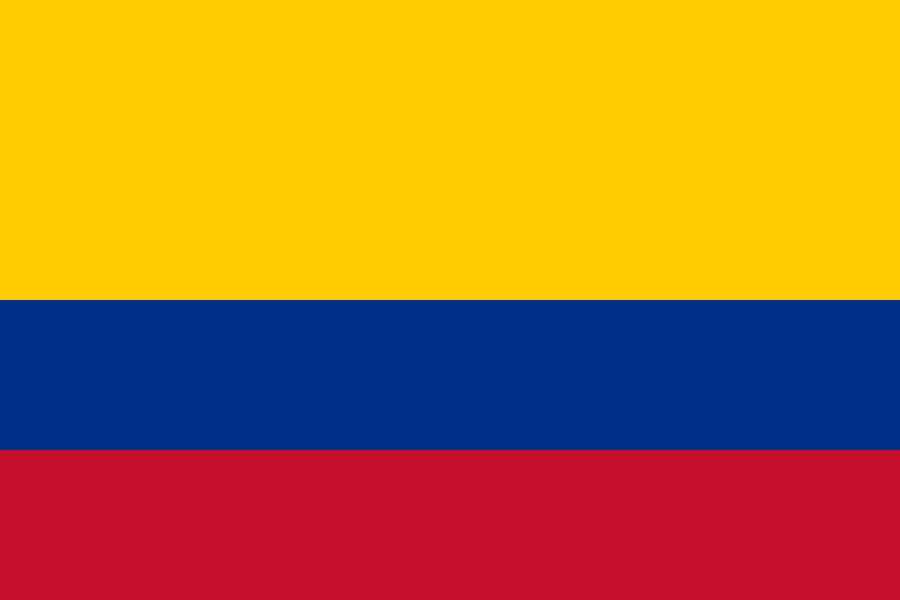
Meanwhile the deeper-running sides are scattered down the board. Colombia, who can be committed and physical, are at 14.1% and Belgium at 11.6%, while the genuinely disciplined deep runners are being overlooked entirely. That is the inefficiency to attack: the market has priced cleanliness without pricing longevity.
Treat these figures as a live snapshot rather than settled truth. Prices on this market move as squads, suspensions and group-stage form come into focus, so the gap between the minnows and the value picks can close quickly once the tournament begins.
Why is South Korea the disciplined value pick?
South Korea, priced at just 9.7%, are the team that ticks both boxes. They play a controlled, technical pressing game that wins the ball through positioning rather than reckless challenges, and they are led by Son Heung-min, one of the most level-headed professionals in the world game and exactly the kind of captain who sets a clean tone.
Crucially, this is not a side built to bow out early. Ranked 15th by FIFA and given a 0.8% title price, South Korea are a credible trade to escape Group A and reach the knockout rounds, which would hand them the extra matches the Fair Play model rewards. A disciplined team that plays five or six games is the ideal profile, and the market has them eighth.
Their disciplinary temperament travels well too. Korean sides rarely lose their heads, defend in compact, organised blocks and keep their tackling clean, the traits that keep card counts low across a long run. That is a far stronger fair play case than a minnow hoping to keep things quiet for three matches before flying home.
Put simply, South Korea offer the cleanest record among the teams most likely to go deep, yet they trade at less than half the price of New Zealand. That mismatch between profile and price is the value, and it is why we make them the call in this market.
What about Sweden and Japan, the market favourites?
Sweden top the snapshot at 29.9%, and the logic is sound on the surface: a structured, defensively organised side that does not concede many cards. The catch is the price. At nearly 30% in a field this wide, Sweden are being treated as close to a one-in-three certainty, and a striker-heavy team that may have to chase games can pick up cautions in a hurry.
Japan at 26% are the genuine gold standard for discipline, a beautifully coached side that keeps the ball and rarely fouls. We have no quarrel with their credentials, but two things temper the appeal: the price already reflects their reputation, and we are looking for the team the market has mispriced, not the one it has correctly identified.
That is the whole point of this call. The favourites are clean and fairly priced; the minnows are clean but too short-lived; the value lives in between, in a disciplined side with knockout pedigree that the market has pushed down to 9.7%. South Korea are that side, and backing them is a stronger angle than paying up for the obvious names.
Where to trade the Fair Play Award market
You can trade the World Cup 2026 Fair Play Award market on Polymarket right now, and our verdict is clear: South Korea at 9.7% are the disciplined, deep-running profile this award rewards, and the value sits there rather than with the priced-up minnows at the top of the board.
Remember that every figure here is a live snapshot. Sweden at 29.9%, Japan at 26% and South Korea at 9.7% will all keep moving as suspensions, form and group-stage results land, so check the current price on Polymarket before you trade and look for the South Korea number to tighten once they start banking clean matches.
New to the market? Polymarket is running an offer for new traders: Deposit $20, Get a $50 Trading Bonus with promo code TGSWC. Head to the World Cup 2026 Fair Play Award market, read the live prices for yourself and trade the angle while South Korea are still trading long.
Frequently asked
Who is favourite for the World Cup 2026 Fair Play Award?
In the current Polymarket snapshot, Sweden lead at 29.9%, with Japan at 26% and New Zealand at 23.8%. Our value pick, South Korea, sits eighth at just 9.7%.
How is the World Cup Fair Play Award decided?
It is decided by the cleanest disciplinary record, with yellow and red cards converted into penalty points and the side carrying the fewest points winning. That rewards organised, low-foul teams, not the most gifted attackers.
Why back South Korea for the Fair Play Award?
South Korea combine a disciplined, technical style with the squad to reach the knockout rounds, meaning more matches in which to showcase a clean record. At 9.7% the market is underrating that profile.
Should I back the minnows like New Zealand or Cape Verde?
We would fade them. Sides likely to exit in the group stage play too few matches for a clean record to stand out, yet they are priced at 23.8% and 20.1% respectively.
Where can I trade the Fair Play Award market?
You can trade the World Cup 2026 Fair Play Award market on Polymarket, where prices move constantly. New users can Deposit $20, Get a $50 Trading Bonus with promo code TGSWC.