 ESP 16%
 FRA 12%
 ARG 12%
 BRA 11%
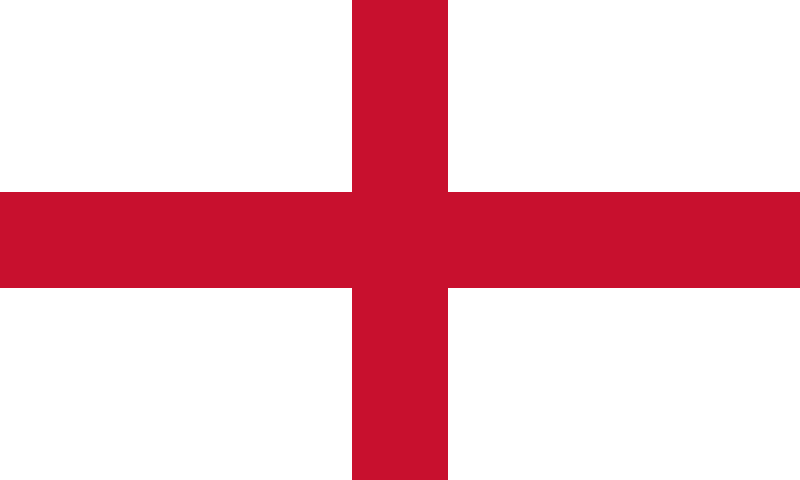 ENG 10%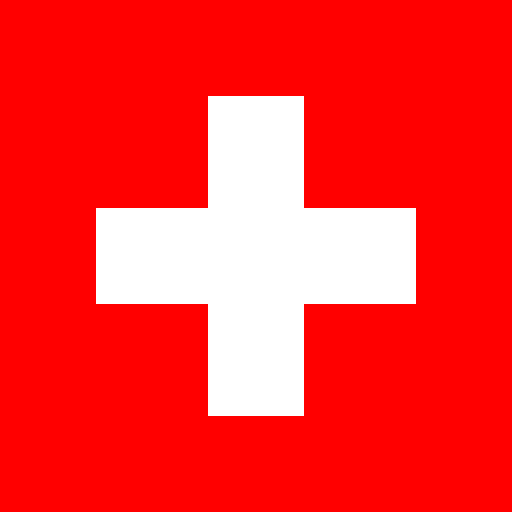


Our World Cup Fair Play Award pick is Switzerland: the most disciplined side still alive, badly underrated while Norway hogs 63.9% on Polymarket.
Back Switzerland for the 2026 World Cup Fair Play Award. This is a market that pays out on the cleanest disciplinary record, not the deepest talent pool, and the Swiss are the most organised, low-foul side still standing, yet the market has them off its top-10 board entirely, priced longer than Paraguay's 1.1%. That is the mispricing to attack.
The favourite, Norway, is priced at 63.9% on Polymarket, a number that asks you to accept that one team will win nearly two-thirds of the time in a market with nine live contenders and several frozen clean records still in play. We think that is too rich, and that a disciplined, controlled side like Switzerland is being ignored precisely because it is not glamorous.
Treat every figure here as a current snapshot. The quarter-finals are being played, cards are still being handed out, and this market will keep moving with every booking. That is exactly why a low-foul side priced off the board is worth getting in front of now.
Ad
How is the World Cup Fair Play Award actually decided?
The Fair Play Award is a disciplinary market. Its engine is simple: count a team's cards, weight them (a yellow is a small penalty, a second yellow or a straight red a much larger one), and the side carrying the fewest penalty points at the end wins. Positive, respectful play and clean sheets in the notebook are the whole game here.
That is why you should build your model around style, not stardom. Ask three questions of every contender: do they defend in an organised block that avoids desperate, cynical fouls; are their knockout games low-event and controlled rather than frantic; and do their key defenders and midfielders have a temperament that keeps them off yellow. Talent barely features. A brilliant attacking side that presses aggressively and commits tactical fouls is a bad fair-play team even if it is a great football team.
There is a second wrinkle unique to this award: records freeze on elimination. A team that went out clean can no longer pick up a card, so its total is locked. That is why the market still carries several eliminated names. The trade-off is that a frozen side has a short record from few games, while an alive side has more matches to stay clean but also more chances to blot the copybook.
So the winning profile is narrow: a team disciplined enough to keep accumulating clean matches under knockout pressure, or a short, spotless record that survives untouched. Switzerland is the strongest example of the first type that the market is barely pricing.
Why is Norway the 63.9% favourite, and is it too rich?
Norway sit top of this market at 63.9% for good reasons. They have run deep, sitting fourth in the title market at 6.1% after knocking out Brazil, and Scandinavian sides carry a reputation for order and calm. If a deep-running team also stays clean, it becomes the natural fair-play winner, and the market has piled in on that story.
But 63.9% is an enormous share of the probability for a market this scattered. It implies Norway are almost twice as likely as the entire rest of the field combined, and that ignores how knockout football actually generates cards. Quarter-finals and semi-finals are where tactical fouls, frustration bookings and last-ditch challenges spike. The further Norway go, the more exposure they have to exactly the events that lose this award.
Look at the shape of the board below. After Norway, the drop is steep: Spain at 14.6%, France at 7%, then a long tail. That distribution tells you the market has one strong opinion and very little else, which is usually where value hides in the names being waved away.
We are not telling you Norway cannot win it; they clearly can. We are telling you 63.9% leaves no margin, and that fading the favourite while backing a disciplined side at a fraction of the price is the sharper way to trade this snapshot.
Why Switzerland is the disciplined value the market ignores
Switzerland are built for this award. They reached the quarter-finals on a solid spine and a controlled, low-block identity, and their knockout results tell the story: a 2-0 win over Algeria and a 0-0 with Colombia settled on penalties (4-3). Those are low-event, tightly managed games, the exact profile that keeps a team out of the referee's book. This is a side that wins by organisation, not by chaos.
Compare that with the alive rivals above them. France and Argentina are elite, but they play high-intensity, high-event knockout football, and Argentina needed a 3-2 shootout with Egypt to advance. Spain grind games out but press hard. The more frantic your route, the more cards you tend to collect. Switzerland's calm, structured approach is a genuine edge in a market that only counts discipline.
The market's own pricing is the opportunity. Switzerland do not even feature in the top 10 shown here, which means they trade longer than Paraguay's 1.1% despite still being alive and still able to add clean matches, while Paraguay are eliminated. That is a clear inefficiency: an active, disciplined contender priced behind a frozen, knocked-out record.
This is the non-consensus call. The crowd is anchored on Norway's deep run and Japan's reputation, and nobody is looking at the quietest, best-drilled team left in the field. If Switzerland keep advancing with the same controlled performances, they will be the cleanest of the deep runners, and you will have got in before the market noticed.
What about the frozen records: Japan, Netherlands and the eliminated names?
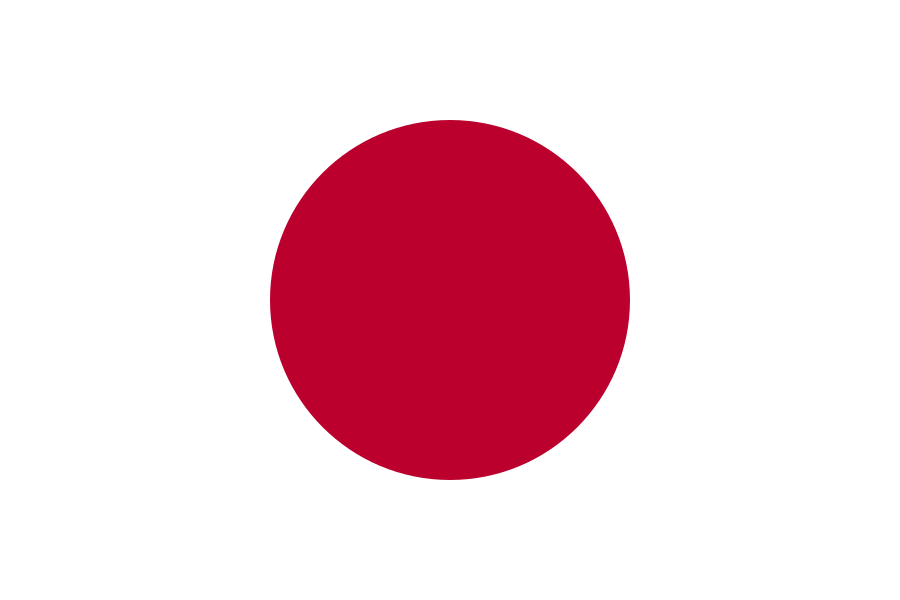
A chunk of this market is made up of teams that are already out. Japan (6.2%), the Netherlands (4.5%), Germany (1.4%), Morocco (1.3%) and Paraguay (1.1%) have all been eliminated, so their disciplinary records are frozen. They can no longer pick up a card, but they can no longer add a clean game either. Their totals are locked from short tournaments.
Japan is the interesting one. The Samurai Blue carried their trademark discipline before losing 2-1 to Brazil in the round of 32, and that clean, short record is why the market keeps them at 6.2%. It is a legitimate claim, but it is a capped one: their record cannot improve, and it was set over only four matches.
The risk in backing any frozen side is that an alive, disciplined team simply matches or beats that record over a longer run and takes the award by going deep without stumbling. That is precisely the case for Switzerland: they can still stack up controlled matches, whereas Japan, the Netherlands and Germany are done adding to their case.
So the frozen names are floor plays, not ceiling plays. If you want the outcome with genuine upside, you want an active contender whose record is still being written the right way, and who is priced as though it is not in the race at all.
Trade the Fair Play Award on Polymarket
Here is the trade in one line: Norway at 63.9% is too short, the top of the board is cluttered with frozen eliminated records, and Switzerland, the most disciplined side still alive, is being priced off the market entirely. That is the gap to exploit.
You can trade the World Cup Fair Play Award market on Polymarket right now. Back Switzerland while the market is still ignoring them, or fade the Norway favourite if you think 63.9% is unsustainable through the sharp end of the knockouts. Both are live ways to play this snapshot.
Remember these are current numbers and this market moves on every booking, so check the live price before you act; a single card in a quarter-final can reshape the whole board. New users can deposit $20 and get a $50 trading bonus with promo code TGSWC, then get your position on before the crowd catches up to the disciplined value.
The smart money on a fair-play market is not on the best team; it is on the cleanest one. Switzerland fit that model better than any name near the top of this board, and the price says almost nobody has noticed yet.
Frequently asked
Who is favourite for the World Cup Fair Play Award 2026?
Norway is the clear favourite on Polymarket at 63.9% implied probability, well ahead of Spain (14.6%) and France (7%). That price looks rich for a market where eight other disciplined sides still hold live claims, which is why we prefer the value elsewhere.
Which team should be rated higher for the Fair Play Award?
Switzerland. They are arguably the most organised, low-foul side still alive, yet they sit off the market's top-10 board entirely, longer than Paraguay's 1.1%. Their controlled 0-0 (4-3 pens) win over Colombia and 2-0 over Algeria are exactly the low-event, disciplined games the award rewards.
How is the World Cup Fair Play Award decided?
It is driven by the cleanest disciplinary record: fewest yellow and red cards across the tournament, converted into penalty points. It rewards organised, well-drilled teams that stay out of the referee's notebook, not the most talented squads.
Can an eliminated team still win the Fair Play Award?
In principle yes, because a frozen clean record cannot get any worse, which is why the market still prices Japan at 6.2% and the Netherlands at 4.5%. But we are backing an alive side that can still add clean matches and grade above those short, frozen records.
Where can I trade the World Cup Fair Play Award market?
You can trade this market on Polymarket right now, where Norway leads at 63.9% and prices are moving as the quarter-finals play out. New users can deposit $20 and get a $50 trading bonus with promo code TGSWC.