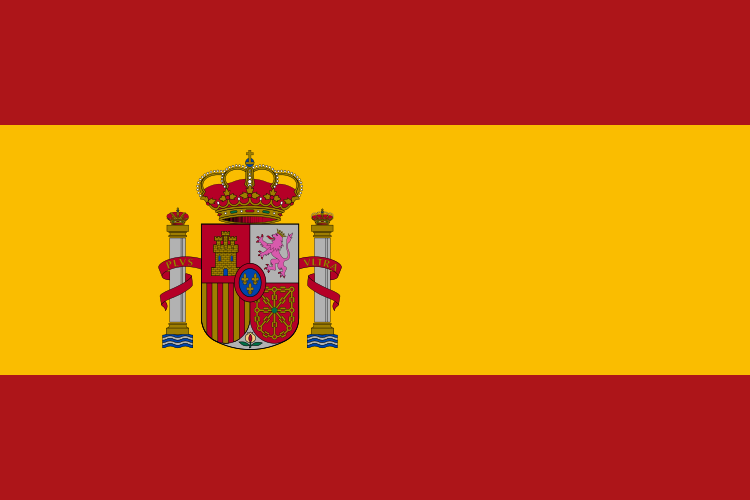
 ESP 16%
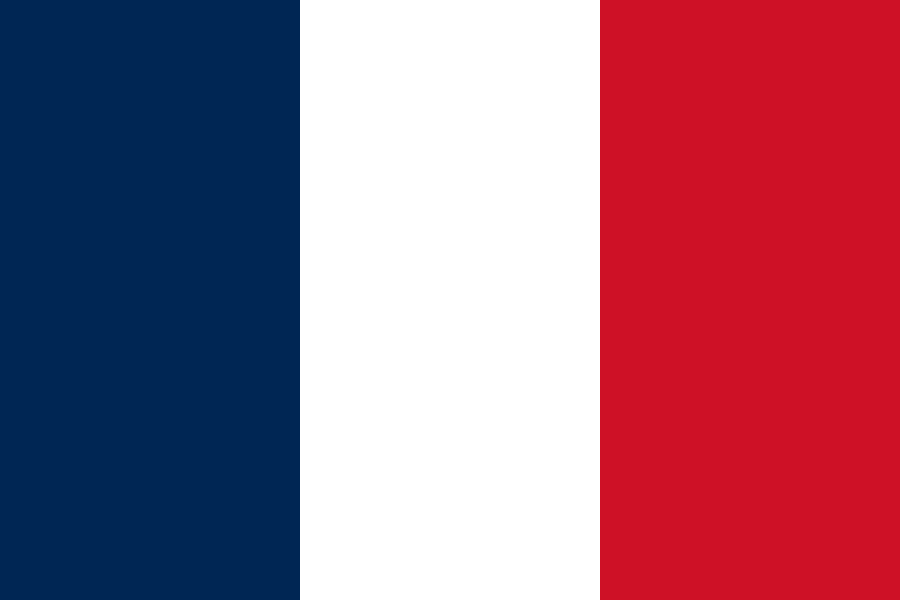 FRA 12%
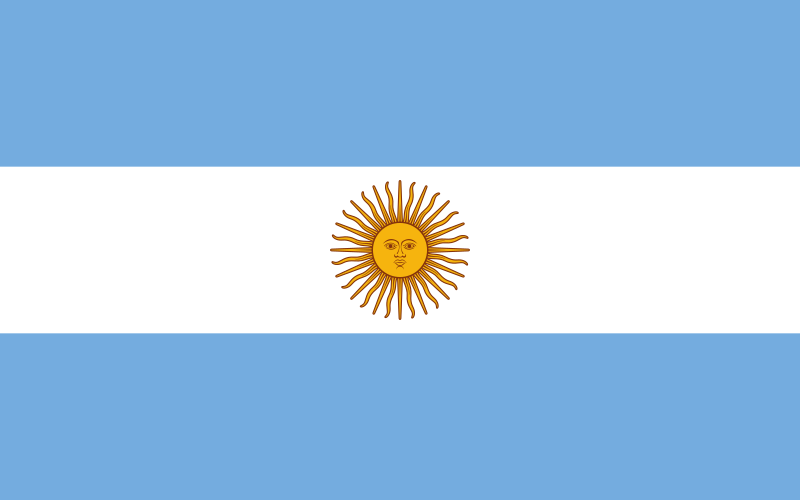 ARG 12%
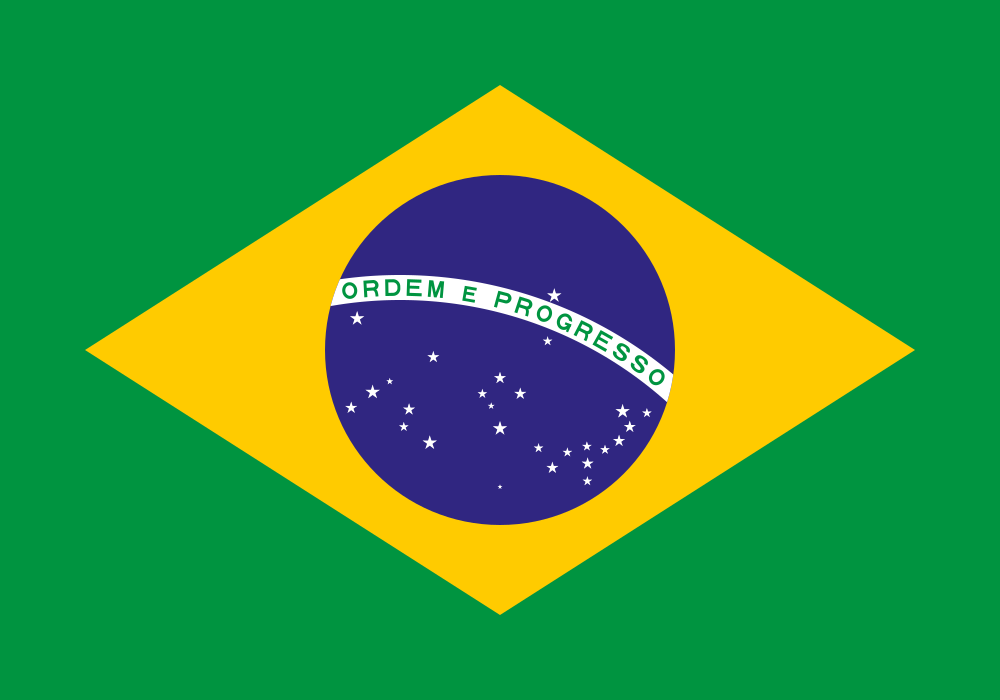 BRA 11%
 ENG 10%


Spain and Argentina, the market's top two by title odds behind France, reached the World Cup 2026 final, while Brazil, Germany and the Netherlands crashed early.
The market's biggest story at World Cup 2026 is a vindication at the very top and carnage just beneath it: Spain (pre-tournament title odds 16%) and Argentina (12%), the two shortest-priced sides behind France, both reached the final, while Brazil (11%), Germany (8%) and the Netherlands (6%) were all dumped out before the quarter-finals. The co-favourites held; the second tier of the market was obliterated.
Title odds are simply implied probabilities, and this tournament stress-tested them from the group stage to a goalless final. On balance the market got the podium shape right and the middle badly wrong. Spain, the shortest price in the field, delivered a run to the final. Argentina, level with France at 12%, did the same. But between those two and the field sat a cluster of fancied giants who never arrived.
This piece grades the movers: which favourites justified their odds, which were exposed as overpriced, and which outsiders shredded their numbers. The headline figures tell the tale on their own, from Switzerland at 1% reaching the last eight to France, the pre-tournament FIFA #1, losing a third-place match 4-6. The tournament reshuffled the board without quite rewriting the top of it.
Ad
Which favourites justified their short odds?
Only two of the market's top eight by title odds reached the final, and they were the right two. Spain, priced at 16% and ranked FIFA #2, topped Group H with 7 points and then beat Austria, Portugal, Belgium and France on the way to the showpiece. For a side carrying the heaviest pre-tournament expectation, that is as clean a validation of a favourite's price as the market could hope for.
Argentina, level with France at 12% and ranked FIFA #3, matched them. The reigning champions won Group J with a maximum 9 points, then edged past Cape Verde, Egypt, Switzerland and England to set up the all-favourite final. Lionel Messi's 8 goals carried an attack that found a way through fine margins in every knockout round, including two 1-1 ties settled in Argentina's favour.
England (10%, FIFA #4) can claim a par result rather than a triumph. Tuchel's side won Group L, reached the semi-finals, lost 1-2 to Argentina and then beat France 6-4 in a remarkable third-place match. That is roughly what a 10% price implies: a deep run, no trophy. Belgium (3%) and Morocco (3.5%) also broadly met expectations by reaching the quarter-finals before bowing out to Spain and France respectively.
The clear lesson is that the very top of the market was accurate. The three shortest prices were France, Spain and Argentina, and two of them contested the final. Where the numbers failed was not at the summit but in the band just below it.
Who were the market's biggest losers?
Germany and the Netherlands were the defining busts. Germany, priced at 8% and ranked FIFA #10, topped Group E but then lost a round-of-32 shootout 4-3 to Paraguay after a 1-1 draw. The Netherlands, at 6% and FIFA #7, suffered the identical fate, going out 3-2 on penalties to Morocco. Two of the market's top seven exited at the first knockout hurdle, a brutal verdict on their prices.
Brazil carried the fourth-shortest price at 11% and lasted only one round longer. Ancelotti's Selecao won Group C and saw off Japan 2-1, but Norway stunned them 2-1 in the round of 16. For a side backed as a genuine title threat, a last-16 exit to a team priced at 2% is the kind of result that rewrites a market in a single afternoon.
Portugal (7%, FIFA #5) were another heavyweight to fall before the last eight, beaten 1-0 by Spain in the round of 16 in what was billed as Ronaldo's farewell. Taken together, Germany, the Netherlands, Brazil and Portugal accounted for 32% of combined pre-tournament title probability and produced a grand total of zero semi-finalists between them.
France are the most nuanced case. The pre-tournament FIFA #1 at 12% topped Group I with a maximum 9 points and reached the semi-finals, where Spain won 2-0. Mbappe's 10 goals won the Golden Boot outright, so the attack fired; the team still fell short, then lost the third-place match 4-6 to England. For the joint-second favourite, a fourth-place finish counts as a clear underperformance against the price.
Who were the biggest risers against the odds?
Switzerland were the mover of the tournament. Priced at just 1% and ranked FIFA #19, they won Group B, then ground past Algeria, Colombia (on penalties) and took Argentina to 1-1 before going out in the quarter-finals. A defence-first run from a 1% side to the last eight is the biggest positive gap between price and performance in the field.
Norway were not far behind. Backed at 2% with Haaland and Odegaard ending a long absence, they finished second in Group I, beat Ivory Coast 2-1, shocked Brazil 2-1 in the round of 16 and pushed England to 1-1 in the quarter-finals before exiting. Haaland's 7 goals made him the third-highest scorer, and a quarter-final from a 2% price is a serious overachievement.
Lower down the board, Paraguay (0.4%) knocked out Germany to reach the round of 16, and Cape Verde (0.1%) marked a debut by taking Argentina to 1-1 in the round of 32 before losing. Morocco (3.5%) arguably delivered the most complete outsider run of all, reaching the quarter-finals and dispatching the Netherlands and Canada along the way, losing only to France.
These risers share a profile: well-organised, defensively stubborn, and priced as makeweights. The market consistently underrated grit at knockout time, which is why so many single-digit-percent sides outran double-digit favourites.
What the all-favourite final says about the market
The final pitted Spain (16%) against Argentina (12%), the two shortest prices in the entire field once France are discounted for their semi-final exit. That is a striking result for the market: after a knockout stage littered with upsets, the last match standing was contested by the two teams the odds rated most highly. Chaos reigned in the middle rounds, but order reasserted itself at the very end.
The match itself finished 0-0, a cagey, high-stakes stalemate between two sides who had proven their pedigree over six games apiece. Spain arrived unbeaten through Group H and four knockout wins; Argentina via a flawless group campaign and a string of one-goal margins. Neither reached the final by fluke, which is precisely why their short prices look justified in hindsight.
For anyone reading the market as a forecasting tool, the final is the strongest possible evidence that the top of the board was priced correctly. The failure was never in identifying the elite; it was in the assumption that the likes of Brazil, Germany and the Netherlands belonged alongside them. The tournament drew a sharp line between the genuine contenders and the merely fancied.
The market's 2026 report card
Grade the market generously at the top and harshly in the middle. Spain and Argentina reaching the final, with France the third of the three co-favourites making the semis, means the podium of implied probability translated almost perfectly into the final four. The single shortest price delivering a finalist is about as good as pre-tournament odds get.
The failing grade belongs to the 6-11% band. Brazil, Germany, the Netherlands and Portugal were all priced as realistic winners and none reached the quarter-finals. Three of those four exits came against teams rated at 3.5% or less, including two round-of-32 shootout defeats. The market systematically overrated attacking talent and underrated tournament resilience.
The outsiders, meanwhile, earn the distinctions. Switzerland (1%) and Norway (2%) reaching the last eight, Morocco (3.5%) matching them, and debutants Cape Verde (0.1%) and Uzbekistan's fellow first-timers testing the elite show how much value sat in the lower half of the board. If there is one portable lesson from 2026, it is that a short favourite's price is only as safe as its temperament in a shootout.
The verdict: the market nailed the champions' bracket and misjudged the second tier badly. For a single-elimination tournament defined by penalties and fine margins, getting both finalists from the top of the odds list is a result the bookmakers will happily take, even as the busts beneath them pile up.
Frequently asked
Which teams justified their pre-tournament title odds at World Cup 2026?
Spain and Argentina, the two shortest-priced sides after France at 16% and 12%, both reached the final. No other top-eight favourite made it that far.
Who was the biggest overachiever against the odds?
Switzerland, priced at just 1% and ranked FIFA #19, reached the quarter-finals. Norway (2%, FIFA #31) matched that run after knocking out Brazil.
Which favourite fell the hardest?
Germany (8%) and the Netherlands (6%) both exited on penalties in the round of 32, the steepest collapses among the top eight. Brazil (11%) followed, beaten 2-1 by Norway in the round of 16.
Did France win the World Cup in 2026?
No. France, the pre-tournament FIFA #1 at 12%, lost 0-2 to Spain in the semi-finals and then lost the third-place match 4-6 to England.
How did the World Cup 2026 final end?
Spain and Argentina drew 0-0 in the final, an all-favourite showdown between the market's top two by title odds.