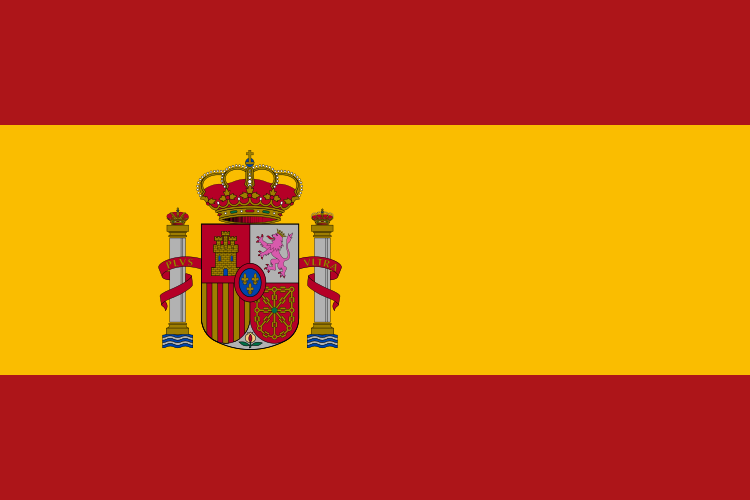
 ESP 16%
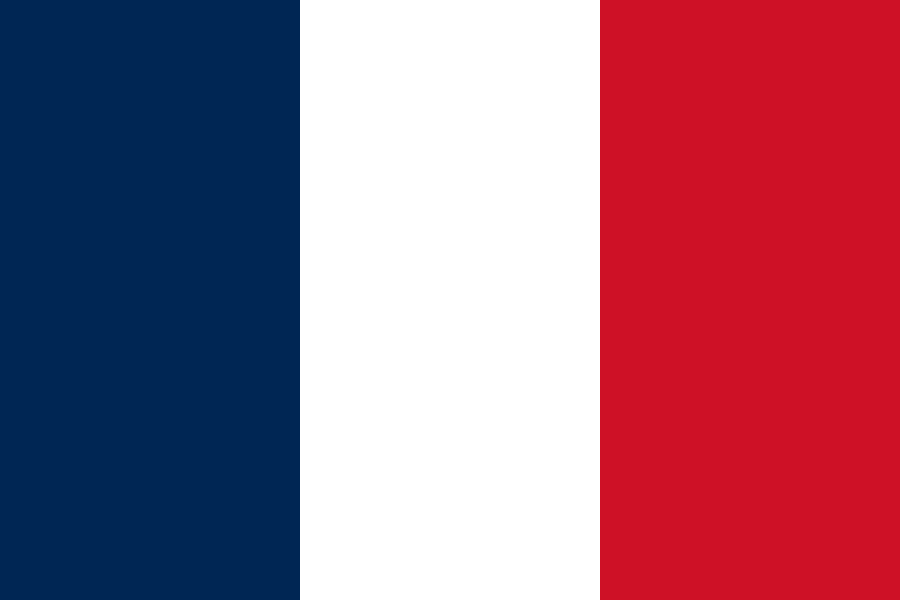 FRA 12%
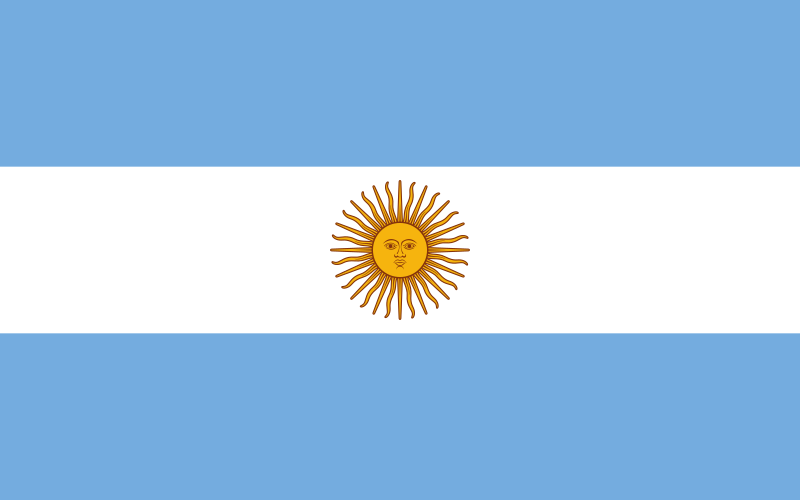 ARG 12%
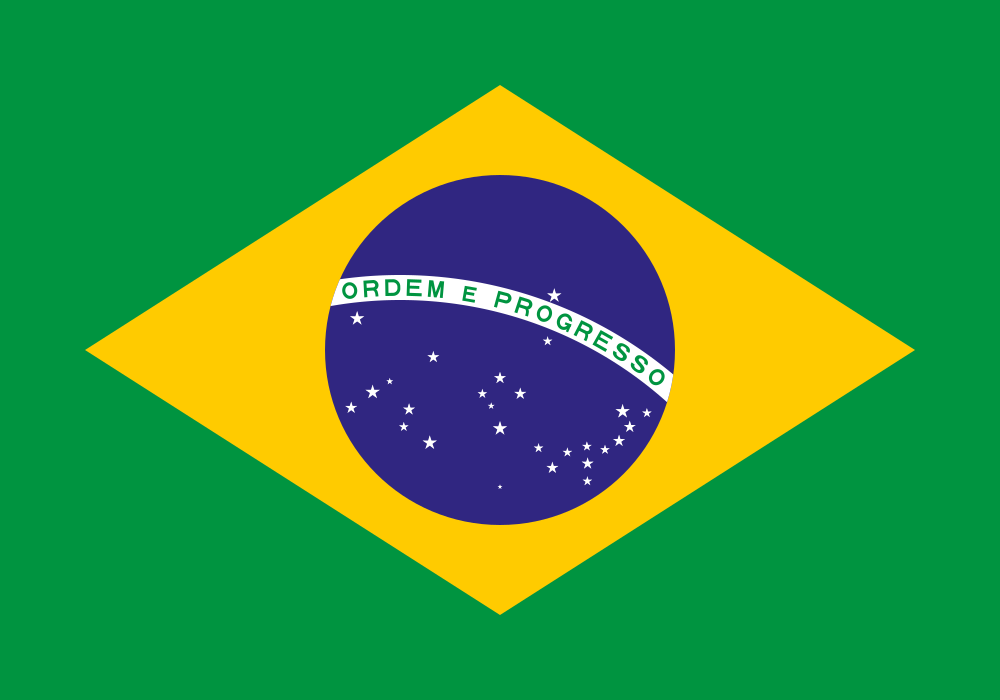 BRA 11%
 ENG 10%


Title-odds movers at World Cup 2026: Spain and Argentina delivered, Switzerland and Norway soared, while Brazil, Germany and the Netherlands crashed out.
The market's verdict on World Cup 2026 is emphatic: the two teams it backed most heavily, Spain (pre-tournament title odds 16%) and Argentina (12%), were the two that reached the final, which finished goalless. The biggest overperformers against the odds were Switzerland (1%) and Norway (2%), each reaching the quarter-finals, while Brazil (11%), Germany (8%) and the Netherlands (6%) were the costliest fallers, all eliminated before the last eight.
Title odds are simply implied probabilities dressed up as percentages, and a completed tournament is the cleanest possible audit of them. When a 16% favourite reaches the final and an 11% contender is dumped out in the Round of 16, the market has told you which reads were sharp and which were sentiment. This is the full arc, from the opening whistle to a finalists' stalemate, measured against the numbers the bookmakers set before a ball was kicked.
What follows is a movers-and-losers ledger for the whole tournament. Some short-priced teams earned their billing, several long-shots turned pocket change into deep runs, and a cluster of heavyweights became cautionary tales. Taken together, the results reward the two clear market leaders, punish the European old guard hardest, and hand the neutrals a Swiss and Norwegian story nobody priced in.
Ad
Which favourites justified their short odds?
Spain were the market's anointed side at 16%, the shortest price in the field, and they delivered a run that never wobbled. Euro 2024 winners and ranked FIFA #2, La Roja topped Group H with seven points, then swept through the knockouts: Portugal 0-1, a 2-1 quarter-final over Belgium, and a commanding 2-0 semi-final demolition of France. For a favourite carrying the weight of expectation, that is close to a flawless validation of a short price.
Argentina, co-favourites in the betting at 12% and ranked FIFA #3, matched them stride for stride on the other side of the draw. The reigning champions won Group J with a maximum nine points and a +7 goal difference, then survived the tournament's tightest margins: a penalty shootout past Cape Verde, a 3-2 thriller against Egypt, and another shootout to see off Switzerland in the last eight. A 2-1 semi-final win over England carried Lionel Messi, on eight goals, to the final.
Both finalists earned their standing the hard way, and the goalless final that followed was fitting for two sides the market had separated from the pack. England, priced at 10%, also broadly honoured their billing by reaching the semi-finals and then winning the third-place match 4-6 against France, a chaotic seven-goal afternoon. For the top of the board, this was a tournament where the smart money largely held.
Which pre-tournament favourites collapsed?
Brazil were the headline casualty. Backed at 11% under Carlo Ancelotti and hunting a sixth star, the Seleção won Group C and beat Japan 2-1 in the Round of 32, only to run into Norway and lose 1-2 in the last 16. For a side priced as a genuine contender, a exit before the quarter-finals is a heavy market loss.
Germany's collapse was even more abrupt. Priced at 8% and fancied as the class of Group E, the Wirtz-and-Musiala generation topped their pool but fell at the very first knockout hurdle, losing 3-4 on penalties to Paraguay in the Round of 32. The Netherlands (6%) suffered an identical fate the same day, going out 2-3 on penalties to Morocco despite a strong group campaign. Two European heavyweights, both gone before the last 16.
Portugal, at 7% and framed as Cristiano Ronaldo's golden farewell, at least reached the last 16 before Spain ended the story 1-0. Uruguay were the biggest group-stage disappointment on price: Marcelo Bielsa's side, quoted at 4%, finished third in Group H on just two points and never made the knockouts. Collectively, this band of fallers is where the market lost most of its money, and where the gap between reputation and June-July reality was widest.
Who were the market's biggest overachievers?
Switzerland were the tournament's purest against-the-market story. Priced at a modest 1% and rated FIFA #19, the Swiss won Group B ahead of Canada, then ground out results the numbers never anticipated: a 2-0 win over Algeria, a 4-3 shootout victory against Colombia in the last 16, and a quarter-final that only Argentina settled on penalties after a 1-1 draw. From 1% to the last eight is arguably the single sharpest overperformance in the field.
Norway, at 2%, were the co-headline overachievers and did it in the most eye-catching fashion. Erling Haaland and Martin Ødegaard drove a run that included a 2-1 last-16 stunner over Brazil and a quarter-final that England only settled after a 1-1 draw. Haaland's seven goals underlined a Norwegian side that turned long odds into genuine last-eight credibility on their return from a lengthy World Cup exile.
Morocco, at 3.5%, backed up their 2022 semi-final with another quarter-final, beating the Netherlands and Canada before France ended them 2-0. And at the very bottom of the board, the debutants delivered the romance: Cape Verde, priced at just 0.1%, reached the Round of 32 and forced Argentina to penalties, while Paraguay (0.4%) knocked out Germany and reached the last 16. Pound for pound, these were the trades the market got most wrong, in the best possible way.
How did France become the market's most painful story?
No result cuts across the pre-tournament board quite like France's. Ranked FIFA #1 and co-priced at 12% among the very shortest contenders, Les Bleus were meant to be the benchmark, and for a while they looked it. France won Group I with a maximum nine points and a tournament-best +8 goal difference, then dispatched Sweden 3-0, Paraguay 1-0 and Morocco 2-0 to reach the semi-finals without conceding heavily.
Then the wheels came off. Spain won the semi-final 0-2, ending French hopes with a performance that flipped the head-to-head between two of the market's giants decisively one way. Worse followed in the third-place match, where England beat France 4-6 in a seven-goal shootout that left the FIFA #1 side finishing a bruising fourth.
The painful subplot is that France also produced the tournament's outstanding individual: Kylian Mbappé topped the scoring charts with 10 goals, two clear of Messi. That a team could carry the Golden Boot winner, top billing and the world's number one ranking yet finish outside the medals is exactly why the market treats France as its cautionary tale of 2026. The talent honoured the price; the results did not.
What does the final market arc tell us?
The cleanest lesson is that the top of the board was right and the middle was wrong. Spain (16%) and Argentina (12%), the two shortest genuine title prices, were the two teams left standing for a goalless final, while the 6-to-11% band of Brazil, Germany, the Netherlands and Portugal collectively failed to produce a single semi-finalist. When the biggest names underdelivered, it was the favourites, not the mid-tier, who filled the gap.
The scoring charts reinforce the split between individual brilliance and team outcome. Mbappé (10) and Messi (8) led the way, with Haaland (7) and Jude Bellingham (7) close behind, yet only Messi's Argentina reached the final. Mikel Oyarzabal's five goals for Spain were the quieter, more decisive contribution, the sort of shared burden that tends to outlast reliance on a single star.
For anyone reading the market as a forecasting tool, 2026 offered a split verdict. The favourites were trustworthy and the outsiders were the value: Switzerland from 1%, Norway from 2% and Cape Verde from 0.1% turned long odds into memorable runs, while the safest money to fade was the reputation-heavy European middle. In a tournament that ended with two of its three biggest names contesting a goalless final, the board got the summit right and the slopes badly wrong.
Frequently asked
Which team was the biggest title-odds overachiever at World Cup 2026?
Switzerland, priced at just 1% before the tournament, reached the quarter-finals. The Swiss edged Colombia 4-3 on penalties in the last 16 and pushed Argentina to a shootout in the last eight.
Which pre-tournament favourite fell hardest?
Brazil, backed at 11% and chasing a sixth star, suffered the most damaging collapse relative to their price, knocked out 2-1 in the Round of 16 by Norway.
Did the market's favourite Spain deliver?
Yes. Spain entered as the 16% favourite and reached the final, beating Portugal, Belgium and then France 2-0 in the semi-finals along the way.
How far did France go despite being FIFA #1?
France reached the semi-finals but lost 0-2 to Spain, then lost the third-place match 4-6 to England to finish fourth, a return short of their 12% billing.
Who won the Golden Boot at World Cup 2026?
Kylian Mbappé of France, with 10 goals, finishing ahead of Lionel Messi (8) and Erling Haaland (7) despite France falling in the last four.