 ESP 16%
 FRA 12%
 ARG 12%
 BRA 11%
 ENG 10%

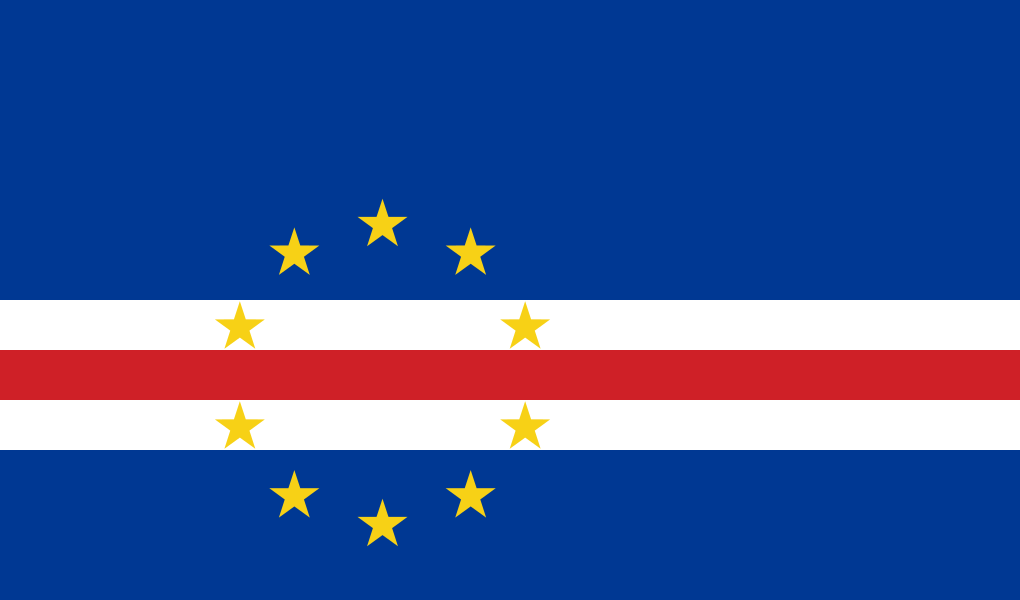
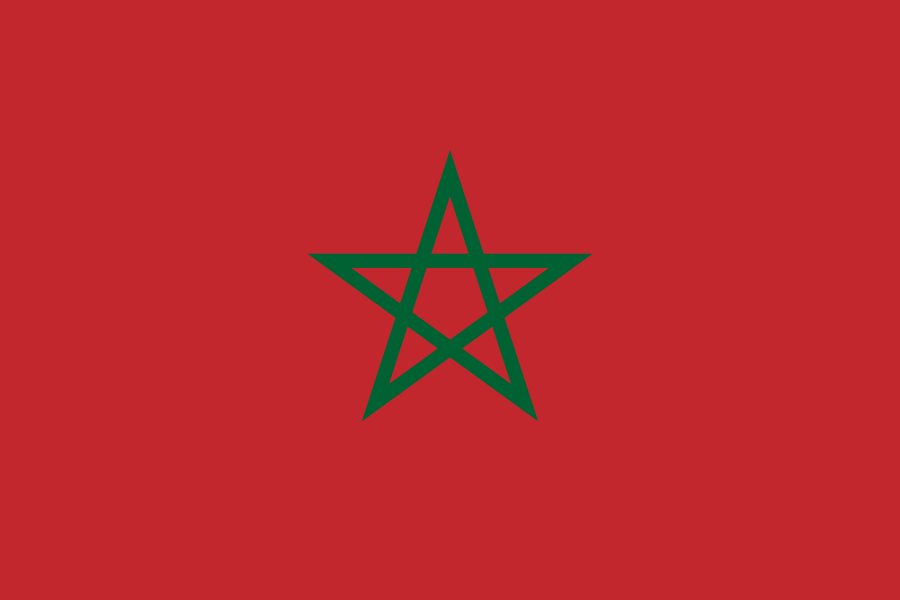
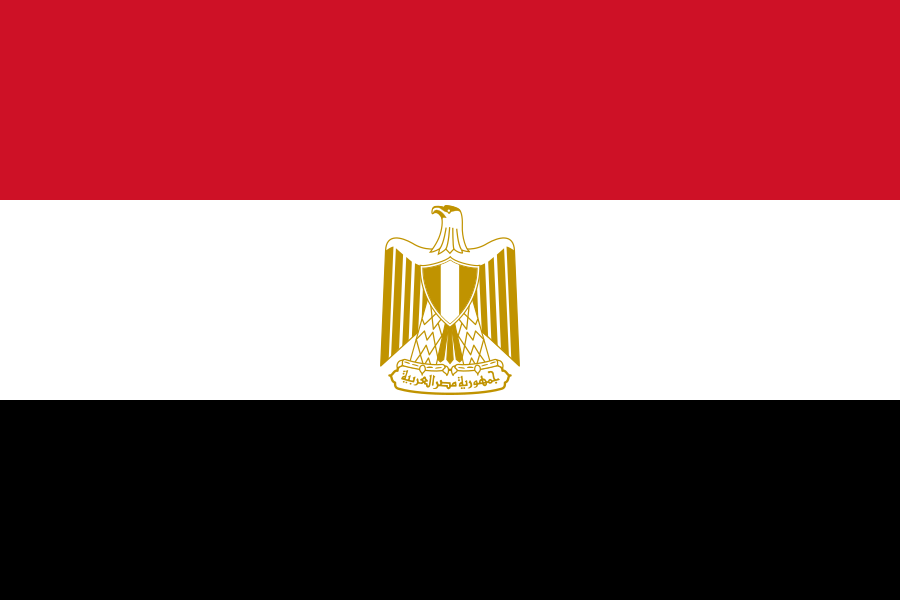

Switzerland and Norway carried the dark-horse flag to the World Cup 2026 quarter-finals, while Paraguay stunned Germany and Cape Verde lit up their debut.
The dark horses that ran furthest at World Cup 2026 were Switzerland and Norway, who both reached the quarter-finals before running into Argentina and England respectively. Just below them, Paraguay produced the giant-killing of the tournament by dumping Germany out on penalties, while debutants Cape Verde pushed Argentina all the way in the Round of 32. None broke through to the last four, but several rewrote what their nations thought possible.
By any sensible definition, a dark horse is a side priced long before a ball was kicked. Switzerland were rated at 1% to lift the trophy, Norway 2%, Paraguay 0.4% and Cape Verde a mere 0.1%. Contrast that with the four sides who eventually filled the semi-finals: Spain (16%), France and Argentina (12% each) and England (10%). The gulf in expectation was enormous, and the story of the knockouts is how far the outsiders narrowed it before pedigree reasserted itself.
The headline lesson is a clean one: the quarter-final was the dark-horse ceiling. Switzerland, Norway and Morocco all reached the last eight and all three lost there, leaving the final four to the usual aristocracy. That does not diminish the runs. Beating Germany, Brazil and the Netherlands along the way, as this group of outsiders collectively did, is the kind of chaos that defines a World Cup and reshapes reputations for a generation.
Ad
Which dark horses reached the quarter-finals?
Two genuine outsiders made the last eight: Switzerland and Norway. Switzerland topped a tight Group B on seven points, then edged through a knockout run built on control and nerve, beating Algeria 2-0, seeing off Colombia on penalties after a goalless draw, and only bowing out to Argentina after holding the reigning champions to 1-1. For a nation rated at 1% before kick-off, a quarter-final was a ceiling met, not a disappointment.
Norway's route was even more eye-catching. Haaland and Ødegaard finally ended the country's long absence from the big stage, and once there they refused to go quietly. They came through the so-called Group of Death behind France, then knocked out the Ivory Coast 2-1 and, most memorably, beat Brazil 2-1 in the Round of 16 before falling to England after a 1-1 quarter-final. Erling Haaland's seven goals left him third in the scoring charts, behind only Kylian Mbappé (10) and Lionel Messi (8).
Morocco belong in the conversation only with an asterisk. Ranked #8 and priced at 3.5%, they were closer to a contender than a classic dark horse, yet their run mirrored the outsiders': a penalty win over the Netherlands, a 3-0 dismantling of Canada, and then a 2-0 defeat to France in the last eight. For a side that reached the semi-finals in 2022, the quarter-final felt like a step back rather than a fairytale.
Line the outsiders up by pre-tournament odds and the scale of their overachievement is obvious. The longer the price, the more remarkable the run, and it was the two mid-ranked European sides, not the more fancied names, who ultimately travelled deepest.
How did Switzerland grind their way to the last eight?
Switzerland's run was a masterclass in doing the unglamorous things well. They conceded sparingly, kept their shape when games grew ragged and trusted their spine to see out tight margins. A 2-0 win over Algeria in the Round of 32 was comfortable; the Round of 16 was anything but, a goalless slog against Colombia settled 4-3 on penalties. That shootout nerve, so often the difference for underdogs, carried them into the quarter-finals.
There they met Argentina and were a whisker from a famous upset. A 1-1 draw against the eventual finalists tells you Switzerland gave up nothing cheaply; they simply lacked the killer edge to finish the job, and Argentina advanced to face England in the semi-final. It was the closest any true dark horse came to reaching the last four.
The Swiss model, #19 in the world and priced at just 1%, is the template for how a mid-ranked nation overachieves: defensive discipline, set-piece care and a refusal to panic in shootouts. It rarely produces highlight-reel football, but at a World Cup where penalties decided a string of ties, it proved ruthlessly effective. Switzerland did not need to be spectacular; they needed to be hard to beat, and they were.
Norway's giant-killing run: how Haaland stunned Brazil
If Switzerland were the grinders, Norway were the giant-killers. Making their long-awaited return to the World Cup, they were drawn into a brutal group alongside France, Senegal and Iraq and emerged second with six points, an achievement in itself. What followed elevated them from qualifiers to genuine story of the tournament.
The 2-1 defeat of Brazil in the Round of 16 was the standout dark-horse result of the knockouts. Brazil, priced at 11% and chasing a sixth star under Ancelotti, were undone by a Norwegian side that pressed with intent and finished its chances. That win alone justified the entire trip; that it came after a 2-1 victory over the Ivory Coast made clear Norway were no fluke.
Only England halted them, and only narrowly, in a 1-1 quarter-final that England edged to reach the semis. Erling Haaland's seven goals were the engine of the run, the third-highest tally at the tournament, and Ødegaard's craft gave Norway a balance few outsiders could match. For a nation that had waited decades to return to this stage, a quarter-final built on beating Brazil is a legacy result, not a near-miss.
The wider point is that Norway, at 2% and #31 in the world, punched miles above their billing by combining a world-class striker with fearless organisation. They are the model of a dark horse with a genuine matchwinner: give a well-drilled side one elite finisher and it can topple almost anyone over 90 minutes.
Paraguay and Cape Verde: the outsiders who shocked the giants
The single biggest shock delivered by an outsider came from Paraguay. Rated at just 0.4% and #40 in the world, Alfaro's pragmatic side scraped into the knockouts as a best-placed third, then produced the upset of the Round of 32 by knocking Germany out on penalties after a 1-1 draw. Germany, priced at 8% and fancied to go deep, were sent home by a team almost nobody outside Asunción had backed. Paraguay's run ended 1-0 against France in the Round of 16, but they had already left their mark.
Cape Verde's story was different in scale but no less stirring. The smallest-population debutants in World Cup history, priced at 0.1%, qualified from Group H as runners-up behind Spain, a landmark on its own. In the Round of 32 they held Argentina to 1-1 before going out to the eventual finalists, a performance that announced the Blue Sharks to a global audience and set a benchmark for future African debutants.
Egypt deserve a mention alongside them. Salah's Pharaohs, at 0.6%, edged Australia on penalties in the Round of 32 and then took Argentina to 3-2 in the Round of 16, arguably the toughest test the finalists faced before the closing stages. Like Paraguay and Cape Verde, Egypt could not sustain the run, but they proved that even the deepest outsiders could bloody the noses of the elite.
What links these three is timing and temperament rather than talent depth. Each rode a shootout or a single inspired performance to a result that reordered the bracket. In a tournament where penalties repeatedly separated sides, the outsiders who held their nerve from twelve yards, Paraguay chief among them, punched holes in the favourites' path.
Why did no dark horse reach the semi-finals?
For all the chaos, the last four contained no surprises at all: Spain, France, England and Argentina, the quartet with the shortest pre-tournament odds. Spain beat France 2-0 in one semi-final and Argentina edged England 2-1 in the other, setting up a heavyweight final between the sides priced at 16% and 12%. The dark horses had shaken the tree, but the biggest branches held.
The pattern is instructive. Outsiders can win one-off knockout games through organisation, a hot goalkeeper or a single star, exactly how Switzerland, Norway and Paraguay advanced. Stringing four or five such wins together against relentless quality is a different task, and it is squad depth, tournament nous and the ability to change a game from the bench that eventually tell. That is precisely where the elite pulled clear in the quarter-finals.
None of this should read as failure. Norway beat Brazil, Paraguay beat Germany, Morocco beat the Netherlands and Switzerland took the champions to the wire; the giants who fell early, from Germany to Brazil to the Netherlands, will feel far worse than any outsider. The dark horses of World Cup 2026 answered the question in the headline emphatically: their ceiling was the quarter-final, and reaching it, against these odds, was a run to be proud of.
As a tournament-defining takeaway, 2026 confirmed a familiar truth with fresh evidence. Outsiders decide who among the favourites survives, but rarely who wins. The final belonged to the aristocrats; the memories, more often than not, belonged to the dark horses who dragged them there.
Frequently asked
Which dark horses went furthest at World Cup 2026?
Switzerland and Norway ran furthest, both reaching the quarter-finals. Switzerland went out to Argentina after a 1-1 draw, and Norway lost to England following their own 1-1 tie.
Did any dark horse knock out a pre-tournament favourite?
Yes. Paraguay eliminated Germany on penalties in the Round of 32, Norway beat Brazil 2-1 in the Round of 16, and Morocco knocked out the Netherlands on penalties. Giants fell throughout the bracket.
How far did Cape Verde go on their World Cup debut?
Cape Verde, ranked #69, reached the Round of 32 on debut before losing to Argentina after a 1-1 draw. Qualifying from the group stage was already a landmark for the Blue Sharks.
Why did no dark horse reach the semi-finals?
The four semi-finalists were all elite favourites: Spain, France, England and Argentina, the quartet with the shortest pre-tournament odds. The quarter-final proved the ceiling for every outsider.
Was Morocco a dark horse at World Cup 2026?
Not really. Ranked #8 with 3.5% title odds, Morocco were a genuine contender rather than an outsider, though their quarter-final run still fell short of their 2022 semi-final.