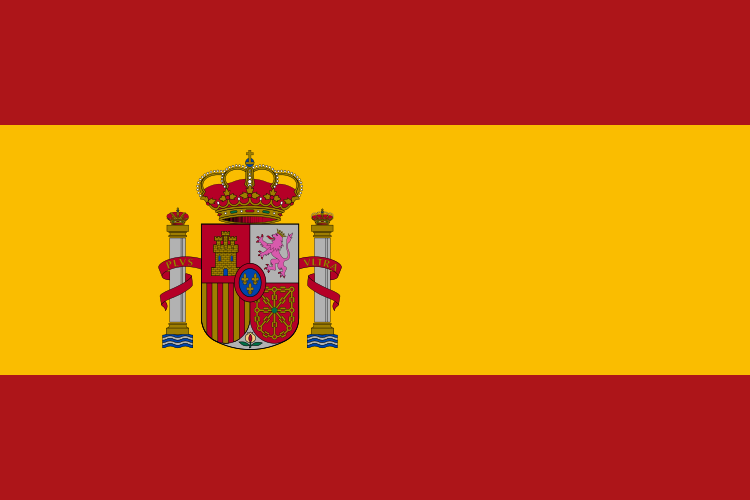
 ESP 16%
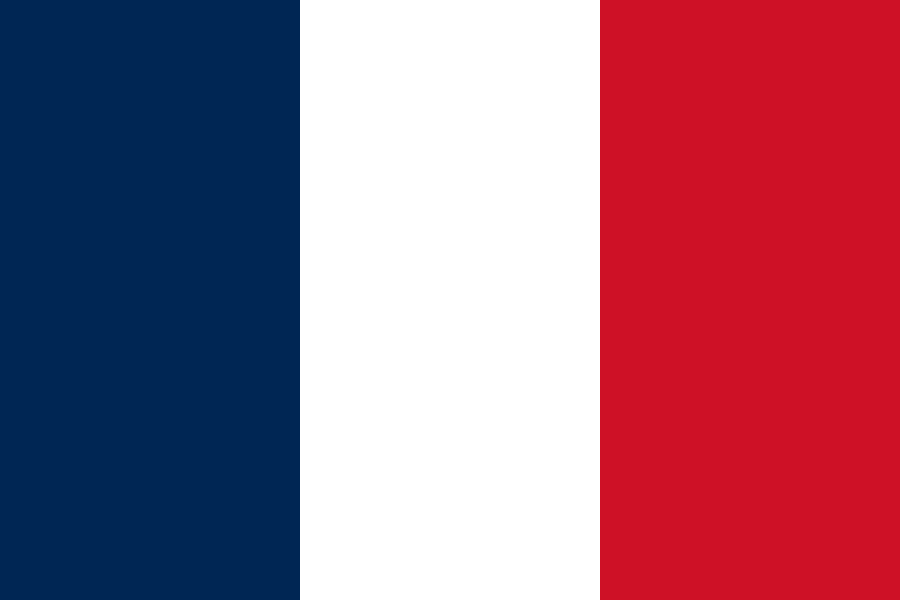 FRA 12%
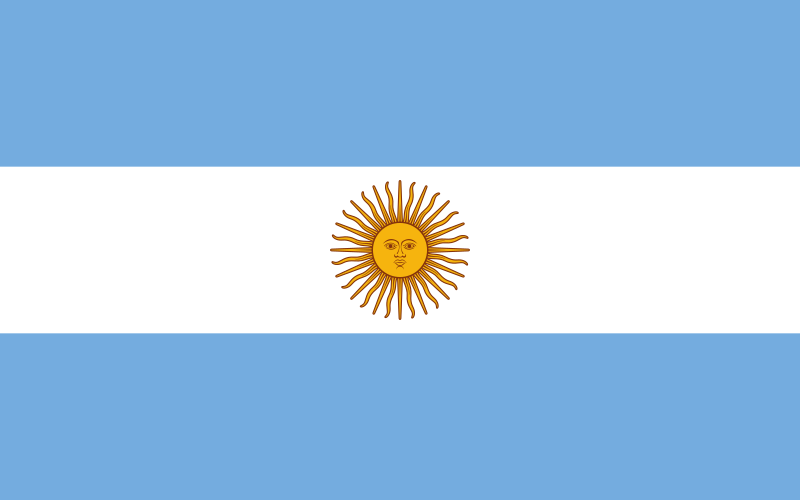 ARG 12%
 BRA 11%
 ENG 10%
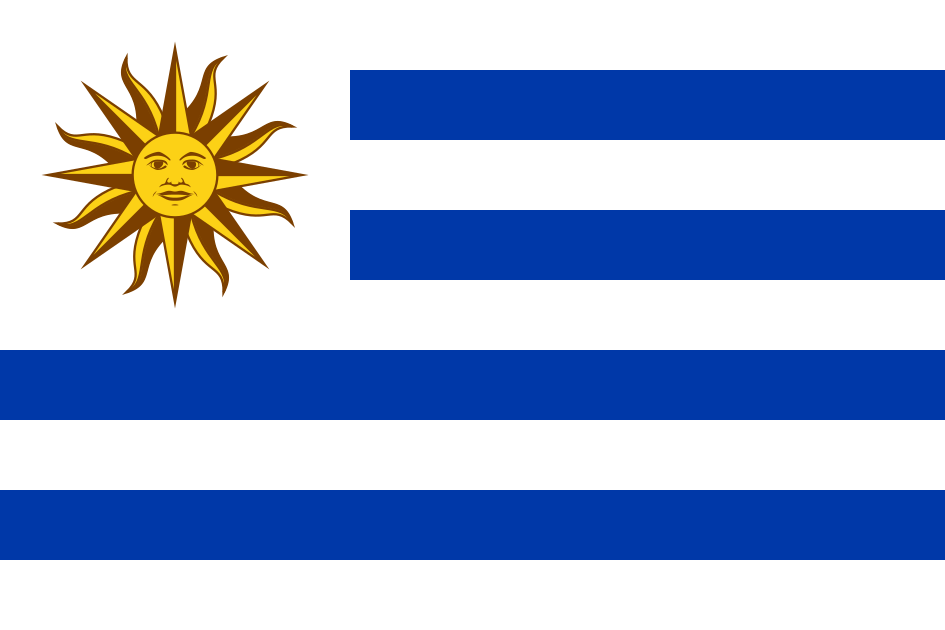
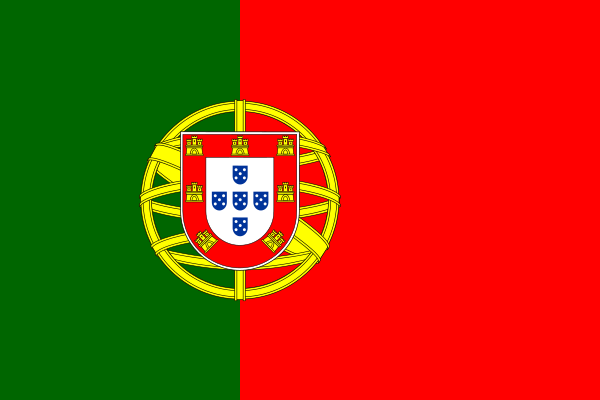

A title-odds reckoning of World Cup 2026's fallen favourites: why Germany, the Netherlands, Brazil and Uruguay flopped while Spain and Argentina delivered.
Of the eight heaviest pre-tournament favourites at World Cup 2026, only two justified their price: Spain (16% title odds) and Argentina (12%) reached the final, which finished 0-0. Everyone else fell short, and some fell spectacularly. Germany (8%) and the Netherlands (6%) were bundled out in the round of 32 on penalties, Brazil (11%, FIFA #6) went down 1-2 to Norway in the round of 16, and Uruguay (4%) did not even escape their group.
That is a brutal scoreline for the favourites. The market had priced a cluster of European and South American giants to dominate the knockouts, yet the bracket repeatedly rewarded grit over glamour. By the semi-finals, the only elite names left standing were Spain and Argentina, with the outsiders Switzerland and Norway having bullied their way into the last eight.
This piece is a reckoning keyed to the pre-tournament numbers: for each of the big guns, how far did they actually go, and how wide was the gap between odds and outcome? The answers range from vindication (Spain) to quiet disappointment (France finished fourth) to outright humiliation (Germany and the Netherlands gone before the last 16).
The common thread is that pedigree offered no immunity. Penalty shootouts claimed two group winners in the round of 32 alone, and a single flat night was enough to end campaigns that had looked, on paper, built to last a month.
Ad
Which favourites went out earliest?
Uruguay were the first marquee name to fall. Bielsa's high-pressing Celeste were a 4% shot and ranked FIFA #17, but they finished third in Group H on two points, behind Spain (seven) and the debutants Cape Verde (three). For a side tipped as a dark-horse semi-finalist, failing to reach a 32-team knockout phase was the tournament's starkest group-stage underachievement.
Then came the round-of-32 carnage. Germany, 8% favourites and FIFA #10, topped Group E with six points and a +6 goal difference, only to draw 1-1 with Paraguay and lose the shootout 3-4. The Netherlands, a 6% pick at FIFA #7, won Group F convincingly with seven points and +6, then suffered the identical fate: 1-1 with Morocco, beaten 2-3 on penalties. Two group winners, two first-knockout exits, both on spot-kicks.
These were not slow declines but sudden deaths. Germany and the Netherlands had each looked the class of their pools across three group games, which made their departures all the more jarring. The lesson of the round of 32 was that topping a group counts for little when a single tight 90 minutes can be settled from twelve yards.
For the neutrals, the beneficiaries told their own story. Paraguay and Morocco, both runners-up or lower seeds, converted their nerve into progress, while two of Europe's most storied sides flew home before the tournament had properly caught fire.
Brazil's round-of-16 exit to Norway
Brazil carried the third-shortest odds in the field at 11% and the FIFA #6 ranking, and they began like contenders, winning Group C ahead of Morocco on goal difference with seven points and a +6 swing. A 2-1 win over Japan in the round of 32 kept Ancelotti's Seleção on track for the sixth star.
Then Norway happened. Erling Haaland's side, who had already eliminated Ivory Coast in the previous round, beat Brazil 1-2 in the round of 16 to author one of the knockout phase's defining upsets. For a nation that measures every tournament against the trophy cabinet, a last-16 exit to a team ranked FIFA #31 was a genuine failure.
Vinícius Júnior finished with four goals, enough to sit among the tournament's leading scorers, but Brazil's attack could not paper over a defence that wobbled at the decisive moment. The margins were fine, as they so often were in this tournament, yet the result was emphatic in its consequences.
Norway's reward was a quarter-final, where their run finally ended 1-1 against England. That Brazil were knocked out by a side who themselves bowed out in the last eight underlines how little separated the big names from the pack once the single-elimination format bared its teeth.
France and England: deep runs that still fell short
Not every favourite flopped early; some simply ran out of road at the sharp end. France, the FIFA #1 side and 12% co-favourites, were imperious through four rounds. They won Group I with a maximum nine points and +8, then dispatched Sweden 3-0, Paraguay 1-0 and Morocco 2-0 to reach the semi-finals without conceding much at all.
The wheels came off against Spain, who won the semi-final 0-2. Worse followed in the third-place match, where England ran up a 4-6 win in a chaotic seven-goal defeat that left France fourth. Kylian Mbappé claimed the Golden Boot with 10 goals, a record haul, yet individual brilliance could not mask a side that conceded six in a single consolation game.
England, 10% shots at FIFA #4, arguably exceeded expectations by reaching the semi-finals, beating DR Congo 2-1, Mexico 3-2 and edging Norway after a 1-1 quarter-final. But Argentina ended the dream 1-2 in the last four, and for a nation chasing its first major men's trophy since 1966, a third-place finish still stings as a what-might-have-been.
Jude Bellingham (seven goals) and Harry Kane (six) gave England genuine firepower, and Tuchel's team were competitive with everyone they met. The verdict is nuanced: England went further than most of the favourites yet still joined the long list of contenders who could not get over the line.
Portugal and Belgium: golden generations bow out
Portugal arrived as 7% contenders and FIFA #5, with what was billed as Cristiano Ronaldo's likely farewell. They finished runners-up to Colombia in Group K, then beat Croatia 2-1 in the round of 32 to set up a last-16 tie with Spain. There the run ended, 0-1, a tight defeat that nonetheless drew a line under a celebrated generation.
Belgium, 3% and FIFA #9, went a round further but with just as much frustration. A 2-2 draw with Senegal in the round of 32 required them to grind through, and a 4-1 thrashing of hosts the United States in the last 16 briefly hinted at a surge. The quarter-final against Spain, lost 1-2, was as far as this transitional Belgian side could climb.
Both represent the slow fade of once-fearsome squads. Portugal and Belgium spent years among the tournament elite, yet in 2026 they ran into a Spain team operating at a different level, La Roja knocking out both en route to the final. For Ronaldo in particular, the round-of-16 exit was a muted end to a storied World Cup career.
The pattern is instructive: the chasing pack of European favourites, from Portugal to Belgium to the earlier fallers, were not embarrassed so much as outlasted. Each met a better side on the day and, crucially, none of them found the knockout ruthlessness that separates the finalists from the rest.
Title odds vs reality: who justified their price?
Lined up against the pre-tournament market, the honour roll is short. Spain (16%) delivered a final; Argentina (12%) did too. Of the remaining big guns, none reached the last four from the favourites' list except France, and even they finished fourth after back-to-back defeats.
The chart below plots the eight shortest-priced sides. What it cannot show is the carnage behind the numbers: Germany and the Netherlands eliminated in the round of 32, Brazil in the round of 16, Portugal in the round of 16, Belgium and Morocco in the quarter-finals, and France losing both of their final two games. The dispersion between odds and outcome has rarely been wider.
It also explains why the tournament's story was written by its overachievers. Switzerland (1%, FIFA #19) and Norway (2%, FIFA #31) reached the quarter-finals, while Cape Verde (0.1%) and Senegal (1.2%) outran several teams priced many times shorter. When a third of the favourites exit before the quarter-finals, the outsiders inherit the stage.
The blunt conclusion: in 2026, a short price guaranteed nothing. Spain and Argentina honoured their billing by meeting in a goalless final; almost everyone else above them in the betting became a cautionary tale about the brutality of knockout football.
What the fallen favourites tell us
The overriding verdict is that pedigree bought no safety at World Cup 2026. The round of 32 alone removed two group winners in Germany and the Netherlands, both on penalties, and the round of 16 claimed Brazil and Portugal. By the quarter-finals, the field of heavyweights had already been thinned to the point where outsiders could smell a semi-final.
Shootouts were the great leveller. Germany, the Netherlands and others discovered that a month of careful group-stage work can be undone in minutes once a tie is drawn and the penalties begin. It is no accident that the teams who thrived, Switzerland among them, embraced the fine margins rather than fearing them.
Uruguay's group-stage flop and Brazil's round-of-16 defeat will sting longest because both carried genuine title ambitions. France's fourth-place finish is a softer disappointment given they reached the semis, but conceding six to England in a dead rubber is not how the FIFA #1 side wanted to sign off.
That leaves Spain and Argentina as the only favourites to fully deliver, contesting a final that finished 0-0. For the rest, 2026 becomes a study in how quickly a short price can turn into an early flight home, and a reminder that in knockout football the bracket, not the bookmaker, has the final word.
Frequently asked
Which World Cup 2026 favourite went out earliest?
Uruguay were the earliest big-name casualty, exiting in the group stage. Bielsa's side finished third in Group H on just two points, behind Spain and debutants Cape Verde, and never reached the knockout rounds.
How did Germany get knocked out of World Cup 2026?
Germany lost on penalties to Paraguay in the round of 32 after a 1-1 draw. Despite topping Group E with six points, they fell at the first knockout hurdle, one of the tournament's biggest shocks.
Did Brazil underachieve at World Cup 2026?
Yes. Rated third favourites at 11% and ranked FIFA #6, Brazil won Group C and beat Japan 2-1, but lost 1-2 to Norway in the round of 16 to bow out well short of expectations.
Which favourites reached the World Cup 2026 final?
Spain and Argentina. They were the only two of the pre-tournament heavyweights to go all the way, meeting in a final that finished 0-0.
How far did France go at World Cup 2026?
France reached the semi-finals, where they lost 0-2 to Spain, then were beaten 4-6 by England in the third-place match. Despite Kylian Mbappé's tournament-leading 10 goals, the FIFA #1 side finished fourth.