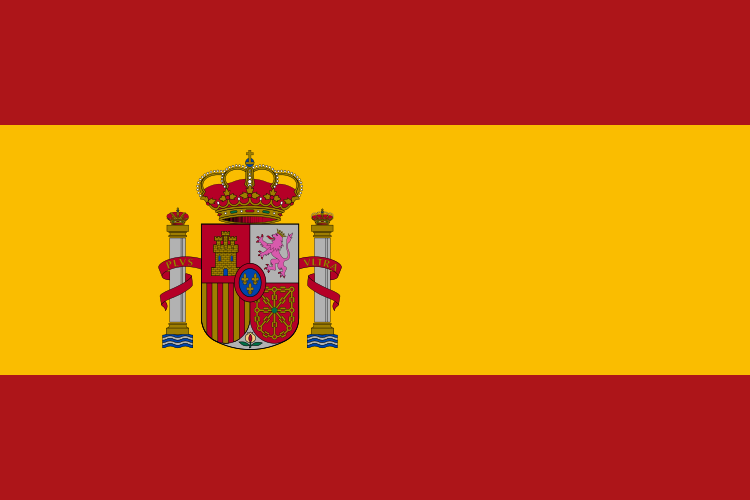
 ESP 16%
 FRA 12%
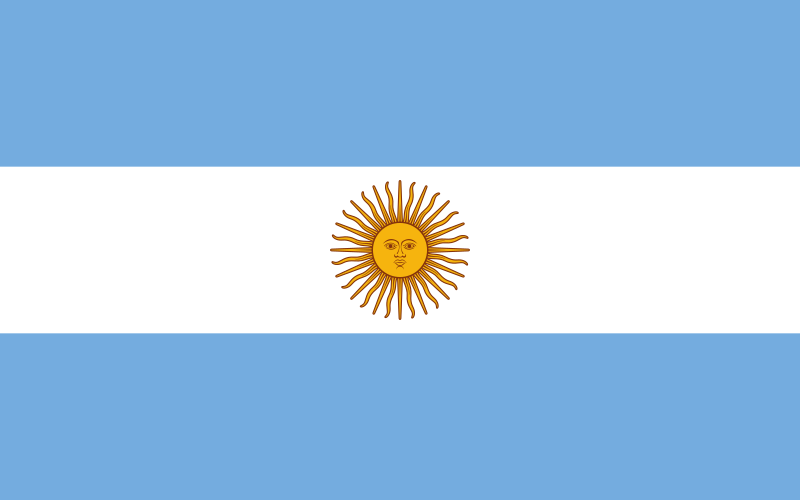 ARG 12%
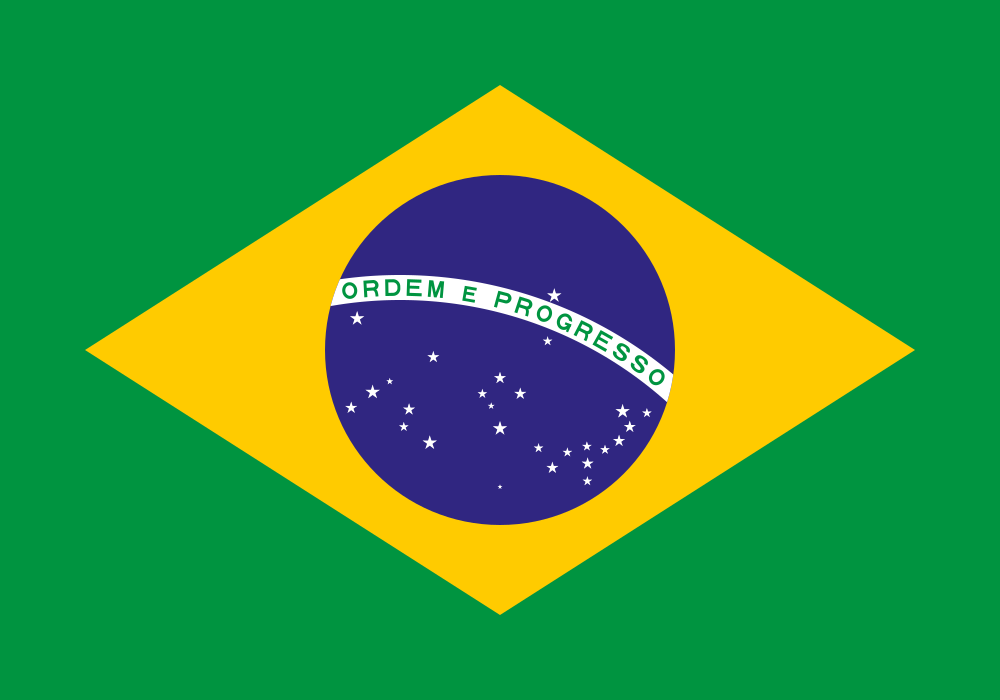 BRA 11%
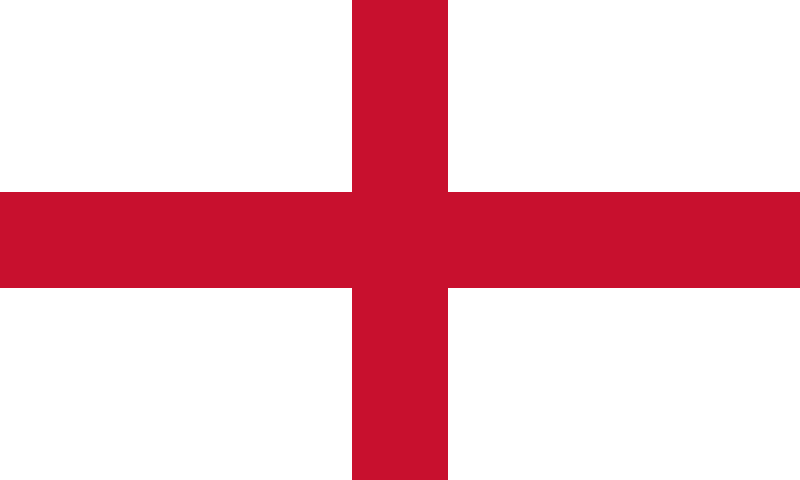 ENG 10%


The Polymarket World Cup Bronze Ball market over-rates Harry Kane at 30%. Back Jude Bellingham instead: the natural Bronze profile for a beaten England semi.
Back Jude Bellingham for the 2026 World Cup Bronze Ball. The award goes to the third-best player of the tournament, which in practice means the standout of a team that reaches the semi-finals and falls short of the final, and Bellingham is the cleanest fit on the board: the creative engine of a Tuchel England side priced to go deep, sitting well outside Polymarket's top ten while the crowd piles into the obvious names.
The market is telling on itself. Bruno Fernandes (30.3%) and Harry Kane (30.2%) sit almost level at the top, which means more than sixty cents in every dollar is stacked on two players who share the exact same problem: they are finishers and figureheads, the Golden and Silver Ball archetypes, not the Bronze one. The Bronze Ball is the consolation prize for a brilliant tournament that ended one game early, and it rarely rewards the man who scored the goals.
This is the overlooked market of the whole World Cup card. Everyone has an opinion on the winner and the Golden Boot; almost nobody has thought hard about who finishes third in the player-of-the-tournament vote. That gap between attention and pricing is where the value lives, and right now it is pointing away from the favourites and towards an England midfielder the market has not got round to backing.
Ad
What is the World Cup Bronze Ball and how is it won?
The Bronze Ball is awarded to the third-placed finisher in FIFA's player-of-the-tournament vote, decided by accredited media. The Golden Ball almost always goes to a player from the winning or losing finalist, and the Silver Ball usually does too. That leaves the Bronze as the prize most likely to drop to someone from outside the final two: a beaten semi-finalist, or occasionally the best player from the third-place play-off.
History bears this out. The Bronze Ball repeatedly lands on the man who dragged a good-but-not-great team to the last four: a midfield orchestrator, a creator, the player whose fingerprints were on everything even though his side did not reach the final. It is a narrative award as much as a numbers one, and the narrative it rewards is heroic-but-defeated, not champion.
So the way to price this market is backwards. First ask which teams are most likely to lose in the semis rather than win the whole thing. Then ask who the single defining player of that team is. You are not looking for the tournament's best player; you are looking for the best player on the fourth, fifth or sixth best team, the side that overachieves to the semis and then runs out of road.
That profile is why the consensus at the top of this market is suspect. It is built on name recognition and goal expectation, not on the specific shape of the award being traded.
Why is the Bronze Ball market overpricing Harry Kane and Haaland?
Start with the snapshot. Polymarket has Bruno Fernandes at 30.3%, Harry Kane at 30.2%, Erling Haaland at 17.4%, Lamine Yamal at 11.5%, Gavi at 10.6%, Lionel Messi at 9.8%, Rayan Cherki at 8%, Ousmane Dembélé at 7.1%, Rodri at 6.3% and Michael Olise at 5.4%. Treat those as a live picture that will keep shifting, but the shape is the story: the money is jammed at the top.
Kane at 30.2% is the clearest mispricing. He is England's Golden Boot threat, and that is precisely the point: if England run deep and Kane is their best player, voters reach for the Golden or Silver Ball, not the Bronze. The Bronze Ball almost never rewards the out-and-out number nine. You are paying a premium for the wrong award.
Haaland at 17.4% is the fade. The price treats him as a marquee name without pricing the precondition: Norway, at 2% title odds, have to reach the semi-finals for him to be in the conversation at all. A striker on a side that bows out in the round of 16 or the quarters does not poll third in a global media vote. That is a lot of implied probability resting on a run nobody else expects.
Bruno Fernandes at 30.3% is the most defensible of the favourites, because Portugal as a deep-running, non-winning side is a textbook Bronze profile and Bruno is unambiguously their talisman. But you are taking a short price on an outcome that is already fully understood. The edge in this market is not in the names everyone has already bid up.
Why Jude Bellingham fits the Bronze Ball profile
Bellingham is the answer the market has skipped. He is England's chief creator and tempo-setter, the player Tuchel's side is built to run through, and an England team that reaches the semis and loses is one of the most likely single outcomes of the whole tournament. That is the Bronze Ball recipe almost exactly: deep run, no final, one player carrying the load.
Crucially, he is the right kind of player for this award. The Bronze Ball gravitates to the midfielder who does everything, the man whose performances define a tournament run even without the goal tally of a striker. Where Kane's contribution shows up as goals that point voters towards the bigger prizes, Bellingham's shows up as control, drive and decisive moments, the exact texture a media vote rewards in a beaten semi-finalist.
The market's own structure makes him a value play. England's Bronze hopes are being priced almost entirely through Kane at 30.2%, while Bellingham sits outside the top ten on the snapshot. If you think England are a semi-final side, you should want exposure to that run through the player most likely to be its face, at a far longer price than the striker.
There is no need to invent a number for him: the point is that he is cheap precisely because the crowd has not arrived yet. Find him on the full Polymarket board, check where the price actually sits, and weigh it against a Kane line that is already fully backed.
Which other names offer Bronze Ball value?
If you want a second angle, look at the beaten-semi-finalist profile rather than the winners. Spain are favourites to lift the trophy, so Yamal (11.5%), Gavi (10.6%) and Rodri (6.3%) are arguably better Golden or Silver Ball plays: if Spain win, their best man wins the big one, not the Bronze. Their Bronze case only really opens up if they lose in the semis, which is not what their title odds imply.
France's depth makes Cherki (8%), Dembélé (7.1%) and Olise (5.4%) interesting in theory, but the same logic bites: France are a genuine title contender, so their standout is more likely to be a finalist than a semi-final casualty. The Bronze profile wants the best player of the team that just misses the final, not the team in it.
Messi at 9.8% is a pure narrative price. Argentina reaching the semis and Messi being voted into the top three on reputation is entirely plausible, but you are paying for the story, and a champion or finalist Argentina pushes him towards the Golden Ball instead. It is a name trade, not a profile trade.
The cleanest non-consensus shapes remain the deep-but-not-winning sides: England through Bellingham rather than Kane, and Portugal through Bruno if you must take a favourite. Everything else on the board is either priced for the wrong award or priced for a run the team is not expected to make.
How should you price the World Cup Bronze Ball market?
Build your number in two steps. First, estimate the chance your player's team reaches the semi-finals but not the final, because that is the window in which the Bronze Ball is actually won. Second, estimate the chance he is the standout of that side in the media vote. Multiply the two, and compare the result to the live implied probability.
Run Kane through that filter and the 30.2% looks heavy, because a deep England run tends to push their best player towards the Golden or Silver Ball, shrinking the slice that lands specifically on Bronze. Run Haaland through it and 17.4% collapses, because the first term, Norway reaching the semis, is small to begin with. Run Bellingham through it and the maths flatters him: a likely England semi multiplied by a strong claim to be their defining player, at a price the market has not yet set short.
Remember the overround. With two players alone accounting for more than 60% of the implied total, the top of this market is crowded and the longer prices are where the inefficiency hides. That is structurally good news for a contrarian who has identified the right profile rather than the loudest name.
And treat every figure here as a snapshot. These prices move with team news, draws and results, so the edge you see today may tighten or widen by kick-off. The discipline is to fix your own fair value first, then act when the live price disagrees with it.
Where to trade the World Cup Bronze Ball on Polymarket
You can trade the World Cup Bronze Ball market directly on Polymarket, where every contender carries a live implied probability you can take a position on, from the crowded favourites to the longer names the crowd has overlooked. This is the place to back the profile rather than the headline: load the full market, find where Jude Bellingham is actually priced, and weigh it against the Kane and Haaland lines the crowd has already bid up.
Because the prices in this article are a current snapshot, the first thing to do is check the live market. The gap between Bruno Fernandes at 30.3% and Harry Kane at 30.2% will not hold still, and the longer prices on beaten-semi-finalist creators are exactly where movement creates opportunity. Set your fair value, then trade the disagreement.
New to the market? Polymarket's current offer is straightforward: Deposit $20, Get a $50 Trading Bonus with promo code TGSWC. Get set up, pull up the World Cup Bronze Ball market, and take your position on the most overlooked award of the tournament before the rest of the crowd works out the profile.
Frequently asked
What is the World Cup Bronze Ball?
The Bronze Ball is FIFA's award for the third-best player of the World Cup, voted on by the media, behind the Golden Ball and Silver Ball. It typically goes to the standout performer of a team that reaches the semi-finals without lifting the trophy.
Who is the favourite for the 2026 World Cup Bronze Ball?
On the current Polymarket snapshot, Bruno Fernandes leads at 30.3%, with Harry Kane right behind at 30.2% and Erling Haaland third at 17.4%. Those prices move constantly, so check the live market before trading.
Is Harry Kane good value for the Bronze Ball?
Not at 30.2%. Kane is a Golden Boot and Silver Ball profile, not a Bronze one, and the award usually skips the finisher in favour of a beaten semi-finalist's creator, which makes his price look short.
Why back Jude Bellingham for the Bronze Ball?
Bellingham is the orchestrator of a Tuchel England side priced to run deep, and a beaten semi-finalist's best player is exactly the Bronze Ball profile. He sits outside the market's top ten, so the value is in finding him before the crowd does.
Where can I trade the World Cup Bronze Ball market?
You can trade the World Cup Bronze Ball market on Polymarket, where each contender carries a live implied probability you can take a position on. New users can use the current offer: Deposit $20, Get a $50 Trading Bonus with promo code TGSWC.